
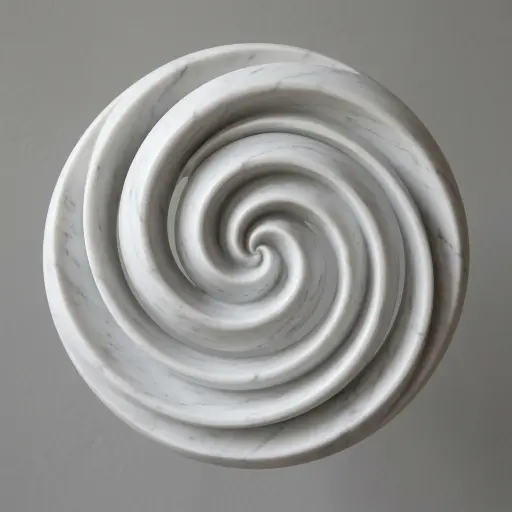
If you are looking for synonyms for spiral, the best choice depends on what you mean by spiral. The word can describe a curved shape, circular movement, a gradual increase or decrease, or a situation that becomes increasingly difficult to control. Because of these different meanings, no single synonym works in every sentence.
For example, coil, helix, and twist can describe a physical shape, while escalate, snowball, and intensify can describe a situation getting worse or more extreme. In mathematics or science, words such as helix or spiral curve may be more precise. In everyday writing, decline, deteriorate, or get out of control may communicate the intended idea more clearly.
Quick Answer
Common synonyms for spiral include coil, twist, wind, curl, helix, circle, rotate, escalate, intensify, snowball, worsen, deteriorate, decline, unravel, and get out of control. The correct alternative depends on whether spiral describes a shape, movement, increase, decrease, or worsening situation.
Quick List: Synonyms for Spiral:
Closest Alternatives
- Coil
- Curl
- Twist
- Wind
- Helix
- Circle
- Rotate
- Wind around
- Loop
- Turn
Alternatives for a Worsening Situation
- Worsen
- Deteriorate
- Decline
- Escalate
- Intensify
- Snowball
- Compound
- Escalate rapidly
- Get out of control
- Unravel
For Increasing or Growing
- Increase
- Rise
- Grow
- Expand
- Accelerate
- Build
- Mount
- Snowball
- Multiply
- Intensify
Alternatives for Decreasing
- Decline
- Drop
- Fall
- Decrease
- Deteriorate
- Sink
- Diminish
- Recede
- Slide
- Plummet
Formal Alternatives:
Coil
Meaning: To form or move into a series of circular curves.
Explanation: Coil is a strong physical alternative when something wraps around itself or another object. It is more specific than spiral in some contexts because it often suggests repeated circular turns.
Example: The wire began to coil around the metal frame.
Best Use: Technical descriptions, physical objects, cables, springs, ropes, and natural forms.
Worst Use: Do not use it for an abstract problem unless the meaning is clearly metaphorical.
Tone: Neutral and precise.
Helix
Meaning: A three-dimensional curve that winds around a central axis.
Explanation: Helix is a specialized alternative to spiral. It is especially useful in mathematics, biology, chemistry, engineering, and science.
Example: The DNA molecule has a double-helix structure.
Best Use: Scientific and technical writing.
Worst Use: Avoid it in ordinary conversation when spiral or twist would be easier to understand.
Tone: Technical and formal.
Escalate
Meaning: To become more serious, intense, or extreme.
Explanation: Escalate can replace spiral when the word describes a problem, conflict, cost, or situation that keeps becoming more severe.
Example: The disagreement quickly escalated into a larger dispute.
Best Use: Business reports, news writing, workplace communication, and formal analysis.
Worst Use: It does not describe a physical spiral.
Tone: Professional and neutral.
Intensify
Meaning: To become stronger or more extreme.
Explanation: Intensify focuses on increasing strength rather than movement in a circular pattern.
Example: The pressure intensified throughout the negotiations.
Best Use: Formal writing, reports, academic work, and professional communication.
Worst Use: It can be misleading if the original sentence specifically describes circular movement.
Tone: Formal and neutral.
Deteriorate
Meaning: To become worse in quality, condition, or effectiveness.
Explanation: Deteriorate is useful when spiral means that a situation or condition is steadily getting worse.
Example: Relations between the two teams began to deteriorate.
Best Use: Formal reports, academic writing, professional communication, and health or environmental descriptions when appropriate.
Worst Use: It does not mean physical circular movement.
Tone: Formal.
Decline
Meaning: To become lower, weaker, or worse.
Explanation: Decline is a broad alternative when a situation, performance, condition, or value is moving downward.
Example: Sales began to decline after the price increase.
Best Use: Business, finance, academic writing, and general professional writing.
Worst Use: Avoid it when you need to emphasize rapid or chaotic deterioration.
Tone: Neutral to formal.
Snowball
Meaning: To grow rapidly as one event causes another.
Explanation: Snowball is a metaphorical alternative to spiral. It emphasizes momentum and accumulating effects.
Example: Small delays began to snowball into a major scheduling problem.
Best Use: Business writing, journalism, blogs, and conversational professional communication.
Worst Use: It may sound too casual for highly formal academic or legal writing.
Tone: Informal to neutral.
Compound
Meaning: To make a problem or effect increasingly serious by adding another problem or effect.
Explanation: Compound works when several factors build upon one another.
Example: Rising costs compounded the company’s financial difficulties.
Best Use: Business, academic, financial, and analytical writing.
Worst Use: It does not describe physical rotation or a curved shape.
Tone: Formal and analytical.
Accelerate
Meaning: To increase in speed or happen more quickly.
Explanation: Accelerate can replace spiral when the key idea is that change is happening faster.
Example: The decline accelerated during the final quarter.
Best Use: Reports, academic writing, business analysis, and technical contexts.
Worst Use: It does not automatically mean that something is getting worse.
Tone: Neutral and professional.
Unravel
Meaning: To gradually fall apart or become difficult to manage or understand.
Explanation: Unravel can replace spiral when a situation is breaking down.
Example: The negotiations began to unravel after several disagreements.
Best Use: Describing plans, relationships, negotiations, or situations.
Worst Use: It should not replace spiral when the physical circular shape is important.
Tone: Neutral and expressive.
Semi-Formal and Neutral Alternatives:

Curl
Meaning: To bend into a curved or rounded shape.
Explanation: Curl is one of the most natural choices for physical objects that form a curved shape.
Example: The smoke curled upward into the air.
Best Use: Everyday writing, descriptive prose, and physical movement.
Worst Use: It is usually not suitable for describing an escalating conflict.
Tone: Neutral and descriptive.
Twist
Meaning: To turn or bend around itself.
Explanation: Twist can describe movement similar to spiraling, but it often suggests irregular turning rather than a smooth circular pattern.
Example: The vine twisted around the wooden post.
Best Use: Plants, wires, roads, fabric, and physical movement.
Worst Use: Avoid it when mathematical precision matters.
Tone: Neutral.
Wind
Meaning: To move or wrap around something in a curved path.
Explanation: Wind is especially useful for roads, rivers, paths, cables, and objects that follow a curving route.
Example: The trail winds through the forest.
Best Use: Descriptive writing and physical routes.
Worst Use: It can confuse readers because wind has multiple pronunciations and meanings.
Tone: Natural and descriptive.
Loop
Meaning: A curved shape that returns around or toward itself.
Explanation: Loop is related to a spiral but usually suggests a closed or rounded curve rather than a continuously expanding or contracting spiral.
Example: The cable formed a loop beside the machine.
Best Use: Objects, roads, cords, software processes, and everyday descriptions.
Worst Use: Do not use it if the shape clearly contains multiple expanding turns.
Tone: Neutral.
Rotate
Meaning: To turn around a central point or axis.
Explanation: Rotate focuses on turning rather than the curved path created by that turning.
Example: The wheel continued to rotate slowly.
Best Use: Mechanical, scientific, mathematical, and everyday contexts.
Worst Use: A rotating object is not necessarily spiraling.
Tone: Neutral and technical.
Turn
Meaning: To change direction or move around a point.
Explanation: Turn is much broader than spiral and should be used when the exact spiral pattern does not matter.
Example: The path turns sharply near the river.
Best Use: Everyday speech and simple writing.
Worst Use: Avoid it when precision about repeated circular movement is necessary.
Tone: Simple and neutral.
Rise
Meaning: To move upward or become greater.
Explanation: Rise can replace spiral when the original word describes something increasing, especially prices, temperatures, or numbers.
Example: Housing costs continued to rise.
Best Use: Clear, simple writing.
Worst Use: It does not communicate chaotic or accelerating growth by itself.
Tone: Neutral.
Grow
Meaning: To become larger, greater, or more significant.
Explanation: Grow is a broad alternative when the emphasis is simply on increasing size, importance, or severity.
Example: The problem continued to grow.
Best Use: General writing and everyday communication.
Worst Use: It may be too vague when the speed or direction of change matters.
Tone: Neutral and conversational.
Mount
Meaning: To increase gradually to a high level.
Explanation: Mount often describes pressure, costs, concerns, tension, or evidence that continues to build.
Example: Pressure on the organization continued to mount.
Best Use: News, business writing, reports, and professional communication.
Worst Use: It is not a substitute for physical spiraling.
Tone: Formal to neutral.
Slide
Meaning: To gradually move downward or into a worse condition.
Explanation: Slide works when spiral refers to a decline, especially a gradual one.
Example: The company began to slide into financial difficulty.
Best Use: Business writing, commentary, and everyday language.
Worst Use: It may imply a gradual decline rather than a rapid collapse.
Tone: Neutral.
Informal and Casual Alternatives:

Go downhill
Meaning: To become worse.
Example: Things started to go downhill after the original plan failed.
When it sounds natural: Casual conversation, messages, blogs, and informal workplace discussions.
When to avoid it: Formal reports, academic papers, and legal documents.
Tone: Casual.
Get out of control
Meaning: To become impossible or difficult to manage.
Example: The argument quickly got out of control.
When it sounds natural: Everyday speech and informal writing.
When to avoid it: Highly formal documents where a more precise description is available.
Tone: Casual and direct.
Snowball
Meaning: To grow rapidly because each new effect adds to the previous one.
Example: One missed deadline snowballed into several other delays.
When it sounds natural: Conversations, blogs, workplace discussions, and informal explanations.
When to avoid it: Very formal academic or legal writing.
Tone: Casual to neutral.
Blow up
Meaning: To suddenly become much more serious, intense, or difficult.
Example: A small disagreement blew up into a major argument.
When it sounds natural: Casual conversation and informal writing.
When to avoid it: Client emails, formal reports, and academic work.
Tone: Very casual.
Fall apart
Meaning: To stop working, functioning, or holding together.
Example: Their original plan started to fall apart.
When it sounds natural: Everyday conversation and informal writing.
When to avoid it: Formal documents unless the conversational tone is intentional.
Tone: Casual.
True Synonyms vs. Contextual Alternatives:
Not every word associated with spiral is an exact replacement. The distinction matters because spiral can refer to shape, movement, growth, decline, or worsening circumstances.
| Type | What It Means | Can It Replace the Original? |
|---|---|---|
| True synonym | Has essentially the same meaning in the same context | Usually |
| Near synonym | Has a very similar meaning but a slight difference | Sometimes |
| Contextual alternative | Works only for a particular meaning of spiral | Yes, in specific contexts |
| Broader expression | Covers a wider idea than spiral | Sometimes |
| Narrower expression | Describes one specific kind of spiral | Only in that context |
For example, coil can replace spiral when describing something winding around itself, while escalate works when spiral means that a problem is becoming more serious. Snowball suggests accumulating effects, while deteriorate focuses specifically on becoming worse.
Industry-Specific Usage:
Business Writing
In business writing, choose words that explain the direction and type of change clearly.
Instead of saying:
Costs spiraled out of control.
You might write:
Costs increased rapidly.
Or:
Operating expenses escalated during the final quarter.
For formal business reports, increase, escalate, accelerate, mount, and deteriorate are often more precise than the metaphorical spiral.
Corporate Communication:
Corporate communication benefits from direct language.
Instead of:
The situation spiraled after the announcement.
Consider:
The situation became increasingly difficult after the announcement.
For internal updates, escalate, intensify, develop, or worsen may make the message clearer without sounding dramatic.
Academic Writing
Academic writing usually benefits from precision. If you mean a measurable increase, use increase, rise, accelerate, or grow. If you mean deterioration, use decline, deteriorate, or worsen.
Use helix when discussing a specific three-dimensional mathematical or scientific structure.
For example:
The researchers observed an accelerated increase in temperature.
This is more precise than using spiraled upward if the writing is technical.
Customer Service
Customer-service writing should be clear and calm.
Instead of:
Your issue has spiraled.
Try:
The issue has become more complicated.
Or:
The problem has grown because of the additional delay.
These choices avoid sounding dramatic or blaming the customer.
Legal Writing
Legal writing requires particular care because seemingly similar words may have different meanings. Escalate, increase, deteriorate, and compound are not automatically interchangeable.
For example, saying that a dispute escalated suggests increasing seriousness, while saying that a contract issue worsened gives a broader description. In legal documents, use the exact term supported by the facts and the relevant legal context rather than choosing a synonym simply for stylistic variety.
Email Communication
In professional emails, spiral can sometimes sound dramatic. More neutral choices such as increase, escalate, develop, worsen, or become more complicated are often better.
Email Examples:
Client Communication
Subject: Update on Project Costs
Hello Maria,
I wanted to provide a quick update on the project budget. Material costs have increased more quickly than expected, so we are reviewing several options to keep the project within the approved range.
I will send you the revised figures by Thursday.
Best,
Daniel
Project Update
Subject: Schedule Update
Hi Team,
The initial delay has begun to snowball into several scheduling changes. We are adjusting the timeline now so that the remaining tasks can move forward without creating additional delays.
I’ll share the updated schedule this afternoon.
Best,
Alex
Workplace Request
Subject: Support Needed With Current Workload
Hi Sarah,
The volume of urgent requests has continued to mount, and the team is now finding it difficult to maintain the original turnaround times.
Could we review the current priorities and decide which tasks should come first?
Thanks,
James
Customer Service
Subject: Your Support Request
Hello Mr. Khan,
I’m sorry that the issue has become more complicated than expected. We have escalated your case to our technical team and asked them to review the account as a priority.
We will contact you as soon as we have an update.
Kind regards,
Customer Support
Vendor Communication
Subject: Delivery Schedule
Hello David,
The recent shipping delays have started to affect several stages of the project. Please let us know whether the revised delivery date is still achievable so that we can adjust our schedule accordingly.
Thank you,
Emma
Short Dialogue Examples:
Workplace
Person A: The delays seem to be getting worse.
Person B: Yes. They have started to snowball, so we should address the main bottleneck first.
Classroom
Person A: Why doesn’t the teacher use spiral here?
Person B: Because the number is simply increasing. Rise or increase would be more precise.
Customer Service
Person A: The issue seems to be getting more complicated.
Person B: I agree. I’ll escalate it to the technical team.
Casual Conversation
Person A: How did the argument get so serious?
Person B: One small disagreement just blew up.
Professional Discussion
Person A: What happened to the negotiations?
Person B: Tensions escalated after the latest proposal.
How to Replace “Spiral” in a Sentence:
Physical Shape
Original: The wire spiraled around the pole.
Alternative: The wire coiled around the pole.
Why it works: Coiled clearly describes something winding around itself or an object.
Curved Movement
Original: The smoke spiraled into the sky.
Alternative: The smoke curled into the sky.
Why it works: Curled keeps the visual idea while sounding natural in descriptive writing.
Worsening Situation
Original: The conflict spiraled into violence.
Alternative: The conflict escalated into violence.
Why it works: Escalated directly communicates increasing seriousness.
Financial Decline
Original: The company spiraled into debt.
Alternative: The company fell deeper into debt.
Why it works: This version is more direct and clearly explains the direction of the change.
Rapid Growth
Original: Demand spiraled upward.
Alternative: Demand increased rapidly.
Why it works: The alternative states exactly what happened without relying on a metaphor.
Increasing Pressure
Original: Pressure began to spiral.
Alternative: Pressure began to mount.
Why it works: Mount naturally describes pressure that gradually builds.
Deteriorating Condition
Original: His performance spiraled downward.
Alternative: His performance declined steadily.
Why it works: Declined clearly communicates downward movement in performance.
Out-of-Control Situation
Original: The argument spiraled out of control.
Alternative: The argument became increasingly difficult to control.
Why it works: The alternative is longer but more explicit and suitable for formal writing.
Comparison Table:
| Phrase | Tone | Meaning / Scope | Best Use | Example |
|---|---|---|---|---|
| Spiral | Neutral | Circular movement or progressive change | General writing | Costs spiraled upward. |
| Coil | Neutral | Wind into curved turns | Physical objects | The rope coiled around the post. |
| Curl | Neutral | Form a curved shape | Descriptive writing | Smoke curled upward. |
| Twist | Neutral | Turn or bend | Physical movement | The vine twisted around the tree. |
| Helix | Technical | Three-dimensional spiral form | Science and math | The structure forms a helix. |
| Escalate | Professional | Become more serious | Conflicts and problems | The dispute escalated. |
| Intensify | Formal | Become stronger | Academic and professional writing | Pressure intensified. |
| Deteriorate | Formal | Become worse | Conditions and situations | Relations deteriorated. |
| Decline | Neutral | Become lower or weaker | Performance and values | Sales declined. |
| Snowball | Casual | Grow through accumulating effects | Informal business writing | Delays snowballed. |
| Mount | Formal | Gradually increase | Pressure and concerns | Concerns mounted. |
| Accelerate | Neutral | Increase in speed | Trends and processes | Growth accelerated. |
| Unravel | Expressive | Fall apart | Plans and negotiations | The agreement unraveled. |
| Go downhill | Casual | Become worse | Conversation | Things went downhill. |
| Get out of control | Casual | Become difficult to manage | Everyday situations | The meeting got out of control. |
Which Alternative Should You Choose?
For Formal Writing
Choose deteriorate, intensify, escalate, accelerate, decline, or compound depending on the exact meaning.
For Business Communication
Use increase, escalate, mount, accelerate, decline, or become more difficult. These options are generally clearer than dramatic metaphors.
For Academic Writing
Choose the most precise word. Increase, decline, accelerate, intensify, and deteriorate are useful when they accurately describe the process.
For Legal Writing
Avoid casual metaphors such as blow up, snowball, or go downhill. Select terminology based on the exact factual and legal meaning.
For Professional Email
Use increase, escalate, mount, worsen, or become more complicated when you want a calm and professional tone.
For Everyday Conversation
Spiral, snowball, get out of control, blow up, and go downhill can all sound natural, depending on the situation.
For Casual Messages
Use conversational expressions such as snowball, blow up, or fall apart when the context is informal.
Grammar and Usage Guide:
Spiral as a Verb
As a verb, spiral can describe movement:
The bird spiraled downward.
It can also describe progressive change:
The situation spiraled into a larger problem.
Spiral as a Noun
As a noun, it describes a curved form or process:
The staircase follows a spiral.
It can also describe a pattern of change:
The company entered a downward spiral.
Common Prepositions
Several combinations are especially common:
- Spiral upward
- Spiral downward
- Spiral out of control
- Spiral into something
- Spiral toward something
- Spiral around something
Examples:
Prices spiraled upward.
The discussion spiraled into an argument.
The situation spiraled out of control.
Spiral vs. Spiraled
Use spiral for present or general action:
Costs continue to spiral.
Use spiraled for a completed past action:
Costs spiraled after the policy changed.
Spiral vs. Spiraling
Spiraling is the present participle and is commonly used as an adjective or part of a continuous verb phrase.
Spiraling costs created additional pressure.
Prices are spiraling upward.
Downward Spiral
Downward spiral is a common fixed expression describing a continuing process of decline.
The company entered a downward spiral.
This expression is stronger than simply saying that something declined, because it suggests that one negative development contributes to another.
Upward Spiral
Upward spiral describes a positive cycle in which improvement creates further improvement.
Better customer service created an upward spiral of positive reviews and repeat business.
Common Mistakes to Avoid:
Treating Every Alternative as an Exact Synonym
Escalate and coil are not interchangeable. One usually describes increasing seriousness, while the other describes physical winding.
Ignoring the Meaning of the Sentence
Always determine whether spiral means shape, movement, growth, decline, or deterioration before choosing a replacement.
Using Casual Language in Formal Writing
Words such as blow up and go downhill may sound too informal in an academic paper or corporate report.
Making a Situation Sound More Dramatic
Spiral out of control can suggest serious loss of control. If the situation is simply becoming more difficult, become more complicated may be more accurate.
Using “Increase” When Speed Matters
Increase tells readers that something became greater. It does not necessarily tell them that the change was rapid.
Compare:
Costs increased.
Costs increased rapidly.
The second sentence provides more information.
Confusing Spiral With Rotate
Something can rotate without moving along a spiral path. Rotate describes turning around an axis, while spiral often describes movement along a curved path.
Using Helix in Everyday Writing
Although helix is technically precise, it can sound unnecessarily scientific in ordinary communication.
Overusing Synonyms
Changing every occurrence of spiral to a different word can make writing less consistent. If spiral is the most accurate word, keep it.
When Not to Use “Spiral”
When You Need Scientific Precision
If the structure is specifically a three-dimensional curve, helix may be more accurate.
When You Mean Simple Growth
If something simply becomes larger, increase or grow may be clearer than spiral.
When You Mean a Straight Decline
If performance drops without implying a continuing cycle, decline may be more precise.
When You Mean Increasing Severity
For a conflict or problem that becomes more serious, escalate is often clearer.
When the Audience Needs Plain Language
A phrase such as became increasingly difficult may be easier to understand than spiraled out of control.
When the Metaphor Is Too Dramatic
Professional communication often benefits from factual language instead of dramatic imagery.
When “Spiral” Is Actually Better
Do not replace spiral simply because you want variety. It is the better choice when you want to communicate a distinctive pattern of repeated or progressive change.
For example:
The negotiations spiraled into a series of disputes.
Here, spiraled gives the sentence a sense of movement and progression that changed would not provide.
Advanced Writer Tips:
Professional Email Etiquette
Avoid dramatic wording when discussing problems with clients or colleagues. Instead of saying a situation has spiraled out of control, explain exactly what has happened.
The delay has affected two additional tasks.
This is more useful than a vague metaphor.
Politeness
Word choice can change how strongly a problem sounds.
The issue spiraled.
sounds more dramatic than:
The issue became more complicated.
The second version can be better when you want to remain calm and constructive.
Context Alignment
Think about the audience before choosing an alternative. A novelist may benefit from vivid language such as spiraled or unraveled, while a financial analyst may prefer accelerated or declined.
Precision
Ask yourself what actually changed:
- Did something become larger? Use increase.
- Did it become more serious? Use escalate.
- Did it become worse? Use deteriorate or worsen.
- Did several effects accumulate? Use compound or snowball.
- Did something physically wind around itself? Use coil.
- Did something form a three-dimensional curve? Use helix.
Readability
Simple words are often stronger.
Instead of:
The financial situation spiraled downward at an accelerated rate.
write:
The company’s financial position deteriorated rapidly.
The second sentence is shorter, clearer, and more precise.
Related Questions:
What Is Another Way to Say “Spiral”?
Depending on the meaning, you can say coil, curl, twist, wind, escalate, intensify, worsen, deteriorate, decline, snowball, or accelerate. The right choice depends on whether spiral describes a physical shape, movement, growth, decline, or worsening situation.
What Is a Professional Alternative to “Spiral”?
Professional alternatives include escalate, intensify, deteriorate, accelerate, decline, compound, increase, and mount. For example, instead of saying “the problem spiraled,” a business report might say, “the problem became increasingly serious.”
What Is a Formal Alternative to “Spiral”?
There is no single formal synonym for every use of spiral. Deteriorate works for worsening conditions, escalate for increasing seriousness, accelerate for increasing speed, and helix for a specific three-dimensional curved structure.
What Can I Use Instead of “Spiral Out of Control”?
You can use become increasingly difficult to control, escalate rapidly, become unmanageable, or deteriorate rapidly. The best option depends on whether you want to emphasize loss of control, increasing severity, or worsening conditions.
Is “Spiral” Formal?
Spiral is a standard neutral English word and is not inherently informal. However, metaphorical phrases such as spiral out of control can sound more dramatic than direct alternatives in formal business or academic writing.
Can I Use “Snowball” Instead of “Spiral”?
Sometimes. Snowball emphasizes accumulation, where one event causes or contributes to another. Spiral can emphasize a continuing cycle, direction, or progression. They overlap but are not exact synonyms.
What Is the Difference Between “Spiral” and “Escalate”?
Spiral can describe circular movement or a progressive process that may become increasingly positive or negative. Escalate specifically focuses on something becoming more serious, intense, or extreme. Therefore, escalate is useful when describing conflicts, risks, costs, and problems.
Key Takeaways:
- Spiral has several meanings, so its best synonym depends on context.
- Use coil, curl, twist, or wind for physical curved movement.
- Use escalate, intensify, or mount when something becomes more serious.
- Use decline or deteriorate when describing a worsening condition.
- Choose the synonym that preserves the original meaning rather than changing words simply for variety.
Conclusion:
The best synonym for spiral depends on the idea you want to communicate. If you are describing a physical shape, coil, curl, twist, and wind can work well. For a scientific or mathematical structure, helix is often more precise.
When spiral describes a worsening situation, alternatives such as escalate, intensify, deteriorate, worsen, and compound can make your meaning clearer. For rapid accumulation, snowball is useful, while increase, rise, or accelerate may be better when you simply want to describe growth.
The most important rule is not to treat every related word as interchangeable. Consider the direction of change, level of severity, audience, and tone before choosing an alternative. In casual writing, phrases such as blow up, fall apart, and go downhill can sound natural.
In academic, business, or legal writing, more precise terms are usually preferable. When spiral accurately captures the idea of continuing or circular progression, however, keeping the original word may be the strongest choice.