

Finding the right synonym for entrance is not always as simple as replacing one word with another. The word can describe a physical place where someone enters, the act of coming into a place, or permission to enter a building, organization, event, or institution. Because of these different meanings, the best alternative depends heavily on the sentence and situation.
For example, entry, doorway, gateway, and portal can describe a physical way into a place, while admission, admittance, and permission to enter are more closely related to the right or opportunity to enter. In another context, arrival, appearance, or coming in may work when entrance describes someone appearing or coming into a scene.
This guide explains the most useful synonyms for entrance, including formal, neutral, casual, professional, academic, and contextual alternatives. You will also see examples, comparison tables, grammar tips, common mistakes, and practical advice for choosing the right word.
Quick Answer: What Are Synonyms for Entrance?
Common synonyms for entrance include entry, doorway, access, gateway, opening, passage, portal, ingress, way in, admission, admittance, and arrival. The correct choice depends on meaning. Use doorway for a physical opening, admission for permission to enter, entry for the act or opportunity to enter, and access for the right or means to enter or use something.
Quick List of Synonyms for Entrance:
Here are useful alternatives grouped by meaning:
Closest Alternatives
- Entry
- Way in
- Access
- Doorway
- Opening
- Passage
- Gateway
- Entranceway
- Ingress
- Portal
Formal Alternatives
- Ingress
- Admittance
- Admission
- Permission to enter
- Right of entry
- Means of access
- Portal
- Entry point
Neutral Alternatives
- Entry
- Doorway
- Access
- Opening
- Passage
- Gate
- Way in
- Entry point
Contextual Alternatives
- Arrival
- Appearance
- Coming in
- Introduction
- Admission
- Acceptance
- Approach
- Gateway
Not all of these are interchangeable. For example, arrival describes reaching a place, while doorway identifies a physical structure. Admission often focuses on permission, while entry can refer to the act or opportunity of entering.
Formal Synonyms for Entrance:

Admission
Meaning: Permission or the process of being allowed to enter a place, institution, event, or group.
Explanation: Admission is especially useful when entrance involves approval, payment, selection, or formal permission.
Example: Admission to the university is highly competitive.
Best Use: Schools, universities, museums, events, organizations, and formal situations.
Worst Use: Avoid it when you are simply describing a physical door.
Tone: Formal and professional.
Admittance
Meaning: The right or permission to enter.
Explanation: Admittance is closely related to admission but often emphasizes whether someone is allowed to enter.
Example: Admittance to the restricted area is limited to authorized staff.
Best Use: Rules, notices, security policies, and formal writing.
Worst Use: It can sound unnecessarily formal in casual conversation.
Tone: Formal.
Ingress
Meaning: The act or means of entering a place.
Explanation: Ingress is a technical or formal word. It is often used in legal, architectural, engineering, and security contexts.
Example: The building has separate points of ingress and egress.
Best Use: Technical documents, regulations, architecture, and formal writing.
Worst Use: Avoid it in ordinary conversation where entrance or entry is clearer.
Tone: Technical and formal.
Permission to Enter
Meaning: Approval to go inside a place.
Explanation: This phrase directly explains the permission aspect of entrance.
Example: Visitors must obtain permission to enter the facility.
Best Use: Policies, instructions, security notices, and official communication.
Worst Use: It is too long when a simple entry or admission would work.
Tone: Formal and direct.
Right of Entry
Meaning: A legal or authorized right to enter a property or place.
Explanation: This phrase is more specific than ordinary entrance and can carry legal implications.
Example: The agreement gives the landlord a limited right of entry.
Best Use: Property documents, contracts, regulations, and formal policies.
Worst Use: Do not use it simply to describe a doorway.
Tone: Legal and formal.
Means of Access
Meaning: A way or method of reaching or entering something.
Explanation: This phrase focuses on how someone can get to or into a place.
Example: The rear road provides a second means of access to the building.
Best Use: Business, planning, transportation, architecture, and technical writing.
Worst Use: It may sound too technical for everyday speech.
Tone: Formal and practical.
Entry Point
Meaning: A particular place where someone or something enters.
Explanation: Entry point is useful when you want to identify a specific location rather than simply mention an entrance.
Example: The main lobby is the primary entry point for visitors.
Best Use: Buildings, systems, technology, security, and business writing.
Worst Use: It may sound overly technical in a simple conversation.
Tone: Neutral to professional.
Portal
Meaning: An entrance, doorway, or gateway into a place or system.
Explanation: Portal can describe a physical entrance, but it is also common for websites and digital systems.
Example: Employees can access the company portal through the main login page.
Best Use: Architecture, literature, websites, software, and formal descriptions.
Worst Use: Avoid it when a simple door or entrance is more natural.
Tone: Formal, literary, or technical.
Entranceway
Meaning: A passage or structure that provides access to a building or place.
Explanation: Entranceway is a direct physical alternative to entrance.
Example: The hotel has a wide entranceway with glass doors.
Best Use: Descriptions of buildings and physical spaces.
Worst Use: It can be wordier than entrance.
Tone: Neutral.
Access Point
Meaning: A specific location or route through which someone can enter or reach something.
Explanation: Access point emphasizes availability of access rather than appearance.
Example: Security guards monitored every access point.
Best Use: Security, technology, buildings, networks, and professional writing.
Worst Use: Avoid it for a decorative doorway unless the access function matters.
Tone: Professional and technical.
Semi-Formal and Neutral Alternatives:
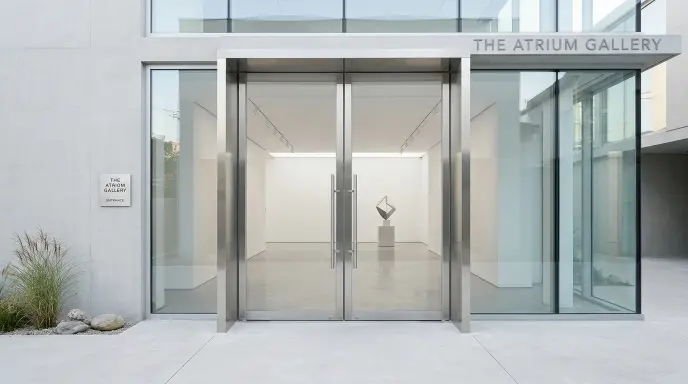
Entry
Meaning: The act or opportunity of entering.
Example: The main entry is on the eastern side of the building.
Best Use: Almost any situation where entrance means entering or a way into a place.
Tone: Neutral and versatile.
Doorway
Meaning: An opening with a door or passage into a room or building.
Example: She stood in the doorway and waved.
Best Use: Physical descriptions.
Tone: Neutral.
Opening
Meaning: An open space that allows entry or passage.
Example: We found a small opening in the wall.
Best Use: Physical spaces where there may not be a formal door.
Tone: Neutral.
Gate
Meaning: A movable barrier that controls entry into an enclosed area.
Example: Please wait outside the main gate.
Best Use: Gardens, schools, stadiums, properties, and outdoor areas.
Tone: Neutral.
Passage
Meaning: A route or opening through which someone can move.
Example: The narrow passage led to the courtyard.
Best Use: Buildings, corridors, tunnels, and literary descriptions.
Tone: Neutral to formal.
Gateway
Meaning: A structure or route that provides access to another place or area.
Example: The historic gateway leads into the old city.
Best Use: Physical locations and figurative writing.
Tone: Neutral or literary.
Way In
Meaning: A simple way of referring to an entrance.
Example: Is there another way in?
Best Use: Everyday conversation.
Tone: Casual and natural.
Approach
Meaning: A route or way used to reach a place.
Example: The northern approach to the building is closed.
Best Use: Roads, buildings, landscapes, and formal descriptions.
Tone: Neutral to formal.
Access
Meaning: The right, opportunity, or means to enter or use something.
Example: Staff have access to the restricted area.
Best Use: Buildings, information, technology, services, and organizations.
Worst Use: It should not automatically replace doorway because it usually focuses on the ability or means to enter rather than the physical structure.
Tone: Professional and neutral.
Arrival
Meaning: The act of reaching a destination.
Example: Her arrival at the ceremony attracted attention.
Best Use: When entrance refers to someone coming into a place or event.
Tone: Neutral.
Informal and Casual Alternatives for Entrance:

Way In
Example: Do you know the easiest way in?
This is one of the most natural casual alternatives when discussing a physical entrance.
Door
Example: I’ll meet you by the front door.
Use door when the physical object itself is the focus.
Coming In
Example: His coming in surprised everyone.
This is conversational and focuses on the action of entering.
Getting In
Example: We had trouble getting in because the gate was locked.
This is highly conversational and should generally be avoided in formal writing.
Front Door
Example: Leave the package by the front door.
This is useful when the entrance specifically refers to the main door of a house or building.
True Synonyms vs. Contextual Alternatives for Entrance:
The word entrance has several meanings, so alternatives should be selected carefully. Dictionaries distinguish physical entry points from permission to enter and from the act of appearing or coming in.
| Type | What It Means | Can It Replace the Original? |
|---|---|---|
| True synonym | Very similar meaning in the same context | Usually |
| Near synonym | Similar but with a small meaning difference | Sometimes |
| Contextual alternative | Works only in a particular situation | Depends |
| Broader expression | Covers a wider idea | Sometimes |
| Narrower expression | Refers to a more specific form | Only when appropriate |
For example, entry is often a close replacement for entrance. Doorway is narrower because it refers to a physical opening. Admission is contextual because it focuses on permission. Arrival is also contextual because it focuses on reaching a destination.
Entrance in Different Contexts:
Physical Entrance
For a physical entrance, words such as doorway, entryway, entranceway, opening, gate, gateway, portal, and way in can work.
Example:
The main entrance is closed.
Possible alternatives:
The main doorway is closed.
The main entryway is closed.
The front gate is closed.
The best option depends on the actual structure.
Building Entrance
For buildings, entry, doorway, entranceway, access point, and entry point are useful.
Example:
The building has two entrances.
A natural alternative is:
The building has two entry points.
Event Entrance
For events, admission is often more appropriate when the focus is permission or payment.
Example:
Entrance to the exhibition is free.
Alternative:
Admission to the exhibition is free.
Here, admission is more precise because the sentence refers to the right or permission to attend.
School or College Entrance
In education, admission is usually more appropriate when discussing acceptance into an institution.
Example:
Entrance to the university is competitive.
Alternative:
Admission to the university is competitive.
The two ideas are related, but admission emphasizes being accepted.
Entrance as an Arrival
When entrance refers to someone appearing or coming into a place, alternatives include arrival, appearance, coming in, and entry.
Example:
Her entrance into the room was unexpected.
Alternative:
Her arrival in the room was unexpected.
The tone and meaning are slightly different. Entrance can emphasize the manner or moment of coming in, while arrival emphasizes reaching the place.
Entrance in Business Writing:
Business writing usually benefits from precise words.
Instead of:
The entrance to the new market was difficult.
You could write:
Entering the new market was difficult.
Or:
Market entry was difficult.
Market entry is especially natural in business writing because it describes participation in a market rather than a physical doorway.
For buildings, however, entrance or access point may be better:
Please use the eastern entrance.
Entrance in Corporate Communication:
Corporate communication often uses entry point, access point, admission, access, and entry depending on the context.
Example:
Employees should use the designated entry point.
For a security notice:
Access to the restricted area is limited to authorized personnel.
These alternatives can sound clearer than repeatedly using entrance.
Entrance in Academic Writing:
Academic writing should favor precision over unnecessary variation.
Examples:
Admission to the program is based on academic performance.
The study identifies several entry points into the research field.
The historical gateway provided access to the city.
Avoid replacing entrance simply to make vocabulary look more advanced. A familiar word is often the better choice if it communicates the idea clearly.
Entrance in Customer Service:
Customer service language should be simple and polite.
Instead of:
Please proceed to the entrance.
You might say:
Please use the main entrance.
Or:
Please enter through the main doors.
If permission is the issue:
Admission is limited to registered guests.
Clear language is usually better than formal-sounding vocabulary.
Entrance in Legal Writing:
Legal writing requires special care because words such as right of entry, access, admission, admittance, and ingress can have more specific meanings.
For example:
The owner retains a limited right of entry.
This is not necessarily equivalent to:
The owner has access.
A legal document should use the exact term required by the relevant agreement or legal context. Casual synonyms should not be substituted merely for stylistic variety.
Entrance in Email Communication:
Client Emails
Please use the main entrance when you arrive at our office.
Internal Workplace Emails
The east entry will remain closed during construction.
Requests and Invitations
Admission to the event is limited to registered guests.
Event-Related Emails
Please enter through the west doorway, where staff will be available to assist you.
Email Examples Using Alternatives for Entrance:
Client Email Using Entry
Subject: Office Entry Instructions
Dear Ms. Taylor,
For your meeting tomorrow, please use the main entry on the east side of the building. Reception will be available to welcome you and direct you to the conference room.
Best,
James
Workplace Email Using Access Point
Subject: Temporary Access Point Change
Hi Team,
Due to construction, the usual entrance will be closed tomorrow morning. Please use the temporary access point near the parking area until further notice.
Thanks,
Mia
Event Email Using Admission
Subject: Admission Details for Friday’s Event
Hello,
Admission to Friday’s event begins at 6:30 p.m. Please have your registration confirmation ready when you arrive.
Best,
Event Team
Customer Email Using Doorway
Subject: Store Entry Information
Dear Customer,
Our main doorway is currently being repaired. Please use the side entrance near the parking lot. Staff will be available to assist you.
Kind regards,
Customer Service
Vendor Email Using Entry Point
Subject: Delivery Entry Point
Hello,
Please use the designated delivery entry point at the rear of the warehouse. A member of our receiving team will meet you there.
Regards,
Operations Team
Short Dialogue Examples:
Workplace Conversation
Person A: Which entrance should I use?
Person B: Use the east entry. The main doors are being repaired.
Classroom Conversation
Person A: Where do students enter for the exam?
Person B: Through the side doorway near the library.
Customer Service Conversation
Person A: Is there another way in?
Person B: Yes. The side entrance is open for customers.
Casual Conversation
Person A: Where’s the entrance?
Person B: Just use the front door.
Professional Discussion
Person A: Which access point should visitors use?
Person B: They should enter through the main lobby.
How to Replace “Entrance” in a Sentence:
Example 1
Original: The entrance to the building is on the left.
Alternative: The entry to the building is on the left.
Why it works: Entry can refer to a way into a building.
Example 2
Original: Admission to the museum is free.
Alternative: Entrance to the museum is free.
Why it works: Both can work, but admission more clearly emphasizes permission or the right to enter.
Example 3
Original: Please use the main entrance.
Alternative: Please use the main doorway.
Why it works: Doorway is appropriate when the physical opening is the focus.
Example 4
Original: The entrance was blocked.
Alternative: The access point was blocked.
Why it works: Access point works when the location functions as a route into an area.
Example 5
Original: Her entrance into the room was dramatic.
Alternative: Her arrival in the room was dramatic.
Why it works: Arrival changes the focus toward reaching the room rather than the manner of entering.
Example 6
Original: The entrance to the university is highly competitive.
Alternative: Admission to the university is highly competitive.
Why it works: Admission is more precise when discussing acceptance into an institution.
Example 7
Original: We couldn’t find the entrance.
Alternative: We couldn’t find the way in.
Why it works: Way in is natural in everyday conversation.
Example 8
Original: The entrance is located behind the garden.
Alternative: The doorway is located behind the garden.
Why it works: Doorway works when the physical opening is specifically meant.
Comparison of Synonyms for Entrance:
| Phrase | Tone | Meaning / Scope | Best Use | Example |
|---|---|---|---|---|
| Entrance | Neutral | General way or act of entering | General writing | Use the main entrance. |
| Entry | Neutral | Act, opportunity, or way of entering | General/business | Use the rear entry. |
| Doorway | Neutral | Physical opening | Buildings | Stand in the doorway. |
| Access | Professional | Right or means of entering/using | Business/technical | Access is restricted. |
| Admission | Formal | Permission to enter | Events/institutions | Admission is free. |
| Admittance | Formal | Permission to enter | Rules/notices | Admittance is restricted. |
| Ingress | Technical | Act or means of entering | Technical writing | Keep the ingress clear. |
| Gateway | Neutral/literary | Route or structure providing access | Places/figurative writing | The gateway leads to the garden. |
| Portal | Formal/literary | Doorway or gateway | Architecture/technology | Enter through the portal. |
| Way in | Casual | A way to enter | Conversation | Is there another way in? |
| Arrival | Neutral | Reaching a place | People/events | Her arrival was unexpected. |
| Entry point | Professional | Specific place of entry | Security/business | Use the designated entry point. |
Which Alternative Should You Choose?
Best for Formal Writing
Use admission, admittance, ingress, entry point, or means of access when the context supports them.
Best for Business Communication
Use entry, access, entry point, or access point.
Best for Academic Writing
Use entry, admission, access, or ingress when the specific meaning requires it.
Best for Legal Writing
Use the exact term required by the legal context, such as right of entry or access, rather than choosing a synonym for style alone.
Best for Professional Emails
Use simple terms such as entrance, entry, doorway, or access point.
Best for Everyday Conversation
Use entrance, door, doorway, or way in.
Best for Casual Messages
Way in, door, and front door usually sound natural.
Grammar and Usage Guide:
Entrance as a Noun
The most common use is as a noun.
The entrance is on the right.
We waited outside the entrance.
Entrance as a Verb
Entrance can also be a verb meaning to deeply fascinate or captivate someone.
The performance entranced the audience.
This meaning is completely different from the noun meaning of a physical entrance. Synonyms in this sense include captivate, enchant, fascinate, enthrall, and mesmerize.
Common Prepositions With Entrance
Common combinations include:
- entrance to the building
- entrance into the room
- entrance to the museum
- entrance into the profession
- entrance through the main gate
Examples:
The entrance to the theater is on Main Street.
She made her entrance into the room.
Entrance vs. Entry
These words overlap, but entry is often broader and can refer to the act or opportunity to enter.
The museum has a separate entrance.
Entry to the museum is free.
The second sentence focuses more on permission or opportunity.
Entrance vs. Admission
Admission is especially useful when someone is permitted to enter an event, institution, or organization.
Admission to the concert costs $20.
Here, admission is more natural than doorway or gateway.
Entrance vs. Access
Access emphasizes the ability, right, or means to enter or use something.
Employees have access to the building.
It does not necessarily identify a physical doorway.
Singular and Plural Forms
The singular is entrance.
The plural is entrances.
The building has one entrance.
The stadium has several entrances.
Capitalization and Punctuation
The word entrance is normally lowercase unless it begins a sentence or appears in a proper name.
Please use the main entrance.
Not:
Please use the Main Entrance.
unless Main Entrance is being used as an official label or sign.
Common Mistakes to Avoid:
Treating Every Alternative as an Exact Synonym
Admission, doorway, and arrival do not always mean exactly the same thing as entrance. Choose based on context.
Confusing Entrance With Admission
A doorway is a physical structure. Admission is permission to enter.
Using Access in the Wrong Context
Access usually refers to the right, ability, opportunity, or means of entering or using something. It does not always mean a physical door.
Choosing an Overly Formal Word
Ingress may be accurate but unnecessary in everyday conversation.
Using Casual Language in Professional Writing
Way in is natural in conversation but may sound too casual in a formal report.
Changing the Original Meaning
Replacing entrance with arrival can shift the meaning from entering to reaching a destination.
Ignoring Context
A school, museum, office, website, and private home may require different alternatives.
Using Vague Alternatives
Words such as opening can be too general if the reader needs to know that the opening is an official entrance.
When Not to Use the Word “Entrance”
When Entry Is More Natural
Use entry when discussing the act or opportunity to enter.
Entry is free after 5 p.m.
When Admission Is More Accurate
Use admission for events, institutions, and organizations when permission or payment is involved.
Admission to the exhibition is free.
When Access Is More Precise
Use access when discussing the right or ability to use or enter something.
Employees have access to the secure area.
When Doorway Is Better
Use doorway when you specifically mean the physical opening.
She stood in the doorway.
When a Casual Expression Fits Better
Use way in in ordinary conversation.
Where’s the way in?
When Entrance Is Actually the Better Choice
Do not replace entrance just for the sake of variety. If the word is clear and accurate, keeping it is often the best option.
Advanced Writer Tips:
Tone Control
Choose words based on the audience. Doorway and entry are simple and neutral. Ingress is technical. Admittance is formal. Way in is conversational.
Professional Email Etiquette
Use direct wording:
Please use the east entrance.
This is usually better than an unnecessarily complicated phrase such as:
Kindly proceed toward the designated means of ingress.
Politeness
The noun itself does not determine politeness. The surrounding sentence does.
Compare:
Use the side entrance.
with:
Please use the side entrance when you arrive.
The second sounds softer because of the polite framing.
Context Alignment
Always ask what entrance means in the sentence:
- Physical structure?
- Act of entering?
- Permission?
- Arrival?
- Route?
- Access?
Once you identify the meaning, choosing a synonym becomes much easier.
Readability
Do not choose a complicated synonym when a common word communicates the idea better.
Please use the main entrance.
is clearer than:
Please utilize the principal ingress.
Related Questions About Synonyms for Entrance:
What Is Another Way to Say Entrance?
Common alternatives include entry, doorway, access, opening, gateway, passage, way in, entranceway, and entry point. The best option depends on whether you mean a physical place, a route, the act of entering, or permission to enter.
What Is a Professional Alternative to Entrance?
Entry, access point, entry point, means of access, and admission can work in professional contexts. Choose the one that matches the exact meaning instead of selecting a word simply because it sounds more formal.
What Is a Formal Alternative to Entrance?
Ingress, admittance, admission, and right of entry can be formal alternatives. However, they have different meanings and should not be treated as interchangeable.
Is Entrance a Formal Word?
No. Entrance is a standard neutral English word. It works in casual conversation, professional writing, academic writing, and many other contexts. More specialized alternatives such as ingress are more formal or technical.
What Is the Difference Between Entrance and Entry?
Both words can describe entering a place, but entrance commonly refers to a physical way in or the act of entering, while entry can also refer to the opportunity or right to enter. Context determines which sounds more natural.
What Is the Difference Between Entrance and Admission?
Entrance can refer to a physical way in, an act of entering, or permission to enter. Admission more strongly emphasizes permission, acceptance, or the right to enter an event, institution, or organization.
Frequently Asked Questions:
What is the best synonym for entrance?
Entry is one of the closest general alternatives. However, doorway is better for a physical opening, admission for permission to enter, and access for the right or ability to enter or use something.
Is entry the same as entrance?
They overlap, but they are not identical in every context. Entry can describe the act or opportunity to enter, while entrance commonly describes a physical way into a place or the act of coming in.
What is a formal word for entrance?
Ingress and admittance are formal alternatives in specific contexts. Admission is also formal or neutral depending on the sentence. Avoid using specialized words when the simple word entrance is clearer.
What is another word for a building entrance?
Depending on the structure, you can use entry, doorway, entryway, entranceway, access point, portal, gate, or gateway. A doorway is best when you specifically mean the opening around a door.
What is the difference between entrance and admission?
Entrance can refer to the physical location or the act of entering. Admission usually emphasizes permission, acceptance, or the right to enter, especially for events and institutions.
Can access replace entrance?
Sometimes. Access works when you mean the ability, right, or means of entering. It is not a direct replacement when you are talking about a physical doorway.
What is a casual way to say entrance?
Way in is a common casual alternative.
Do you know where the way in is?
For a home or building, front door or simply door may also work.
Key Takeaways:
- Entry is one of the most versatile alternatives to entrance.
- Use doorway or entryway when referring to a physical opening.
- Use admission or admittance when permission to enter is the main idea.
- Use access when referring to the right, ability, or means of entering or using something.
- Choose synonyms according to meaning, audience, tone, and context rather than simply replacing words.
Conclusion:
The best synonym for entrance depends on what you actually mean. If you are talking about a general act or opportunity to enter, entry is often a strong choice. For a physical opening, doorway, entryway, or entranceway may be more precise.
When permission or acceptance is involved, admission and admittance are better options. For the ability or means to enter or use something, access is usually more accurate.
More specialized words such as ingress, portal, and right of entry have their own uses and should not be treated as universal replacements. In casual conversation, simple expressions such as way in can sound more natural.
The key is not to choose the most sophisticated word. Choose the word that preserves the original meaning and fits the situation. A clear, familiar word is often stronger than an unnecessarily formal synonym.