
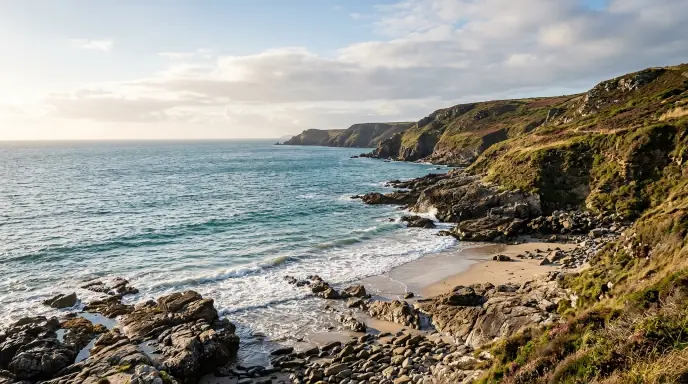
The word shore usually means the land along the edge of a sea, ocean, lake, or other large body of water. It can describe a sandy beach, a rocky coastline, or simply the area where land meets water. Because the exact meaning can change with context, writers may need a more precise word or phrase.
Useful alternatives include coast, coastline, beach, seashore, waterfront, bank, edge, strand, seaside, and lakeside. However, these words are not always interchangeable. Some refer specifically to oceans, while others work better for rivers, lakes, or general water edges. This guide explains the differences so you can choose the most natural option for your sentence.
Quick Answer
Common synonyms for shore include coast, coastline, beach, seashore, seaside, waterfront, strand, water’s edge, bank, lakeside, riverside, coastland, and littoral zone. The best choice depends on the setting. Coast works well for a sea or ocean, while bank is usually better for a river or lake.
Quick List of Synonyms for Shore:
Closest Alternatives
- Coast
- Coastline
- Seashore
- Beach
- Seaside
- Waterfront
- Strand
- Water’s edge
- Coastland
- Littoral
Contextual Alternatives
- Bank
- Riverside
- Lakeside
- Lakefront
- Riverbank
- Waterside
- Oceanfront
- Seaboard
- Coastal area
- Waterfront area
More Descriptive Alternatives
- Sandy beach
- Rocky coast
- Coastal edge
- Coastal strip
- Waterline
- Shoreline
- Land beside the water
- Edge of the water
Formal Alternatives for Shore:
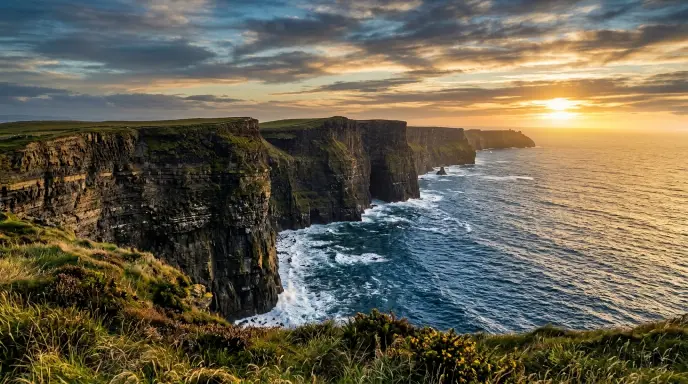
Coast
Meaning: The land bordering a sea or ocean.
Explanation: Coast is one of the closest alternatives to shore when talking about a large body of salt water. It often describes a larger geographical area rather than a small piece of land.
Example: The town sits along the northern coast.
Best Use: Geography, travel writing, news, and formal descriptions.
Worst Use: A small river edge, where bank is usually more precise.
Tone: Neutral and professional.
Coastline
Meaning: The boundary where land meets the sea.
Explanation: Coastline emphasizes the shape or boundary of the land next to the ocean. It is often more geographical than shore.
Example: The coastline stretches for hundreds of miles.
Best Use: Geography, environmental writing, travel articles, and reports.
Worst Use: A sentence describing someone standing on a small sandy beach.
Tone: Neutral to formal.
Seashore
Meaning: The land directly beside the sea.
Explanation: Seashore is very close to shore but specifically connects the word with the sea. It can sound slightly more literary than ordinary shore.
Example: The children collected shells along the seashore.
Best Use: Descriptive writing, nature writing, and general references to the sea.
Worst Use: A freshwater lake or river.
Tone: Neutral and slightly literary.
Seaside
Meaning: An area beside the sea, especially one used for recreation.
Explanation: Seaside often describes a location, atmosphere, or community rather than the exact physical edge of the water.
Example: They spent the weekend in a quiet seaside town.
Best Use: Travel writing and descriptions of coastal places.
Worst Use: Technical geography where a precise physical boundary is needed.
Tone: Friendly and descriptive.
Littoral
Meaning: Relating to the area close to the shore of a sea or lake.
Explanation: Littoral is a specialized term rather than an everyday replacement for shore. It is useful when discussing coastal or aquatic environments.
Example: Littoral habitats support many species of birds and plants.
Best Use: Scientific, environmental, and academic writing.
Worst Use: Casual conversation.
Tone: Technical and formal.
Seaboard
Meaning: A region bordering the sea.
Explanation: Seaboard generally describes a broad coastal region rather than a specific point along the water.
Example: Several cities developed rapidly along the eastern seaboard.
Best Use: Geography, history, and formal regional descriptions.
Worst Use: A sentence about sitting beside the water.
Tone: Formal.
Coastland
Meaning: Land located near a coast.
Explanation: Coastland focuses on the land area associated with a coast. It is less common than coast or coastal area.
Example: The region’s coastland supports fishing communities.
Best Use: Geographic or descriptive writing.
Worst Use: Everyday conversation, where coast or coastal area sounds more natural.
Tone: Formal.
Waterfront
Meaning: Land or buildings located directly beside a body of water.
Explanation: Waterfront can refer to an ocean, lake, river, or harbor. It often describes developed areas rather than untouched natural shore.
Example: The city renovated its historic waterfront.
Best Use: Urban planning, real estate, travel, and city descriptions.
Worst Use: A remote natural coastline when development is not relevant.
Tone: Neutral and professional.
Strand
Meaning: A shore or beach, especially a sandy one.
Explanation: Strand is a traditional or literary word for a beach or shore. It is less common in ordinary American English.
Example: They walked along the quiet strand at sunset.
Best Use: Literary, poetic, and descriptive writing.
Worst Use: Formal technical writing where a simpler word is clearer.
Tone: Literary.
Water’s Edge
Meaning: The exact place where land meets water.
Explanation: This phrase is more precise than shore when the writer wants to emphasize the boundary between land and water.
Example: The boat was waiting at the water’s edge.
Best Use: Descriptive writing and precise physical descriptions.
Worst Use: A broad geographical region.
Tone: Neutral.
Semi-Formal and Neutral Alternatives:
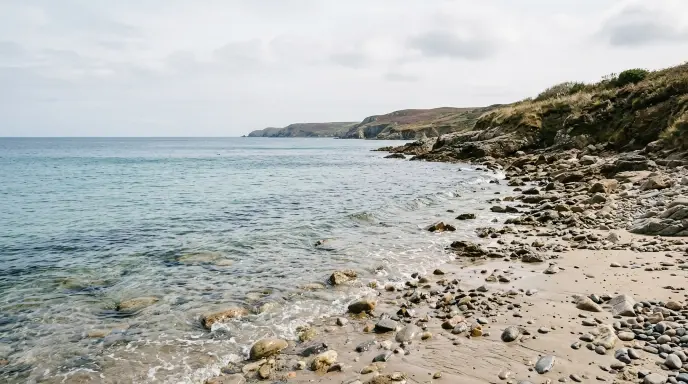
Beach
Meaning: A shore covered mainly with sand, pebbles, or similar material.
Example: We spent the afternoon on the beach.
Best Use: Everyday conversation and travel writing.
Worst Use: A rocky coastline where there is no actual beach.
Tone: Neutral and familiar.
Shoreline
Meaning: The line or boundary where land meets water.
Example: Construction near the shoreline is strictly controlled.
Best Use: Environmental, geographic, and everyday writing.
Worst Use: When referring to a broad coastal region.
Tone: Neutral.
Bank
Meaning: The land along the side of a river, stream, or sometimes lake.
Example: We sat on the riverbank and watched the boats.
Best Use: Rivers and streams.
Worst Use: Most ocean contexts.
Tone: Neutral.
Riverbank
Meaning: The land directly beside a river.
Example: Wildflowers grew along the riverbank.
Best Use: Rivers.
Worst Use: Seas and oceans.
Tone: Neutral.
Lakeside
Meaning: The area beside a lake.
Example: They rented a lakeside cabin.
Best Use: Lakes and lake communities.
Worst Use: Ocean settings.
Tone: Neutral and descriptive.
Lakefront
Meaning: Land or property directly beside a lake.
Example: The hotel offers beautiful lakefront views.
Best Use: Real estate, tourism, and property descriptions.
Worst Use: Rivers or oceans.
Tone: Neutral and professional.
Riverside
Meaning: Located beside a river.
Example: We found a quiet riverside park.
Best Use: Places, buildings, and activities near rivers.
Worst Use: Describing an ocean beach.
Tone: Neutral.
Waterside
Meaning: Located beside water.
Example: The restaurant has a pleasant waterside patio.
Best Use: General descriptions when the specific body of water is not important.
Worst Use: Technical writing requiring geographic precision.
Tone: Neutral and descriptive.
Oceanfront
Meaning: Directly facing or bordering the ocean.
Example: They booked an oceanfront hotel room.
Best Use: Travel, hotels, real estate, and tourism.
Worst Use: Rivers or lakes.
Tone: Neutral and commercial.
Informal and Casual Alternatives:
The word shore itself is already common in everyday English, so it does not have many special slang replacements. Most casual alternatives depend on the type of water or the physical setting.
Beach
Meaning: A familiar term for a sandy or pebbly shore.
Example: Let’s walk down to the beach.
When It Sounds Natural: Everyday conversation and casual messages.
When to Avoid It: When the area is rocky or does not technically form a beach.
Tone: Casual and friendly.
Waterfront
Meaning: An area beside water, often in a town or city.
Example: Let’s grab dinner by the waterfront.
When It Sounds Natural: Casual travel and social conversations.
When to Avoid It: When referring to a completely natural shoreline.
Tone: Casual to neutral.
Water’s Edge
Meaning: The place where land meets water.
Example: We sat at the water’s edge for a while.
When It Sounds Natural: Relaxed conversations and descriptive writing.
When to Avoid It: When you need to describe an entire coastal region.
Tone: Casual and descriptive.
True Synonyms vs Contextual Alternatives:
| Type | What It Means | Can It Replace the Original? |
|---|---|---|
| True synonym | A word with nearly the same core meaning | Usually |
| Near synonym | A word with closely related meaning | Sometimes |
| Contextual alternative | Works only in certain settings | Only in the right context |
| Broader expression | Covers a wider area or idea | Not always |
| Narrower expression | Refers to a specific type of shore | Only in specific contexts |
For example, coast can often replace shore when discussing an ocean. However, bank is not a universal synonym because it usually refers to the edge of a river or stream. Likewise, beach is narrower because a beach is one particular type of shore.
Business Writing:
Business writing usually benefits from precise terms.
Waterfront
Use waterfront when discussing commercial property, restaurants, hotels, or urban development.
Example: The company plans to develop a new waterfront retail district.
Lakefront
Use lakefront when property or business activity is directly connected to a lake.
Example: The resort offers premium lakefront accommodations.
Coastal Area
Use coastal area when discussing a broad geographic business market.
Example: The company expanded its services into several coastal areas.
Corporate Communication:
Corporate reports often need geographical precision.
Example
Instead of:
The company operates near the shore.
A more specific version might be:
The company operates along the coastline.
Or:
The company operates in several coastal communities.
The best option depends on whether you mean a physical water boundary, a coastal region, or a community near the sea.
Academic Writing:
Academic writing should favor precise terminology.
Shoreline
Shoreline works well in environmental studies and geography.
Example: Researchers measured changes in the shoreline over several years.
Littoral Zone
Littoral zone is appropriate in scientific contexts involving aquatic ecosystems.
Example: The study examined plant diversity within the lake’s littoral zone.
Coastal Zone
Coastal zone works when discussing a broader area affected by coastal processes.
Example: Rising sea levels may significantly affect the coastal zone.
Avoid replacing shore with technical terminology unless the technical meaning is actually intended.
Customer Service:
Customer-facing communication should remain simple.
Example
Instead of:
Your hotel is adjacent to the littoral zone.
Say:
Your hotel is located near the beach.
Or:
Your hotel is right by the waterfront.
Simple words are usually clearer for customers.
Legal Writing:
Legal and regulatory writing requires special care. Terms such as shoreline, coastal boundary, riverbank, waterfront, and littoral zone may have specific meanings in particular laws or regulations.
Do not replace shore with another term merely for variety when the wording defines property, boundaries, rights, or regulations. The correct legal term depends on the relevant jurisdiction and document.
Email Communication:
Client Communication
A professional email might use waterfront when discussing a property.
Example: The proposed development will create new waterfront access for residents.
Project Update
Example: The survey team has completed its assessment of the shoreline.
Customer Service
Example: The property is located within walking distance of the beach.
Vendor Communication
Example: Please confirm whether the equipment can operate safely in coastal areas.
Email Examples:
Client Property Email
Subject: Waterfront Property Update
Hello Sarah,
We have completed the initial review of the waterfront property. The next step is to evaluate access, parking, and the condition of the surrounding area.
I’ll send the site assessment once those checks are complete.
Best,
Daniel
Environmental Project Email
Subject: Shoreline Assessment
Hello Mark,
The team has completed the shoreline assessment for the eastern section of the site. We identified several areas that may require additional monitoring after heavy rainfall.
I’ll include the findings in Friday’s project report.
Best,
Rachel
Academic Email
Subject: Coastal Research Project
Hello Professor Adams,
I have revised the section of my paper covering coastal habitats. I replaced several general references to the shore with more precise terms such as coastline and littoral zone where appropriate.
Thank you for your feedback.
Best,
Emily
Customer Service Email
Subject: Your Beach Access Question
Hello James,
Thank you for contacting us. The hotel is located close to the beach, and guests can reach the waterfront through the main walkway.
Please let us know if you need directions before your arrival.
Best,
Customer Support Team
Vendor Email
Subject: Coastal Site Requirements
Hello David,
Could you please confirm whether the equipment is suitable for installation in a coastal area? We are reviewing the environmental requirements before approving the order.
Thank you,
Michael
Short Dialogue Examples:
Workplace
Person A: Where is the new office building?
Person B: It’s near the waterfront, beside the old harbor.
Classroom
Person A: What’s the difference between a shore and a bank?
Person B: A bank usually describes the land beside a river or stream, while shore is broader.
Customer Service
Person A: Is the hotel close to the beach?
Person B: Yes. It’s only a five-minute walk from the beach.
Casual Conversation
Person A: Where did you spend the afternoon?
Person B: We walked along the shoreline and watched the sunset.
Professional Discussion
Person A: Should we call this area a beach?
Person B: Not exactly. It’s mostly rocky, so shoreline would be more accurate.
How to Replace Shore in a Sentence:
Example 1
Original: We walked along the shore.
Alternative: We walked along the coastline.
Why it works: Coastline works well when the setting is an ocean or sea, but it suggests a broader geographic boundary.
Example 2
Original: They sat on the shore of the lake.
Alternative: They sat beside the lake.
Why it works: Beside the lake is simple and natural, although it is less specific than shore.
Example 3
Original: The village is near the shore.
Alternative: The village is near the coast.
Why it works: Coast is appropriate when the village is beside the sea or ocean.
Example 4
Original: The children played on the shore.
Alternative: The children played on the beach.
Why it works: Beach is more precise if the shore is sandy or suitable for recreation.
Example 5
Original: The house is close to the shore.
Alternative: The house is close to the waterfront.
Why it works: Waterfront is useful for property and real-estate descriptions.
Example 6
Original: We camped beside the shore of the river.
Alternative: We camped beside the riverbank.
Why it works: Riverbank specifically identifies the land beside a river.
Example 7
Original: The boat stopped near the shore.
Alternative: The boat stopped near the water’s edge.
Why it works: Water’s edge emphasizes the exact boundary between land and water.
Example 8
Original: Pollution is affecting the shore.
Alternative: Pollution is affecting the shoreline.
Why it works: Shoreline sounds more precise in environmental and scientific writing.
Comparison Table:
| Phrase | Tone | Meaning / Scope | Best Use | Example |
|---|---|---|---|---|
| Shore | Neutral | Land beside water | General use | We walked along the shore. |
| Coast | Neutral | Land beside sea or ocean | Geography | They live on the coast. |
| Coastline | Formal-neutral | Boundary of land and sea | Geography | The coastline is rugged. |
| Beach | Casual-neutral | Sandy or pebbly shore | Recreation | We visited the beach. |
| Seashore | Neutral | Shore beside the sea | Descriptive writing | They explored the seashore. |
| Waterfront | Neutral | Developed or accessible area beside water | Business/travel | The hotel faces the waterfront. |
| Bank | Neutral | Edge of a river or stream | Rivers | We sat on the riverbank. |
| Lakeside | Neutral | Area beside a lake | Travel | They rented a lakeside cabin. |
| Shoreline | Neutral-formal | Boundary where land meets water | Environment | The shoreline is changing. |
| Littoral | Formal | Near-shore aquatic area | Science | Littoral habitats are diverse. |
| Strand | Literary | Beach or shore | Creative writing | They walked along the strand. |
Which Alternative Should You Choose?
For Formal Writing
Choose coastline, seashore, shoreline, coastal area, or littoral zone depending on the exact meaning.
For Business Communication
Use waterfront, coastal area, lakefront, or coastline when they accurately describe the situation.
For Academic Writing
Prefer precise terms such as shoreline, coastline, coastal zone, or littoral zone where appropriate.
For Legal Writing
Use the terminology defined by the relevant document or law. Do not substitute words simply for stylistic variety.
For Professional Email
Shoreline, coast, waterfront, and beach are usually clear choices, depending on the context.
For Everyday Conversation
Shore, beach, coast, lakeside, and waterfront are natural choices.
For Casual Messages
Beach is often the simplest choice when referring to a recreational ocean or lake shore.
Grammar and Usage Guide:
Shore as a Noun
Shore is most commonly used as a noun.
Example: We sat on the shore.
Shore of + Body of Water
The structure shore of + water body is common.
Example: They live near the shore of the lake.
You can also say:
Example: They live near the lake shore.
On the Shore
Use on the shore when describing a position on the land beside water.
Example: The boat is resting on the shore.
Along the Shore
Use along the shore for movement or something extending beside the water.
Example: We walked along the shore.
Shoreline
Shoreline is generally written as one word.
Example: The shoreline has changed significantly.
Shores
The plural shores can refer to different sides or coastal regions.
Example: People gathered from distant shores.
Capitalization
Shore is not normally capitalized unless it begins a sentence or forms part of a proper name.
Correct: We walked along the shore.
Correct: The Shore Hotel hosted the event.
Common Mistakes to Avoid:
Calling Every Shore a Beach
A beach is a specific type of shore. Rocky cliffs and muddy edges can also be shores.
Using Bank for the Ocean
Bank is normally associated with rivers and streams and is not a natural replacement for ocean shore.
Treating Coast and Shore as Identical
They overlap, but coast can describe a much larger geographic region.
Using Littoral in Casual Conversation
Littoral is technical. Most everyday readers will find shore or shoreline easier.
Using Waterfront for Untouched Nature
Waterfront often suggests a developed or accessible area. It may not accurately describe a remote natural coast.
Choosing Beach for a Rocky Area
If there is no sandy or pebbly beach, shoreline or shore may be more accurate.
Ignoring the Body of Water
Always consider whether you mean an ocean, sea, lake, river, or stream.
Changing Meaning for Variety
Do not replace shore merely to avoid repetition if the new word changes the meaning.
When Not to Use the Original Word Shore:
When You Need Geographic Precision
Use coastline if you specifically mean the boundary between land and sea.
When You Mean a River Edge
Use riverbank or bank.
When You Mean a Sandy Recreational Area
Use beach.
When You Mean a Developed Area Beside Water
Use waterfront.
When You Need a Scientific Term
Use littoral zone only when the technical concept is intended.
When You Mean a Lake Property
Use lakefront when describing land or property directly beside a lake.
The original word shore remains the better choice when you want a simple, broad term for land bordering a body of water.
Advanced Writer Tips:
Tone Control
Choose shore for natural, general writing. Use coastline for a more geographic tone and strand for a literary feel.
Professional Email Etiquette
Choose the clearest term rather than the fanciest one. Shoreline is often better than littoral zone when your audience is not technical.
Politeness
These alternatives do not usually change politeness by themselves. Clarity and sentence structure have a greater effect on professional tone.
Context Alignment
Think about the body of water and purpose before choosing a synonym. Riverbank is more accurate than shore for many river-related descriptions.
Precision
Ask what you actually mean: the entire coastal region, the physical boundary, a beach, or a developed waterfront. Then choose the term that matches.
Readability
Simple words such as shore, beach, coast, and waterfront are usually easier for general readers than specialized terms.
Related Questions:
What Is Another Way to Say Shore?
Common alternatives include coast, coastline, beach, seashore, shoreline, waterfront, seaside, strand, and water’s edge. The right choice depends on the body of water and the exact meaning intended.
What Is a Professional Alternative to Shore?
Shoreline, coastline, coastal area, and waterfront can work well in professional writing. Choose based on meaning rather than formality alone.
What Is a Formal Alternative to Shore?
Coastline, seashore, seaboard, and littoral can provide more formal or technical wording. However, shore itself is not informal and is perfectly acceptable in professional writing.
Is Shore a Formal Word?
No. Shore is a standard neutral English word. It works in casual conversation, professional writing, journalism, literature, and academic contexts.
Can Beach Replace Shore?
Sometimes. Beach is narrower because it describes a particular type of shore, usually covered by sand, pebbles, or similar material.
What Is the Difference Between Shore and Coast?
A shore is generally the land directly beside a body of water, while a coast usually refers to land bordering a sea or ocean and can describe a much larger region.
What Is the Difference Between Shore and Shoreline?
Shore refers to the land beside water, while shoreline emphasizes the boundary or line where land and water meet.
FAQs:
What is the closest synonym for shore?
Coast is one of the closest alternatives when referring to the land beside a sea or ocean. For a general body of water, shoreline or water’s edge may be more appropriate depending on the sentence.
Is shoreline the same as shore?
They are closely related but not identical. Shore refers to the land beside water, while shoreline focuses more specifically on the boundary between land and water.
Is beach another word for shore?
Beach can be a type of shore, but the terms are not exact equivalents. A beach is generally sandy or pebbly, while a shore can also be rocky, muddy, or covered by other materials.
What is the synonym for shore of a river?
Bank or riverbank is usually the most natural choice for the land along a river. Shore can also be used, but bank is often more specific.
What is the synonym for shore of a lake?
Depending on context, you can use lakeside, lakefront, shoreline, or bank. Shore remains a natural general term, while lakefront often emphasizes property or location.
What is a poetic word for shore?
Strand can work as a poetic or literary alternative. Seashore can also create a more descriptive or traditional tone.
Which word is best for SEO content?
There is no single best replacement. Use the word that matches the searcher’s intended meaning. Beach, coast, shoreline, waterfront, and lakeside each serve different contexts and should not be inserted merely as keywords.
Key Takeaways:
- Shore is a neutral word for land beside a body of water.
- Coast and coastline are especially useful for seas and oceans.
- Beach is a narrower term describing a particular kind of shore.
- Bank is usually more precise for rivers and streams.
- Choose alternatives according to meaning, audience, tone, and the type of water.
Conclusion:
Choosing a synonym for shore is not simply a matter of finding another word that looks similar in a dictionary. The best choice depends on what you actually mean. Coast works well for broad ocean or sea regions, while coastline focuses on the boundary between land and sea. Beach describes a specific type of shore, and bank is usually more suitable for rivers and streams.
Words such as waterfront, lakefront, shoreline, seaside, and strand add useful distinctions in particular settings.
For everyday writing, simple terms such as shore, beach, coast, and waterfront are usually the clearest. Academic and environmental writing may benefit from more precise words such as shoreline or littoral zone.
The key is accuracy: do not choose a synonym just because it sounds more sophisticated. Choose the word that preserves your intended meaning and fits your audience naturally.