
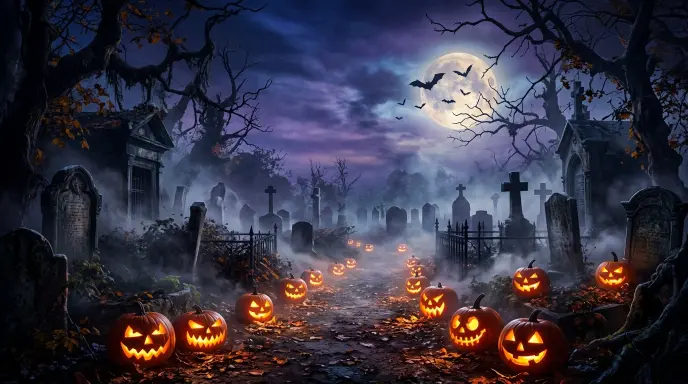
Halloween is the familiar name for the holiday celebrated on October 31, often associated with costumes, trick-or-treating, pumpkins, spooky decorations, parties, and supernatural themes.
If you are looking for synonyms for Halloween, however, it helps to know that there are only a few true alternatives. Many other expressions are historical names, related observances, or descriptive phrases rather than exact synonyms.
People may search for alternatives to Halloween when writing invitations, school activities, blog posts, stories, marketing copy, captions, or educational material. The best choice depends on your audience and purpose. All Hallows’ Eve is the closest traditional alternative, while phrases such as spooky season, Halloween night, and costume night are contextual expressions with slightly different meanings.
Quick Answer
The closest synonym for Halloween is All Hallows’ Eve, the traditional name for October 31, the evening before All Saints’ Day. Other alternatives include Hallowe’en, All Hallows Eve, Halloween night, spooky season, and costume night. Some terms, such as Samhain, are historically related but should not be treated as exact synonyms.
Quick List of Halloween Alternatives:
Closest and Traditional Alternatives
- All Hallows’ Eve
- All Hallows Eve
- Hallowe’en
- All-Hallows’ Eve
- All Hallows’ Evening
- Halloween Eve
Neutral and Contextual Alternatives
- Halloween night
- Halloween celebration
- Halloween holiday
- Halloween observance
- Halloween festivities
- Halloween event
- Halloween gathering
- Halloween party
- Halloween season
- October 31 celebration
Casual and Modern Expressions
- Spooky season
- Spooky night
- Costume night
- Trick-or-treat night
- Fright night
- Scary season
- Haunted night
- Pumpkin season
- Costume season
- Spooky festivities
Related Historical or Cultural Terms
- Samhain
- All Saints’ Eve
- All Souls’ Eve
- Celtic harvest festival
- Autumn festival
These historical terms require care because they do not all mean exactly the same thing as Halloween.
Formal Alternatives:

Halloween is not normally a formal word that needs replacing. In professional, academic, or educational writing, a descriptive phrase may sometimes be more appropriate.
All Hallows’ Eve
Meaning:
A traditional name for the evening of October 31, before All Saints’ Day.
Explanation:
This is the closest traditional equivalent to Halloween. It has historical and religious associations and sounds more formal or old-fashioned than Halloween.
Example:
The village holds a candlelight service on All Hallows’ Eve.
Best Use:
Historical writing, religious contexts, literature, and traditional descriptions.
Worst Use:
A casual social-media post where a simple Halloween would sound more natural.
Tone:
Traditional, formal, historical.
Hallowe’en
Meaning:
An older spelling of Halloween.
Explanation:
Hallowe’en comes from the same historical expression as Halloween and is not a different holiday. The apostrophe reflects the shortening of the original form.
Example:
The children gathered for a Hallowe’en celebration.
Best Use:
Historical writing, literary work, traditional-style copy, and older texts.
Worst Use:
Modern business copy where contemporary spelling is preferable.
Tone:
Traditional and slightly literary.
All Hallows Eve
Meaning:
A spelling variation of All Hallows’ Eve.
Explanation:
It refers to October 31. The version without the apostrophe is commonly seen, although All Hallows’ Eve is a traditional possessive form.
Example:
The story takes place on All Hallows Eve.
Best Use:
Creative writing, historical references, and themed events.
Worst Use:
Situations requiring strict modern terminology if the audience expects simple language.
Tone:
Traditional and atmospheric.
Halloween Observance
Meaning:
The act of observing or celebrating Halloween.
Explanation:
This is a descriptive phrase rather than a true synonym. It emphasizes the practice or occasion rather than the name of the holiday itself.
Example:
The school announced its Halloween observance for October 31.
Best Use:
School notices, institutional writing, and formal announcements.
Worst Use:
Friendly conversations where it may sound unnecessarily formal.
Tone:
Formal and neutral.
Halloween Celebration
Meaning:
An event or activity held to celebrate Halloween.
Explanation:
This phrase describes the celebration rather than replacing the holiday’s name.
Example:
The community center is hosting a Halloween celebration.
Best Use:
Event announcements, school communication, and community programs.
Worst Use:
When you simply mean the holiday itself.
Tone:
Professional and neutral.
Halloween Festivities
Meaning:
The activities and celebrations associated with Halloween.
Explanation:
Festivities can include parties, decorations, costumes, games, and public events. It is broader than the word Halloween.
Example:
The town prepared several activities for the Halloween festivities.
Best Use:
Event descriptions, articles, newsletters, and promotional writing.
Worst Use:
When referring to October 31 itself rather than its activities.
Tone:
Polished and descriptive.
Celebration
Meaning:
A celebration taking place on October 31.
Explanation:
This expression identifies the date rather than naming Halloween directly. It can work when clarity is more important than traditional naming.
Example:
The library will host an October 31 celebration for local families.
Best Use:
Neutral announcements and family-friendly event descriptions.
Worst Use:
Historical or religious writing where the traditional name matters.
Tone:
Neutral and straightforward.
Halloween Event
Meaning:
A planned activity or gathering connected with Halloween.
Explanation:
This is not a direct synonym for Halloween. It specifically means an event related to the holiday.
Example:
The company is organizing a Halloween event for employees.
Best Use:
Business announcements, calendars, schools, and community pages.
Worst Use:
As a replacement for Halloween in every sentence.
Tone:
Professional and neutral.
Halloween Activities
Meaning:
Things people do as part of Halloween celebrations.
Explanation:
The phrase focuses on activities such as carving pumpkins, dressing up, and trick-or-treating.
Example:
The classroom planned several Halloween activities for students.
Best Use:
Education, parenting content, activity guides, and school websites.
Worst Use:
When you mean the holiday itself.
Tone:
Neutral and practical.
Halloween Observance Day
Meaning:
A descriptive reference to a day on which Halloween is observed.
Explanation:
This is not a standard replacement for Halloween. It is mainly useful when an organization wants formal, descriptive language.
Example:
The center will close early during its Halloween observance.
Best Use:
Institutional or administrative communication.
Worst Use:
Normal conversation, where it sounds stiff.
Tone:
Formal and administrative.
Semi-Formal and Neutral Alternatives:
Halloween Night
Meaning:
The night of October 31.
Example:
We watched a classic horror movie on Halloween night.
Best Use:
Stories, articles, captions, and everyday writing.
Worst Use:
When referring to the entire holiday season.
Tone:
Natural and neutral.
Halloween Season
Meaning:
The period when Halloween-related activities take place.
Example:
The store sells decorations throughout the Halloween season.
Best Use:
Retail, marketing, blogs, and seasonal content.
Worst Use:
When referring specifically to October 31.
Tone:
Neutral and seasonal.
Halloween Festivities
Meaning:
The celebrations and activities connected to Halloween.
Example:
Families enjoyed the Halloween festivities downtown.
Best Use:
Events, community writing, and articles.
Worst Use:
As an exact substitute for the holiday’s name.
Tone:
Friendly and polished.
Halloween Gathering
Meaning:
A social gathering organized around Halloween.
Example:
They invited their neighbors to a small Halloween gathering.
Best Use:
Invitations and social announcements.
Worst Use:
When no gathering is involved.
Tone:
Warm and neutral.
Halloween Party
Meaning:
A party held to celebrate Halloween.
Example:
Our office is having a Halloween party on Friday.
Best Use:
Social events, invitations, and workplace activities.
Worst Use:
When talking about Halloween generally.
Tone:
Casual to neutral.
Festivities
Meaning:
Activities and celebrations taking place on October 31.
Example:
The city has planned several October 31 festivities.
Best Use:
Public announcements and event descriptions.
Worst Use:
Casual conversation.
Tone:
Neutral and descriptive.
Costume Season
Meaning:
A playful expression for the period associated with Halloween costumes.
Example:
Costume season is here, so the children are already choosing outfits.
Best Use:
Marketing, blogs, social media, and casual writing.
Worst Use:
Formal academic writing.
Tone:
Playful and casual.
Trick-or-Treat Night
Meaning:
The evening when children traditionally go from house to house asking for treats.
Example:
The neighborhood becomes busy on trick-or-treat night.
Best Use:
Parenting content, community notices, and children’s activities.
Worst Use:
When referring to Halloween as a whole.
Tone:
Friendly and family-oriented.
Spooky Season
Meaning:
A casual expression for the period leading up to Halloween and Halloween itself.
Example:
The café added seasonal drinks for spooky season.
Best Use:
Social media, blogs, entertainment, marketing, and casual conversation.
Worst Use:
Academic papers, formal reports, and precise historical writing.
Tone:
Casual, playful, modern.
Fright Night
Meaning:
A playful phrase suggesting an evening centered on frightening or spooky entertainment.
Example:
The theater advertised a special fright night for horror fans.
Best Use:
Entertainment, themed events, horror content, and creative marketing.
Worst Use:
As a precise synonym for Halloween.
Tone:
Playful and dramatic.
Informal and Casual Alternatives:
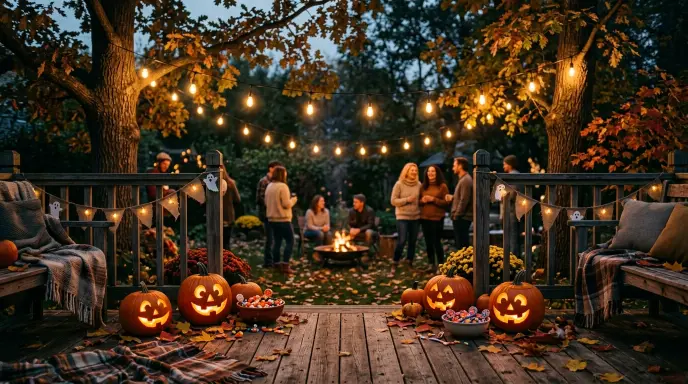
Spooky Season
This is one of the most common modern expressions associated with Halloween. It usually describes a broader period rather than October 31 alone.
Example:
I love decorating the house during spooky season.
Use it for social posts, friendly messages, blogs, and entertainment content. Avoid it in formal academic or legal writing.
Costume Night
Meaning:
A night when people dress in costumes.
Example:
The school is planning a costume night for students.
It is useful for event descriptions but does not necessarily mean Halloween.
Spooky Night
Meaning:
A playful description of a spooky evening.
Example:
We are planning a spooky night with movies and games.
It works in casual writing but is too vague to serve as a precise replacement for Halloween.
Scary Season
Meaning:
A playful description of the Halloween period.
Example:
Scary season has officially arrived at the movie theater.
It is informal and works best in entertainment or social-media content.
Pumpkin Season
Meaning:
A casual expression for autumn, especially the period associated with pumpkins and Halloween.
Example:
Pumpkin season is my favorite time of year.
It should not be treated as a direct synonym because it can refer to autumn more generally.
True Synonyms vs. Contextual Alternatives:
Not every Halloween-related phrase can replace Halloween in the same sentence. Some describe the date, some describe an event, and others describe a wider season.
| Type | What It Means | Can It Replace the Original? |
|---|---|---|
| True synonym | An expression with essentially the same reference | Yes, in suitable contexts |
| Near synonym | A closely related expression with a slight difference | Sometimes |
| Contextual alternative | A phrase associated with Halloween | Only in certain contexts |
| Broader expression | A phrase covering a wider period or idea | No, not exactly |
| Narrower expression | A phrase describing one part of Halloween | Only for that specific context |
All Hallows’ Eve is the closest traditional alternative. Hallowe’en is essentially a spelling variation. Spooky season is broader because it can cover weeks surrounding Halloween. Halloween night is narrower because it specifically refers to the night of October 31. Samhain is historically related to Halloween but refers to a distinct Gaelic festival and should not automatically be substituted for Halloween.
Industry-Specific Usage:
Business Writing
Businesses usually do not need to replace Halloween. Clear phrases such as Halloween event, Halloween promotion, and Halloween activities are useful when describing a specific business initiative.
Example:
Our store is offering a Halloween promotion throughout October.
For a professional audience, avoid unnecessarily dramatic expressions such as fright night unless the brand itself has a playful tone.
Corporate Communication
Internal announcements can use direct wording:
Example:
The company will host a Halloween celebration for employees on October 30.
For workplace communication, Halloween celebration, Halloween event, and Halloween activities are generally clearer than slang such as spooky season.
Academic Writing
Academic writing requires precision. If discussing the holiday itself, Halloween is usually better than a decorative alternative.
When discussing history, All Hallows’ Eve may be appropriate if the historical terminology is relevant.
Example:
Halloween is observed on October 31 in the United States and several other countries.
If discussing historical traditions, make sure terms such as Samhain are used accurately rather than presenting them as interchangeable names.
Customer Service:
Customer-facing communication should be clear and friendly.
Example:
Thank you for contacting us about our Halloween opening hours.
Halloween event and Halloween promotion are usually better choices than highly literary alternatives.
Legal Writing:
Legal and policy documents should normally use Halloween if that is the specific event being referenced. Avoid replacing it with an ambiguous phrase such as spooky season.
Example:
The property will close to visitors on October 31 for a private Halloween event.
In legal writing, precision matters more than stylistic variety.
Email Communication:
Professional emails should favor clear terms such as Halloween event, Halloween schedule, Halloween activities, or October 31 celebration.
Email Examples:
Client Event Email
Subject: Halloween Event Details
Hello Sarah,
We are pleased to invite you to our Halloween event on October 31. The evening will include refreshments, games, and a costume contest.
Please let us know if you plan to attend by October 25.
Best,
Michael
School Email
Subject: Halloween Activities for Students
Dear Parents,
Our school will hold several Halloween activities on October 31. Students may participate in costume-related games and seasonal classroom activities.
Please contact the office if you have any questions.
Kind regards,
The School Office
Internal Workplace Email
Subject: Halloween Celebration
Hi Team,
We are planning a small Halloween celebration in the break room next Friday. There will be snacks, a costume contest, and a few games.
Participation is completely optional.
Thanks,
Emma
Customer Service Email
Subject: October 31 Opening Hours
Hello,
Thank you for reaching out. Our store will remain open during the October 31 celebration, although closing hours will be slightly earlier than usual.
We appreciate your understanding.
Best regards,
Customer Support
Vendor Email
Subject: Halloween Promotion Schedule
Hello David,
I am sending the final schedule for our Halloween promotion. The campaign will run from October 15 through October 31.
Please confirm that the updated promotional materials are ready for publication.
Best,
James
Short Dialogue Examples:
Workplace
Person A: Are we having a Halloween event this year?
Person B: Yes. It is scheduled for Friday afternoon.
Classroom
Person A: What Halloween activities are planned?
Person B: We are making decorations and playing a few seasonal games.
Customer Service
Person A: Will the store be open on October 31?
Person B: Yes, but our Halloween schedule has shorter hours.
Casual Conversation
Person A: Are you doing anything for spooky season?
Person B: I might decorate the house and watch some scary movies.
Professional Discussion
Person A: Should we call it a Halloween party?
Person B: I think Halloween celebration sounds more appropriate for the company announcement.
How to Replace “Halloween” in a Sentence:
Example 1
Original:
We are having a Halloween party on Friday.
Alternative:
We are having a Halloween celebration on Friday.
Why it works:
Celebration sounds slightly more inclusive and professional than party.
Example 2
Original:
The children are excited about Halloween night.
Alternative:
The children are excited about trick-or-treat night.
Why it works:
The alternative focuses specifically on trick-or-treating rather than every Halloween activity.
Example 3
Original:
The store has new Halloween decorations.
Alternative:
The store has new spooky-season decorations.
Why it works:
Spooky season creates a more casual, modern tone but is broader than Halloween.
Example 4
Original:
The school is preparing for Halloween.
Alternative:
The school is preparing for its October 31 celebration.
Why it works:
The alternative is descriptive and suitable for an institutional announcement.
Example 5
Original:
Halloween is one of the biggest themes in the story.
Alternative:
All Hallows’ Eve is one of the biggest themes in the story.
Why it works:
This works when the story specifically uses the traditional or historical name.
Example 6
Original:
Our Halloween event begins at 6 p.m.
Alternative:
Our fright night begins at 6 p.m.
Why it works:
Fright night creates a dramatic promotional tone, but it does not precisely identify Halloween.
Example 7
Original:
We decorated the house for Halloween.
Alternative:
We decorated the house for spooky season.
Why it works:
The alternative sounds more casual and can describe decorations used throughout the autumn season.
Example 8
Original:
The town announced its Halloween activities.
Alternative:
The town announced its October 31 festivities.
Why it works:
This keeps the meaning clear while giving the sentence a slightly more formal, descriptive style.
Comparison Table:
| Phrase | Tone | Meaning / Scope | Best Use | Example |
|---|---|---|---|---|
| Halloween | Neutral | The holiday on October 31 | General writing | Halloween begins at sunset. |
| All Hallows’ Eve | Traditional | October 31 evening | Historical or literary writing | The story begins on All Hallows’ Eve. |
| Hallowe’en | Traditional | Alternative spelling | Historical or literary contexts | The poem describes Hallowe’en. |
| Halloween night | Neutral | The night of October 31 | Everyday writing | We stayed home on Halloween night. |
| Halloween celebration | Neutral/Formal | A celebration of Halloween | Events and announcements | The school held a Halloween celebration. |
| Halloween festivities | Polished | Halloween activities | Articles and events | The festivities continued all evening. |
| Spooky season | Casual | Broader Halloween period | Social media and blogs | Spooky season is here. |
| Trick-or-treat night | Casual | Trick-or-treating evening | Family content | The neighborhood is busy on trick-or-treat night. |
| Costume night | Casual | A costume-focused event | Parties and schools | Friday is costume night. |
| Fright night | Playful | A spooky-themed evening | Entertainment | The theater announced fright night. |
| October 31 celebration | Neutral | Celebration on October 31 | Formal notices | The center hosts an October 31 celebration. |
| Pumpkin season | Casual | Autumn/pumpkin period | Seasonal content | Pumpkin season has arrived. |
Which Alternative Should You Choose?
For Formal Writing
Choose All Hallows’ Eve, Halloween observance, or Halloween celebration, depending on the meaning.
For Business Communication
Use Halloween event, Halloween celebration, Halloween activities, or Halloween promotion.
For Academic Writing
Usually use Halloween. If historical terminology is important, All Hallows’ Eve may be appropriate.
For Legal Writing
Use Halloween or a precise descriptive phrase such as October 31 event. Avoid vague expressions.
For Professional Email
Use Halloween event, Halloween celebration, or October 31 celebration.
For Everyday Conversation
Halloween, Halloween night, and Halloween party are the most natural choices.
For Casual Messages
Spooky season, spooky night, and costume night can work when the context is clear.
Grammar and Usage Guide:
Capitalization
Halloween is normally capitalized because it is the name of a holiday.
Correct:
We are preparing for Halloween.
Incorrect:
We are preparing for halloween.
All Hallows’ Eve
The traditional form is commonly written All Hallows’ Eve.
The apostrophe after Hallows reflects the possessive construction.
Hallowe’en
Hallowe’en is an established alternative spelling. Modern American English generally prefers Halloween, but Hallowe’en may appear in historical or literary contexts.
Halloween Night
When used as part of a normal sentence, lowercase night is usually appropriate:
We watched movies on Halloween night.
Halloween Party
The phrase is normally written without a hyphen:
Halloween party
Not:
Halloween-party
Halloween-Themed
When Halloween modifies a compound adjective, a hyphen may be used:
The hotel hosted a Halloween-themed dinner.
Singular and Plural Forms
Halloween normally remains singular because it refers to the holiday.
For multiple celebrations or events, use a plural noun such as:
- Halloween events
- Halloween parties
- Halloween celebrations
- Halloween activities
Common Mistakes to Avoid:
Calling Every Related Term a Synonym
Samhain, spooky season, and pumpkin season are not exact replacements for Halloween. They have different meanings or scopes.
Using Spooky Season in Formal Writing
Spooky season is friendly and modern, but it can sound too casual for an academic paper or corporate policy.
Confusing Halloween With Halloween Night
Halloween refers to the holiday, while Halloween night specifically refers to the nighttime portion of October 31.
Treating Samhain as Another Name for Halloween
Samhain is a distinct Gaelic festival with its own historical and cultural context. It is better described as historically related rather than simply identical to Halloween.
Overusing Traditional Language
All Hallows’ Eve may sound elegant, but using it in every sentence can make modern writing feel unnecessarily old-fashioned.
Using Fright Night as a Precise Term
Fright night is a creative expression. It does not automatically tell the reader that you mean Halloween.
Ignoring Audience
A phrase that works well on Instagram may not work well in a school policy, academic essay, or legal document.
Using a Narrower Phrase for a Broader Meaning
Trick-or-treat night describes a particular Halloween activity. It cannot always replace Halloween.
When Not to Use the Original Phrase:
There are situations where another expression may be more useful than Halloween.
When You Need a Specific Event Description
Use Halloween celebration or Halloween event when you are discussing an organized gathering.
When You Want a Historical Tone
Use All Hallows’ Eve when the traditional name adds value to the writing.
When You Mean the Whole Seasonal Period
Use spooky season if you mean the broader period surrounding Halloween rather than October 31 alone.
When You Mean Trick-or-Treating Specifically
Use trick-or-treat night when that is the activity being discussed.
When the Audience Needs Simple Language
Simply use Halloween. It is shorter and more recognizable than traditional alternatives.
When Precision Matters
In professional, legal, or academic writing, Halloween is often better than an ambiguous creative expression.
Advanced Writer Tips:
Tone Control
Choose your expression according to the mood. Halloween is neutral, All Hallows’ Eve is traditional, and spooky season is casual.
Professional Email Etiquette
Do not replace clear language with decorative wording simply to sound sophisticated. Halloween celebration is often better than an unusual phrase in workplace communication.
Politeness
Halloween-related terms usually do not change politeness dramatically. The larger issue is whether the wording is suitable for the audience.
Precision
The most accurate alternative is not necessarily the most creative one. Choose a phrase that preserves the original meaning.
Readability
Short, familiar wording usually improves readability. For most readers, Halloween is clearer than All Hallows’ Eve.
Related Questions:
What is another way to say Halloween?
The closest traditional alternative is All Hallows’ Eve. Hallowe’en is an alternative spelling. Other expressions, such as Halloween night, Halloween celebration, and spooky season, are contextual alternatives rather than exact synonyms.
What is a professional alternative to Halloween?
In professional writing, Halloween celebration, Halloween event, or October 31 celebration can work well when describing a specific event. However, there is usually no need to replace the simple word Halloween.
What is a formal alternative to Halloween?
All Hallows’ Eve is the strongest traditional alternative. Halloween observance can also work in institutional writing, although it is a descriptive phrase rather than a direct synonym.
Can I use spooky season instead of Halloween?
Sometimes. Spooky season usually refers to a broader period around Halloween, not just October 31. It is best for casual writing, social media, entertainment, and seasonal marketing.
Is Halloween a formal word?
Halloween itself is neutral, not inherently informal. It is appropriate in professional, academic, educational, and everyday writing.
Is Samhain a synonym for Halloween?
No. Samhain is a distinct Gaelic festival with historical and cultural traditions. Although it is often discussed in connection with the history of Halloween, the two terms should not be treated as exact synonyms.
What is the difference between Halloween and All Hallows’ Eve?
Halloween is the modern common name for October 31. All Hallows’ Eve is the traditional expression referring to the evening before All Saints’ Day. In many modern contexts they refer to the same date, but the expressions carry different historical and stylistic associations.
Key Takeaways:
- All Hallows’ Eve is the closest traditional alternative to Halloween.
- Hallowe’en is an established alternative spelling, not a different holiday.
- Spooky season is broader and more casual than Halloween.
- Halloween night is narrower because it refers specifically to the evening.
- Terms such as Samhain are historically related but should not be presented as exact synonyms.
Conclusion
Finding synonyms for Halloween requires more care than simply creating a long list of spooky-sounding words. Halloween is already a clear, natural, and widely understood name for the October 31 holiday, so it is often the best choice.
The closest traditional alternative is All Hallows’ Eve, while Hallowe’en is an alternative spelling with a more traditional feel.Other expressions serve different purposes. Halloween celebration works well for formal announcements, Halloween night focuses on the evening, and trick-or-treat night highlights a specific activity.
Casual phrases such as spooky season and fright night add personality but should not be treated as exact synonyms. Historical terms such as Samhain also require careful use because they refer to distinct cultural traditions.The best writer chooses the expression that matches the intended meaning, audience, and tone. When clarity matters most, simply use Halloween.