
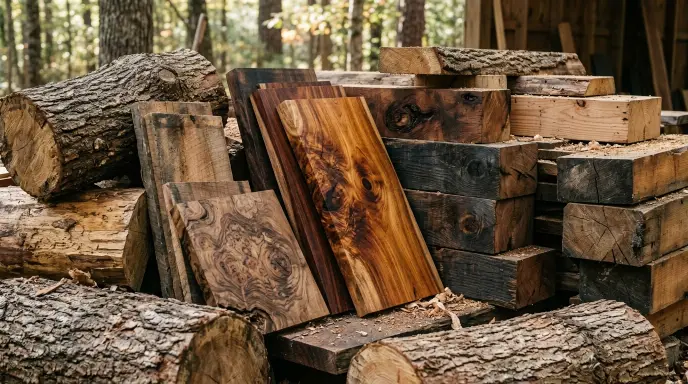
Wood is one of the most common words in English, but it does not always fit every sentence. Depending on the context, you may need a more precise word such as timber, lumber, hardwood, softwood, plank, log, or firewood. Some alternatives describe wood as a material, while others refer to a specific form, type, or use of wood.
People search for synonyms for wood for many reasons. A student may want better vocabulary for an essay, a writer may want to avoid repetition, or a professional may need precise terminology for construction, furniture, forestry, or manufacturing. The right alternative depends on what kind of wood you mean and how it is being used.
This guide explains more than 40 useful alternatives, including formal, neutral, technical, and casual choices. It also shows where each word works best, where it can change the meaning, and how to use it naturally in sentences.
Quick Answer
Common synonyms and contextual alternatives for wood include timber, lumber, hardwood, softwood, log, plank, board, branch, firewood, kindling, tree material, forest product, wooden material, and woodwork. However, these words are not always interchangeable. Timber and lumber often refer to processed or commercially useful wood, while log, plank, board, and firewood describe particular forms or uses.
Quick List of Synonyms for Wood:
Closest and Common Alternatives
- Timber
- Lumber
- Wooden material
- Wood material
- Tree material
- Forest product
- Woodwork
Types or Categories of Wood
- Hardwood
- Softwood
- Heartwood
- Sapwood
- Plywood
- Veneer
- Wood fiber
- Cellulose
Pieces or Forms of Wood
- Log
- Branch
- Limb
- Trunk
- Plank
- Board
- Beam
- Stick
- Slab
- Chip
- Shaving
- Splinter
Wood Used for Specific Purposes
- Firewood
- Fuelwood
- Kindling
- Cordwood
- Building timber
- Construction lumber
- Sawn wood
- Wood stock
Some of these are not exact synonyms. They describe a particular type, part, form, or use of wood.
Formal Alternatives for Wood:

Timber
Meaning: Timber refers to wood, especially when it is prepared or suitable for building and other commercial purposes.
Explanation: It is one of the closest alternatives to wood in construction and forestry contexts. In American English, timber can refer to standing trees suitable for harvesting, while in British English it commonly refers to wood used for construction.
Example:
The house was constructed using locally sourced timber.
Best Use: Construction, forestry, architecture, manufacturing, and formal writing.
Worst Use: Casual sentences where simple wood sounds more natural.
Tone: Professional and industry-focused.
Lumber
Meaning: Lumber is wood that has been cut and processed into boards, planks, or other useful pieces.
Explanation: Lumber is especially common in American English. It is more specific than wood because it normally refers to processed wood rather than a tree or raw material.
Example:
The carpenter ordered enough lumber to build the shelves.
Best Use: Construction, carpentry, home improvement, and manufacturing.
Worst Use: Referring to a living tree or natural forest.
Tone: Practical and professional.
Wooden Material
Meaning: Material made from or consisting of wood.
Explanation: This phrase can replace wood when discussing an object or manufacturing material, but it is less natural than simply saying wood in everyday English.
Example:
The company uses wooden material for several parts of its furniture.
Best Use: Technical descriptions and manufacturing discussions.
Worst Use: Casual conversation, where it may sound unnecessarily wordy.
Tone: Neutral to technical.
Forest Product
Meaning: A product obtained from forests, including wood and processed timber.
Explanation: This is a broader term than wood. Not every forest product is wood because forests also provide items such as resins and plant-based materials.
Example:
Timber remains an important forest product in many regions.
Best Use: Forestry, economics, environmental studies, and academic writing.
Worst Use: Simple sentences specifically describing a piece of wood.
Tone: Formal and technical.
Wood Fiber
Meaning: The small structural fibers that make up wood.
Explanation: Wood fiber is more specific than wood. It is useful when discussing the physical structure or industrial processing of wood.
Example:
The material is produced by compressing wood fibers.
Best Use: Manufacturing, paper production, engineering, and scientific writing.
Worst Use: Referring generally to a wooden table or chair.
Tone: Technical.
Cellulose
Meaning: A natural substance that forms a major structural component of plant cell walls, including wood.
Explanation: Cellulose is not a direct synonym for wood. It is a chemical component found in wood and many other plants.
Example:
Cellulose is an important component of wood and paper.
Best Use: Biology, chemistry, materials science, and academic writing.
Worst Use: Replacing wood in ordinary sentences.
Tone: Scientific.
Sawn Wood
Meaning: Wood that has been cut or sawn into usable pieces.
Explanation: This term describes processed wood rather than wood in general.
Example:
The workshop stores sawn wood for future projects.
Best Use: Forestry, construction, manufacturing, and technical writing.
Worst Use: Talking about trees or naturally fallen branches.
Tone: Technical and professional.
Construction Timber
Meaning: Wood prepared or selected for building and structural purposes.
Explanation: This is a narrower term than wood. It tells the reader that the material is intended for construction.
Example:
The contractor purchased construction timber for the roof.
Best Use: Building, architecture, and engineering.
Worst Use: General descriptions of wooden objects.
Tone: Professional.
Semi-Formal and Neutral Alternatives:

Hardwood
Meaning: Wood from trees classified as hardwood species.
Explanation: Hardwood is not simply another word for all wood. It generally comes from broad-leaved trees and often has different properties from softwood.
Example:
The dining table is made from hardwood.
Best Use: Furniture, flooring, woodworking, and material descriptions.
Worst Use: When the exact type of wood is unknown.
Tone: Neutral and professional.
Softwood
Meaning: Wood generally obtained from coniferous trees.
Explanation: Softwood is a category of wood rather than a complete synonym.
Example:
Softwood is commonly used for framing and general construction.
Best Use: Construction, forestry, woodworking, and material comparisons.
Worst Use: When referring to wood without knowing its species or category.
Tone: Neutral and technical.
Woodwork
Meaning: Objects or structures made from wood, or the craft of working with wood.
Explanation: Woodwork does not mean raw wood. It usually refers to finished wooden items or woodworking as an activity.
Example:
The house contains beautiful traditional woodwork.
Best Use: Furniture, interiors, craftsmanship, and architecture.
Worst Use: Referring to raw logs or timber.
Tone: Neutral and professional.
Wooden Material
Meaning: A material made from wood.
Explanation: This phrase can describe wood-based materials, although native speakers usually prefer simply wood or a more precise term.
Example:
The frame is made from a lightweight wooden material.
Best Use: Product descriptions and general explanations.
Worst Use: When a specific term such as plywood or timber is available.
Tone: Neutral.
Tree Trunk
Meaning: The main woody stem of a tree.
Explanation: A trunk is part of a tree and can become a source of wood. It is therefore narrower than wood.
Example:
The fallen tree trunk was later cut into logs.
Best Use: Nature writing, forestry, gardening, and everyday descriptions.
Worst Use: Referring to processed wood products.
Tone: Neutral.
Log
Meaning: A section of a tree trunk or large branch that has been cut.
Explanation: A log is a specific physical form of wood.
Example:
They placed a dry log on the fire.
Best Use: Fireplaces, forestry, outdoor activities, and woodworking.
Worst Use: Referring to finished furniture or thin boards.
Tone: Neutral and practical.
Plank
Meaning: A long, flat, thick piece of sawn wood.
Explanation: A plank is a specific form of processed wood.
Example:
The carpenter used a long plank to repair the floor.
Best Use: Construction, carpentry, furniture, and DIY projects.
Worst Use: Referring to wood generally.
Tone: Neutral.
Board
Meaning: A flat piece of cut wood, usually thinner than a plank.
Explanation: Board can sometimes be used broadly for a piece of lumber, but it does not mean all wood.
Example:
She painted a wooden board for the garden sign.
Best Use: Carpentry, crafts, construction, and furniture.
Worst Use: Referring to a forest or tree.
Tone: Neutral.
Beam
Meaning: A long, strong piece of wood or another material used to support a structure.
Explanation: Beam describes the function and shape of the material, not wood itself.
Example:
The wooden beam supports the upper floor.
Best Use: Architecture, construction, and structural descriptions.
Worst Use: General references to wood.
Tone: Technical and professional.
Informal and Casual Alternatives:
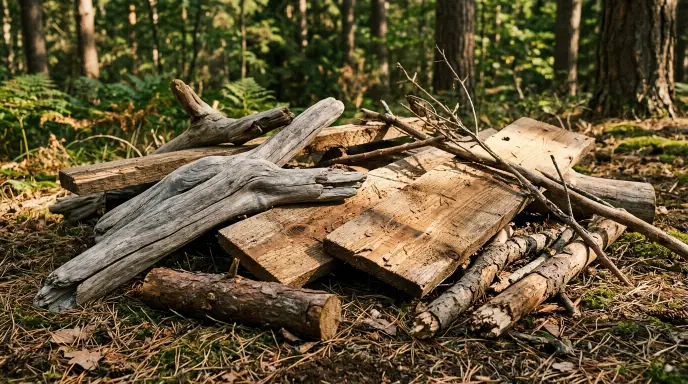
Wood has relatively few true casual synonyms. In everyday speech, people usually continue to say wood because it is short and natural.
However, certain context-specific words can work.
Stick
Meaning: A small, thin piece of wood.
Example:
The children collected sticks in the yard.
When It Sounds Natural: Casual conversation and outdoor descriptions.
When to Avoid It: Professional, academic, or technical writing where a more precise term is needed.
Tone: Casual.
Chunk of Wood
Meaning: An informal expression for a relatively large, solid piece of wood.
Example:
He found a chunk of wood near the old fence.
When It Sounds Natural: Everyday descriptions.
When to Avoid It: Formal reports and technical documents.
Tone: Casual.
Piece of Wood
Meaning: A general phrase for an individual piece of wood.
Example:
She used a piece of wood to support the plant.
When It Sounds Natural: Almost any ordinary situation where exact terminology is unnecessary.
When to Avoid It: Highly technical writing where the exact form matters.
Tone: Neutral and conversational.
Firewood
Meaning: Wood collected or prepared for burning.
Example:
We need more firewood before the temperature drops tonight.
When It Sounds Natural: Heating, fireplaces, camping, and outdoor conversations.
When to Avoid It: When the wood is intended for construction or furniture.
Tone: Neutral and practical.
Kindling
Meaning: Small, dry material used to start a fire.
Example:
She gathered some dry kindling before lighting the fireplace.
When It Sounds Natural: Fire-making contexts.
When to Avoid It: As a general synonym for wood.
Tone: Neutral and specific.
True Synonyms vs Contextual Alternatives:
Not every word associated with wood can replace it in every sentence. Understanding this difference prevents inaccurate or awkward writing.
| Type | What It Means | Can It Replace the Original? |
|---|---|---|
| True synonym | Has almost the same basic meaning | Sometimes |
| Near synonym | Has a closely related meaning | Depends on context |
| Contextual alternative | Works only in certain situations | Usually limited |
| Broader expression | Covers wood plus other materials or products | Sometimes |
| Narrower expression | Refers to a particular type or form of wood | Only in specific contexts |
Timber and lumber are among the closest alternatives, but regional usage and processing can affect their meaning. Hardwood, softwood, log, plank, board, beam, and firewood are narrower terms. They describe particular types, forms, or uses of wood.
Cellulose and wood fiber are even more specific because they describe components or structures associated with wood rather than wood itself.
Industry-Specific Usage:
Business Writing
Business writing benefits from precise material terms. Instead of repeatedly using wood, use the exact term that describes the product.
For example:
The company sources sustainable timber for its furniture line.
For a construction business, lumber or construction timber may be more useful than the general word wood.
Corporate Communication
Reports and company documents should use terminology that matches the subject.
Example:
The manufacturer reduced its use of virgin timber in packaging.
In a sustainability report, forest products, wood fiber, or sustainable timber may be more precise than wood.
Academic Writing
Academic writing should favor accuracy over variety. Do not replace wood simply to avoid repetition.
Example:
Wood is a renewable biological material. Its properties vary according to species, moisture content, density, and structure.
If discussing its internal structure, wood fiber, cellulose, heartwood, and sapwood may be appropriate.
Customer Service:
Customer service language should usually be simple.
Instead of saying:
The product is manufactured from sawn timber.
You might say:
The product is made from carefully selected wood.
Technical terms are useful when the customer specifically needs material information.
Legal Writing:
Legal documents require especially careful terminology. Wood, timber, lumber, forest products, and construction materials may have different meanings depending on the document and jurisdiction.
Do not substitute one for another merely for stylistic variety. If a contract defines a particular material, repeat the defined term consistently.
Email Communication:
Professional emails usually work best with clear, familiar words.
Client Email
Hello,
I’m writing to confirm that we have selected the timber required for the project. The material meets the specifications discussed during our last meeting.
We will share the final delivery schedule once the supplier confirms availability.
Best regards,
The Project Team
Vendor Email
EmailLumber Order Confirmation
Lumber Order Confirmation
Hello,
Could you please confirm the availability of the lumber listed in our latest order?
We would also appreciate an updated delivery estimate so we can coordinate the next stage of production.
Thank you,
Purchasing Team
Internal Workplace Email
EmailWood Material for the New Office
Wood Material for the New Office
Hi Team,
The wood material for the new office furniture has arrived. Please check the delivery against the approved specifications before production begins.
Let me know if anything appears to be missing or damaged.
Thanks,
Operations Team
Customer Service Email
EmailYour Wooden Product Inquiry
Your Wooden Product Inquiry
Hello,
Thank you for contacting us. The table is made from solid hardwood, which gives it a durable and natural appearance.
Please let us know if you would like additional information about its care and maintenance.
Kind regards,
Customer Support
Academic Email
EmailQuestion About Wood Samples
Question About Wood Samples
Dear Professor,
I am reviewing the wood samples for my assignment and would like to confirm whether the analysis should focus on hardwood and softwood separately.
Thank you for your guidance.
Best,
Student
Short Dialogue Examples:
Workplace
Person A: What material are we using for the shelves?
Person B: We ordered hardwood because it should provide better durability.
Classroom
Person A: Is timber the same as wood?
Person B: Not exactly. Timber usually refers to wood used or prepared for commercial purposes, especially construction.
Customer Service
Person A: What is this chair made from?
Person B: It is made from solid wood rather than plywood.
Casual Conversation
Person A: What did you collect for the campfire?
Person B: Mostly dry sticks and some firewood.
Professional Discussion
Person A: Should the report say wood or lumber?
Person B: Since we are discussing processed material for construction, lumber is more precise.
How to Replace “Wood” in a Sentence:
Example 1
Original:
The house was built with wood.
Alternative:
The house was built with timber.
Why it works:
Timber sounds more industry-specific and is particularly natural in construction contexts.
Example 2
Original:
The carpenter bought wood for the project.
Alternative:
The carpenter bought lumber for the project.
Why it works:
Lumber specifically suggests processed wood intended for construction or woodworking.
Example 3
Original:
The table is made from wood.
Alternative:
The table is made from hardwood.
Why it works:
Hardwood provides additional information, but it should only be used if the material is actually hardwood.
Example 4
Original:
He placed wood in the fireplace.
Alternative:
He placed firewood in the fireplace.
Why it works:
Firewood clearly communicates that the wood is intended for burning.
Example 5
Original:
They cut the wood into smaller pieces.
Alternative:
They cut the logs into smaller pieces.
Why it works:
Logs are a specific form of wood, so this alternative works when the original material consists of logs.
Example 6
Original:
The floor was made from wood.
Alternative:
The floor was made from wooden planks.
Why it works:
Planks describe the form of the wood and make the sentence more specific.
Example 7
Original:
The builder used wood to support the roof.
Alternative:
The builder used wooden beams to support the roof.
Why it works:
Beam identifies the structural function of the wood.
Example 8
Original:
The scientist examined the wood.
Alternative:
The scientist examined the wood fibers.
Why it works:
This changes the meaning slightly and is appropriate only when the investigation concerns the microscopic or structural components.
Comparison Table:
| Phrase | Tone | Meaning / Scope | Best Use | Example |
|---|---|---|---|---|
| Wood | Neutral | General material | Everyday writing | The chair is made of wood. |
| Timber | Professional | Wood for commercial or structural use | Construction | The building uses timber. |
| Lumber | Professional | Processed wood | Construction | The lumber arrived today. |
| Hardwood | Neutral | A category of wood | Furniture | The floor uses hardwood. |
| Softwood | Technical | A category of wood | Construction | Softwood is often used for framing. |
| Log | Neutral | Cut section of a trunk | Forestry/firewood | He carried a log. |
| Plank | Neutral | Long flat piece of wood | Carpentry | The plank was cut in half. |
| Board | Neutral | Flat piece of processed wood | DIY | She painted the board. |
| Beam | Technical | Structural piece | Construction | The beam supports the roof. |
| Firewood | Neutral | Wood intended for burning | Heating | We need more firewood. |
| Kindling | Neutral | Small material used to start fires | Fire-making | The kindling caught quickly. |
| Woodwork | Neutral | Wooden objects or woodworking | Interiors/craft | The room has fine woodwork. |
| Wood fiber | Technical | Structural fibers in wood | Science/manufacturing | Wood fibers were analyzed. |
| Cellulose | Scientific | Major component of wood | Biology | Cellulose occurs in wood. |
Which Alternative Should You Choose?
For Formal Writing
Choose timber, forest product, sawn wood, or construction timber when the context is forestry, manufacturing, or construction.
For Business Communication
Use timber, lumber, wood material, or the exact material name. Precision is usually more valuable than vocabulary variety.
For Academic Writing
Use wood when discussing the material generally. Use hardwood, softwood, cellulose, wood fiber, heartwood, or sapwood when the narrower meaning is intended.
For Legal Writing
Use the exact term required by the relevant contract, regulation, or document. Do not casually replace a defined material term with a synonym.
Professional Email
Wood, timber, lumber, hardwood, or wooden material can all work, depending on the context.
For Everyday Conversation
Stick with wood, piece of wood, stick, log, or firewood. Simple vocabulary usually sounds more natural.
Casual Messages
Use everyday expressions such as wood, stick, log, or piece of wood. Avoid technical terminology unless it adds useful information.
Grammar and Usage Guide:
Wood as a Mass Noun
Wood is commonly used as an uncountable noun when referring to the material.
Correct:
The table is made of wood.
Less natural:
The table is made of woods.
When referring to different species or types, woods can sometimes be used in specialized contexts.
A Piece of Wood
Use a piece of wood when referring to one unspecified item.
Example:
He picked up a piece of wood from the ground.
Woods as a Place
Woods can also mean a wooded area or forest.
Example:
They walked through the woods.
This meaning is different from wood as a material.
Wooden as an Adjective
Use wooden to describe something made of wood.
Example:
She bought a wooden chair.
Do not normally use wood as an adjective in the same way.
Wood vs Wooden
Wood is generally a noun.
Example:
The chair is made of wood.
Wooden is an adjective.
Example:
The chair has wooden legs.
Timber vs Lumber
Regional usage matters. Lumber is especially common in American English for processed wood used in construction. Timber has broader commercial and forestry uses and is especially common in British English.
Common Mistakes to Avoid:
Calling Every Alternative an Exact Synonym
Timber, lumber, hardwood, and firewood are not interchangeable in every sentence. Each has a specific scope.
Firewood for Construction Material
Firewood means wood intended for burning. It should not describe lumber used to build furniture.
Hardwood for Unknown Wood
Do not call material hardwood unless you know it belongs to a hardwood category.
Confusing Wood and Wooden
Wood is normally a noun, while wooden is an adjective.
Correct:
The desk is made of wood.
Correct:
The desk is wooden.
Using Lumber for a Living Tree
Lumber generally refers to processed wood, not a growing tree.
Using Technical Words Just to Sound Professional
A sentence does not become better simply because it uses specialized vocabulary. If wood is clear and accurate, keep wood.
Ignoring Regional Differences
Timber and lumber can overlap, but their common usage varies between American and British English.
Using Woods When You Mean Material
The woods usually means a wooded area.
Example:
We walked through the woods.
For the material, use wood.
When Not to Use the Original Word “Wood”
Although wood is perfectly natural in many situations, another term may be better in certain contexts.
When You Need Technical Precision
Use hardwood, softwood, wood fiber, heartwood, or sapwood when the specific category matters.
When Discussing Construction
Timber, lumber, board, plank, or beam may communicate the exact material or form more clearly.
When Discussing Fire
Use firewood, fuelwood, or kindling rather than the broad term wood.
When Describing a Specific Shape
Use log, plank, board, slab, stick, beam, or branch when the physical form matters.
When Writing About Forestry
Timber or forest product may be more precise depending on the subject.
When Wood Is Only One Component
If you are discussing the chemical structure of wood, terms such as cellulose may be appropriate.
When the Original Word Is Actually Better
Do not replace wood simply to avoid repetition. In clear general writing, wood is short, familiar, and accurate. Replacing it with technical terms can make a sentence harder to understand.
Advanced Writer Tips:
Tone Control
Choose vocabulary according to your audience. Wood is simple and neutral. Timber and lumber sound more professional in construction. Wood fiber and cellulose are suitable for technical subjects.
Professional Email Etiquette
Use the most familiar accurate term. A client usually does not need specialized forestry vocabulary unless the material itself is the subject of the discussion.
Politeness
Material terminology usually does not affect politeness as strongly as verbs and sentence structure do. Clear wording is more important than using an impressive synonym.
Context Alignment
Ask what you are actually describing: the raw material, a tree part, processed wood, a product, a structural component, or fuel. That answer usually determines the best alternative.
Readability
Do not replace every occurrence of wood with a different term. Repetition is acceptable when the same material is being discussed. Accuracy should come before stylistic variety.
Related Questions:
What is another way to say wood?
Common alternatives include timber, lumber, wooden material, hardwood, softwood, log, plank, board, and woodwork. The best option depends on the context because several of these terms describe only a specific type or form of wood.
What is a professional alternative to wood?
Timber and lumber are strong professional alternatives when discussing construction or commercially processed wood. In technical writing, more specific terms such as sawn wood, hardwood, softwood, or wood fiber may be better.
What is a formal word for wood?
Timber is one of the most useful formal or professional alternatives, particularly in forestry and construction. However, wood itself is not informal; it is a standard neutral English word.
Is wood a formal word?
Yes. Wood is a standard neutral English noun and is appropriate in academic, professional, business, and everyday writing. You do not need to replace it simply because you are writing formally.
Can I use timber instead of wood?
Sometimes. Timber is appropriate when referring to wood used for construction, forestry, or commercial purposes. It may not work when referring to a wooden object generally, a small stick, or firewood.
What is the difference between wood and lumber?
Wood is the broad term for the material. Lumber usually refers to wood that has been processed into usable pieces, especially boards and other construction materials. Therefore, lumber is narrower than wood.
What is the difference between wood and timber?
The meanings overlap, but timber often has a commercial, forestry, or construction sense. In British English, timber is commonly used where American English might use lumber for processed building wood. The exact meaning depends on regional usage and context.
Key Takeaways:
- Wood is the broad, neutral term for the natural material.
- Timber and lumber are useful professional alternatives, especially in construction and forestry.
- Hardwood, softwood, log, plank, board, and beam describe specific types or forms rather than all wood.
- Firewood and kindling should be used only when the wood is associated with making or maintaining a fire.
- Choose the most precise word for the context instead of replacing wood merely to avoid repetition.
Conclusion:
The best synonym for wood depends on exactly what you are describing. For general writing, wood remains the clearest and most natural choice. In construction or forestry, timber or lumber may provide greater precision.
If you are describing a particular type or form, words such as hardwood, softwood, log, plank, board, beam, or firewood can communicate more information.
It is also important to remember that many alternatives are not true synonyms. Cellulose describes a component of wood, while woodwork describes wooden objects or the craft of working with wood. Likewise, kindling refers to small material used to start a fire rather than wood in general.
Good word choice is therefore less about finding a replacement and more about choosing the term that accurately matches your meaning, audience, and purpose. When in doubt, use the simple word wood rather than forcing a more complicated alternative.