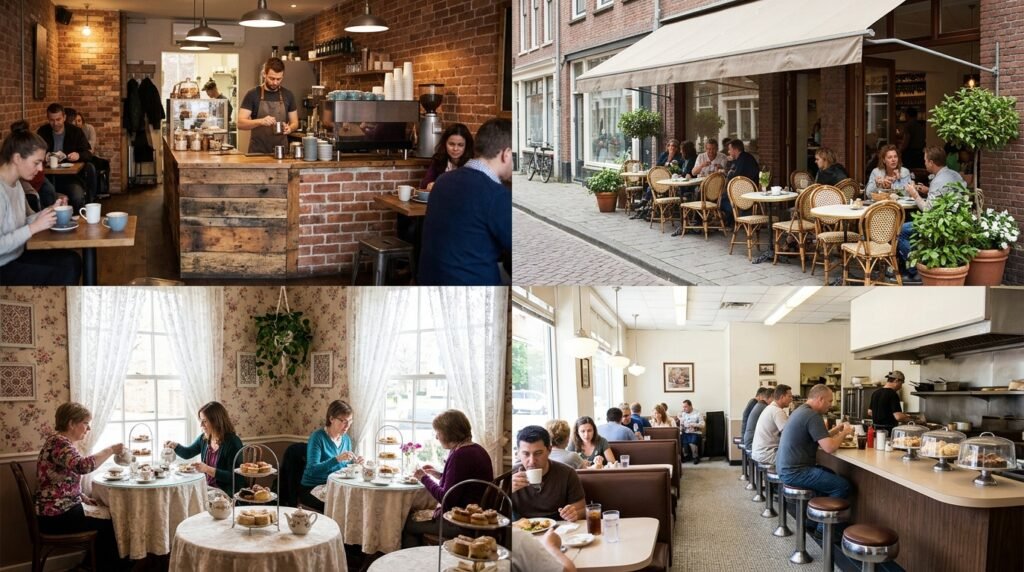
A cafe is a place where people can enjoy coffee, tea, snacks, light meals, and friendly conversations. It is often a relaxed space where customers meet friends, work on laptops, read books, or take a short break. The word cafe is common in everyday English, business writing, restaurant descriptions, travel guides, and marketing content.
However, using the same word repeatedly can make writing sound less interesting. You might need another word for cafe when describing a coffee shop, writing a business profile, creating website content, or talking about a small restaurant. Some alternatives, such as coffeehouse and coffee shop, have almost the same meaning, while others, such as bistro, tearoom, and diner, describe places with different services or atmospheres.
This guide explores 59+ synonyms for cafe, including formal, neutral, casual, and industry-specific alternatives. You will learn their meanings, differences, grammar rules, and practical examples so you can choose the right expression for any situation.
Quick Answer:
The closest synonyms for cafe include coffee shop, coffeehouse, coffee bar, espresso bar, and coffee lounge. Other related alternatives include bistro, tearoom, eatery, and snack bar. The best choice depends on the establishment’s menu, atmosphere, services, and intended audience.
Quick List:Words and Phrases for Cafe:
Closest Synonyms:
- Coffee shop
- Coffeehouse
- Coffee bar
- Coffee lounge
- Espresso bar
- Cafe lounge
- Coffee room
- Neighborhood cafe
- Coffee spot
- Local coffee shop
Food and Dining Alternatives:
- Bistro
- Eatery
- Diner
- Brasserie
- Restaurant
- Lunchroom
- Snack bar
- Refreshment shop
- Food establishment
- Dining spot
Tea and Refreshment Alternatives:
- Tearoom
- Tea room
- Tea shop
- Tea lounge
- Refreshment cafe
- Beverage shop
- Juice bar
- Smoothie bar
- Dessert cafe
- Pastry shop
Casual and Modern Alternatives:
- Coffee spot
- Hangout
- Meeting spot
- Chill spot
- Social hub
- Gathering place
- Neighborhood hangout
- Coffee corner
- Cafe space
- Relaxation spot
Specialized and Contextual Alternatives:
- Internet cafe
- Cybercafe
- Book cafe
- Board game cafe
- Cat cafe
- Pet cafe
- Garden cafe
- Outdoor cafe
- Sidewalk cafe
- Rooftop cafe
- Bakery cafe
- Art cafe
- Student cafe
- Campus cafe
- Hotel cafe
- Airport cafe
- Bistro cafe
- Food court cafe
- Drive-through coffee shop
- Specialty coffee shop
- Coffee kiosk
- Coffee stand
- Cafeteria
Note: These expressions are not all exact synonyms. Some describe particular types of cafes, while others refer to broader dining spaces or specific business models.
Formal Alternatives for Cafe:
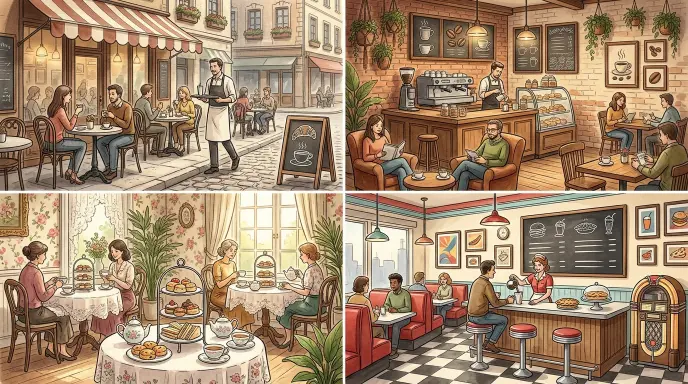
In professional writing, business descriptions, property listings, and hospitality documents, certain alternatives can sound more suitable than the everyday word cafe. Choose an expression that accurately describes the establishment.
1. Coffeehouse:
Meaning: An establishment where people purchase and enjoy coffee and other beverages.
Explanation: Coffeehouse is one of the closest alternatives to cafe. It often suggests a comfortable place where customers can sit, talk, read, or work.
Example: The new coffeehouse offers freshly brewed coffee and comfortable seating.
Best Use: Business descriptions, travel writing, and professional website content.
Worst Use: Avoid it when describing a business that mainly serves full meals rather than coffee.
Tone: Professional, welcoming, and traditional.
2. Coffee Shop:
Meaning: A business that primarily sells coffee and related refreshments.
Explanation: This is a direct and widely understood alternative. It works in most everyday and professional situations.
Example: The coffee shop opens early to serve customers before work.
Best Use: Business listings, advertisements, and everyday communication.
Worst Use: It may be too narrow for an establishment mainly known for meals or desserts.
Tone: Neutral and professional.
3. Coffee Bar:
Meaning: A place or counter where coffee drinks are prepared and served.
Explanation: A coffee bar often emphasizes espresso preparation, specialty drinks, and quick service rather than extended dining.
Example: The hotel recently added a modern coffee bar to its lobby.
Best Use: Hospitality businesses, commercial descriptions, and coffee-focused establishments.
Worst Use: Avoid using it for a traditional restaurant with a large dining menu.
Tone: Modern and professional.
4. Espresso Bar:
Meaning: A small establishment specializing in espresso-based drinks.
Explanation: This expression is more specific than cafe because it highlights espresso preparation.
Example: We visited an espresso bar near the office for cappuccinos.
Best Use: Specialty coffee businesses and hospitality descriptions.
Worst Use: It is inaccurate if espresso is not a main part of the menu.
Tone: Professional and specialized.
5. Food Establishment:
Meaning: A business that prepares or serves food and beverages.
Explanation: This is a broad expression that can include cafes, restaurants, bakeries, and other dining businesses.
Example: The food establishment must follow local health and safety requirements.
Best Use: Business reports, regulations, and general commercial writing.
Worst Use: Avoid it in friendly advertisements because it sounds impersonal.
Tone: Formal and administrative.
6. Dining Establishment:
Meaning: A place where customers can purchase and eat prepared food.
Explanation: It describes cafes and restaurants collectively rather than identifying one particular type of business.
Example: The dining establishment provides indoor and outdoor seating.
Best Use: Property descriptions, business documents, and hospitality reports.
Worst Use: It may sound unnecessarily formal in casual conversation.
Tone: Formal and neutral.
7. Refreshment Establishment:
Meaning: A business that provides drinks and light refreshments.
Explanation: This expression can describe a cafe, although it is less common than coffee shop.
Example: The refreshment establishment serves tea, coffee, and freshly prepared snacks.
Best Use: Formal descriptions and general hospitality writing.
Worst Use: Avoid it when a specific, recognizable business category is needed.
Tone: Formal and descriptive.
8. Hospitality Venue:
Meaning: A commercial location that provides food, drinks, accommodation, or guest services.
Explanation: This is a broader business expression. A cafe can be described as a hospitality venue, but the phrase also includes hotels, restaurants, and event spaces.
Example: The hospitality venue attracts visitors with its welcoming atmosphere.
Best Use: Hospitality reports, commercial proposals, and business presentations.
Worst Use: Do not use it as an exact replacement when discussing a small neighborhood cafe.
Tone: Professional and corporate.
9. Food Service Outlet:
Meaning: A business location that sells prepared food or beverages.
Explanation: This phrase focuses on the commercial service rather than the customer experience.
Example: The company plans to open another food service outlet near the university.
Best Use: Business planning, operations, and industry reports.
Worst Use: Avoid it in customer-facing promotional writing.
Tone: Formal and business-oriented.
10. Commercial Dining Venue:
Meaning: A business location where customers pay to enjoy meals or refreshments.
Explanation: It is a broad descriptive expression rather than a direct synonym. A cafe can fit this category.
Example: The commercial dining venue offers affordable meals throughout the day.
Best Use: Property documents, business proposals, and hospitality discussions.
Worst Use: It sounds too technical for everyday descriptions.
Tone: Formal and descriptive.
Semi-Formal and Neutral Alternatives:
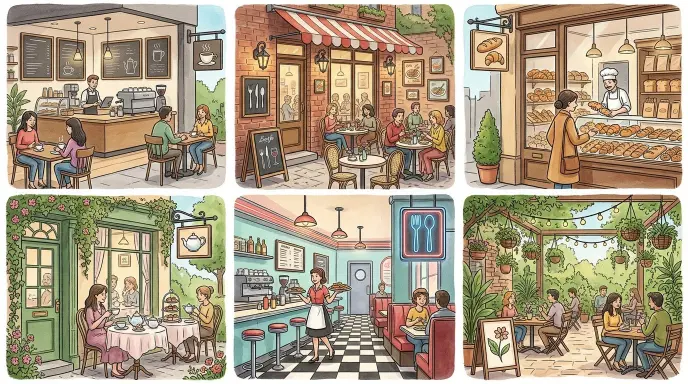
These alternatives work well in websites, articles, business communication, travel descriptions, and everyday writing.
1. Coffee Lounge:
Meaning: A comfortable place where customers can enjoy coffee and relax.
Explanation: It emphasizes seating and atmosphere more than quick coffee service.
Example: We spent the afternoon talking at a coffee lounge.
Best Use: Lifestyle articles and business descriptions.
Worst Use: Avoid it for a small takeaway-only coffee counter.
Tone: Relaxed and neutral.
2. Bistro:
Meaning: A small restaurant that usually serves simple meals in a casual setting.
Explanation: A bistro may resemble a cafe, but it generally focuses more on prepared food.
Example: They opened a charming bistro on the main street.
Best Use: Food reviews and restaurant descriptions.
Worst Use: Avoid it when the business only sells takeaway coffee.
Tone: Stylish and neutral.
3. Eatery:
Meaning: A place where people can buy and eat food.
Explanation: This is a broader alternative that includes cafes, restaurants, and diners.
Example: The small eatery serves sandwiches and fresh coffee.
Best Use: Articles, local guides, and everyday descriptions.
Worst Use: It does not communicate a coffee-focused atmosphere.
Tone: Friendly and neutral.
4. Tearoom:
Meaning: An establishment where tea and light refreshments are served.
Explanation: It is a suitable alternative when a cafe mainly specializes in tea.
Example: My grandmother enjoys visiting the traditional tearoom.
Best Use: Tea businesses and travel writing.
Worst Use: Avoid it for a coffee-focused establishment without tea service.
Tone: Traditional and welcoming.
5. Snack Bar:
Meaning: A small business that serves snacks and light refreshments.
Explanation: A snack bar may offer some services similar to a cafe, but it usually has a more limited menu.
Example: Students often visit the snack bar during lunch breaks.
Best Use: Schools, public venues, and casual dining descriptions.
Worst Use: It may misrepresent a full-service coffeehouse.
Tone: Casual and neutral.
6. Diner:
Meaning: A casual restaurant serving meals, snacks, and beverages.
Explanation: A diner is not an exact synonym for cafe. It usually has a broader meal menu and a different dining style.
Example: We stopped at a local diner for breakfast.
Best Use: Travel writing and restaurant descriptions.
Worst Use: Avoid it when the establishment specializes in coffee and pastries.
Tone: Casual and familiar.
7. Brasserie:
Meaning: A restaurant, often associated with French dining, that serves meals and drinks.
Explanation: A brasserie can share some features with a cafe but generally has a stronger restaurant identity.
Example: The elegant brasserie serves lunch and dinner.
Best Use: Restaurant reviews and hospitality descriptions.
Worst Use: Avoid it for an ordinary coffee shop.
Tone: Refined and sophisticated.
8. Coffee Corner:
Meaning: A small area or business where coffee is available.
Explanation: It can describe a dedicated coffee space inside a larger building or a small independent business.
Example: The office has a coffee corner for employees.
Best Use: Workplace descriptions and casual writing.
Worst Use: It may be inaccurate for a large independent cafe.
Tone: Friendly and neutral.
9. Coffee Spot:
Meaning: An informal expression for a place where people buy or enjoy coffee.
Explanation: This phrase is useful when the exact business category is less important than its purpose.
Example: That little coffee spot has excellent pastries.
Best Use: Blogs, local recommendations, and social media.
Worst Use: Avoid it in formal business agreements.
Tone: Casual and approachable.
10. Bakery Cafe:
Meaning: A business that combines bakery products with cafe services.
Explanation: It describes a specific type of establishment offering baked goods alongside drinks and sometimes light meals.
Example: The bakery cafe prepares fresh bread and serves specialty coffee.
Best Use: Food business descriptions and local guides.
Worst Use: Do not use it if the business does not sell baked goods.
Tone: Descriptive and neutral.
Informal and Casual Alternatives:
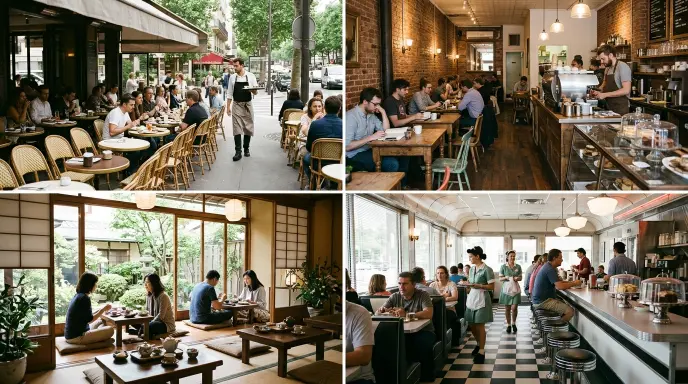
Casual alternatives can make conversations and social media posts sound more natural. However, some of these expressions describe a place to meet rather than a cafe itself.
1. Hangout:
Meaning: A place where people regularly spend time together.
Example: This little coffee shop is our favorite hangout.
When It Sounds Natural: Friendly conversations, messages, and social media captions.
When to Avoid It: Formal business reports and official documents.
Tone: Very casual and friendly.
2. Chill Spot:
Meaning: A relaxed place where people can spend time comfortably.
Example: We found a nice chill spot for coffee after class.
When It Sounds Natural: Casual conversations and lifestyle blogs.
When to Avoid It: Professional descriptions and formal advertisements.
Tone: Relaxed and informal.
3. Meeting Spot:
Meaning: A place where people arrange to meet.
Example: Let’s use the cafe near the station as our meeting spot.
When It Sounds Natural: Everyday conversations and informal planning.
When to Avoid It: When you need to identify the actual type of business.
Tone: Neutral and conversational.
4. Coffee Spot:
Meaning: A casual way to describe a place for coffee.
Example: I know a great coffee spot around the corner.
When It Sounds Natural: Recommendations and friendly messages.
When to Avoid It: Formal company descriptions.
Tone: Friendly and informal.
5. Local Hangout:
Meaning: A familiar place where people from a neighborhood regularly gather.
Example: The new cafe has become a popular local hangout.
When It Sounds Natural: Community articles and casual discussions.
When to Avoid It: Official descriptions that require precise business terminology.
Tone: Warm and conversational.
6. Coffee Joint:
Meaning: An informal expression for a coffee shop.
Example: Let’s grab a drink at that little coffee joint.
When It Sounds Natural: Informal American English and friendly conversations.
When to Avoid It: Formal emails, academic writing, and professional reports.
Tone: Very casual.
7. Neighborhood Spot:
Meaning: A familiar local place that people enjoy visiting.
Example: This neighborhood spot serves some of the best coffee nearby.
When It Sounds Natural: Local recommendations and community discussions.
When to Avoid It: When the exact service or business type matters.
Tone: Friendly and relaxed.
True Synonyms vs. Contextual Alternatives:
Not every word associated with a cafe has exactly the same meaning. Understanding the differences helps you avoid misleading descriptions.
| Type | What It Means | Can It Replace Cafe? |
|---|---|---|
| True or close synonym | A place with a very similar purpose, such as a coffee shop | Usually |
| Near synonym | A similar dining business, such as a bistro | Sometimes |
| Contextual alternative | A place used for a similar purpose, such as a meeting spot | In certain sentences |
| Broader expression | A larger category, such as an eatery | When general meaning is acceptable |
| Narrower expression | A specialized business, such as an espresso bar | Only when accurate |
| Informal equivalent | A casual expression, such as coffee joint | In relaxed communication |
Why Context Matters:
Consider the difference between these expressions:
- Coffee shop: A direct alternative for a business mainly serving coffee.
- Bistro: A small restaurant that focuses more on meals.
- Tearoom: A place specializing in tea and refreshments.
- Eatery: A broad term for a place where people purchase food.
- Hangout: A place where people spend time socially.
These expressions can describe similar locations, but they are not interchangeable in every sentence.
Industry-Specific Usage:
Business Writing:
Business writing requires clear descriptions of products, services, and business activities.
Useful alternatives include:
- Coffee shop
- Coffeehouse
- Food establishment
- Dining establishment
- Food service outlet
Example: The company plans to establish a new coffeehouse in the downtown area.
Use coffee shop when describing a coffee-focused business. Choose food establishment when discussing a wider category of businesses.
Corporate Communication:
In corporate documents, use neutral and specific language instead of informal expressions.
Useful alternatives include:
- Hospitality venue
- Coffee bar
- Dining facility
- Food service outlet
- Employee refreshment area
Example: Employees can use the coffee bar located on the ground floor.
For internal reports, dining facility may work better when discussing a shared dining space rather than a commercial cafe.
Academic Writing:
Academic writing benefits from precise and descriptive terminology.
Useful alternatives include:
- Coffeehouse
- Food establishment
- Dining venue
- Hospitality business
- Commercial food outlet
Example: The study examines how coffeehouses function as informal social spaces.
Avoid expressions such as coffee joint and chill spot in academic assignments unless you are discussing informal language itself.
Customer Service:
Customer service communication should sound clear, friendly, and welcoming.
Useful alternatives include:
- Coffee shop
- Coffeehouse
- Dining area
- Refreshment area
- Cafe location
Example: Thank you for visiting our coffee shop. We hope you enjoyed your experience.
For customers, simple words are usually more effective than technical business expressions.
Legal and Official Writing:
Legal writing requires accuracy. A cafe may fall under different business classifications depending on the document and applicable local rules.
Useful descriptive expressions include:
- Food establishment
- Food service business
- Restaurant
- Commercial premises
- Business premises
Example: The food establishment must comply with the applicable local licensing requirements.
A cafe should not automatically be called a restaurant in a legal document. The correct classification depends on the relevant regulations, license, and business activities. Use the legally defined term where one applies.
Email Communication:
Professional emails should use recognizable expressions that clearly explain the location or business.
Useful alternatives include:
- Coffee shop
- Coffeehouse
- Coffee bar
- Dining area
- Refreshment area
Example: Could we meet at the coffee shop across from the office?
Avoid expressions such as coffee joint and chill spot when writing to clients, managers, or unfamiliar business contacts.
Complete Email Examples:
1. Arranging a Client Meeting:
Subject: Meeting Location Confirmation
Hello Sarah,
I would like to confirm our meeting for Thursday afternoon. We can meet at the coffeehouse near your office if that location is convenient for you.
Please let me know if you would prefer another place.
Best regards,
Michael
2. Sharing a Business Update:
Subject: New Coffee Shop Opening
Hello Team,
We are pleased to announce that our new coffee shop will open next Monday. The location will offer fresh coffee, light meals, and comfortable seating for customers.
More details about the opening schedule will follow shortly.
Best,
Daniel
3. Requesting a Meeting:
Subject: Request for a Short Meeting
Dear Mr. Wilson,
Would you be available for a brief meeting tomorrow? I suggest the coffee bar inside the main building because it is easy for both of us to reach.
Please share your preferred time.
Kind regards,
James
4. Responding to a Customer:
Subject: Thank You for Your Feedback
Hello Emma,
Thank you for sharing your feedback about our cafe. We appreciate your comments and are always looking for ways to improve our coffee shop and customer experience.
We hope to welcome you again soon.
Best regards,
Customer Support Team
5. Arranging a Team Lunch:
Subject: Team Lunch Arrangements
Hi Everyone,
We are planning a team lunch this Friday at a nearby bistro. The menu includes sandwiches, salads, and several vegetarian options.
Please confirm your availability by Wednesday.
Thanks,
Alex
Short Dialogue Examples:
1. Workplace Conversation:
Person A: Where should we meet before the presentation?
B: Let’s meet at the coffee shop downstairs.
Person A: That sounds convenient.
2. Classroom Conversation:
Person A: Do you know a quiet place to study?
B: There is a nice coffeehouse near the university.
Person A: Great! We can study there after class.
3. Customer Service:
Person A: Is there a place nearby where I can get tea?
B: Yes, there is a tearoom just across the street.
Person A: Thank you for your help.
4. Casual Conversation:
Person A: Where do you usually meet your friends?
B: At our favorite coffee joint.
Person A: I would love to visit sometime.
5. Professional Discussion:
A: Does the hotel have a place for guests to enjoy refreshments?
B: Yes, there is a coffee bar in the main lobby.
A: Perfect. That should work well.
How to Replace Cafe in a Sentence:
Here are eight practical examples showing how different alternatives can change the tone or meaning of a sentence.
1. Using Coffee Shop:
Original: We visited a cafe after work.
Alternative: We visited a coffee shop after work.
Why It Works: Both expressions describe a place where customers can purchase coffee and refreshments.
2. Using Coffeehouse:
Original: She likes reading books at the cafe.
Alternative: She likes reading books at the coffeehouse.
Why It Works: Coffeehouse creates a similar meaning while emphasizing a comfortable social environment.
3. Using Bistro:
Original: We had lunch at a small cafe.
Alternative: We had lunch at a small bistro.
Why It Works: Bistro works if the establishment serves meals. It changes the business category slightly.
4. Using Tearoom:
Original: They opened a cafe specializing in tea.
Alternative: They opened a tearoom specializing in tea.
Why It Works: Tearoom is more specific and accurately highlights the tea-focused menu.
5. Using Eatery:
Original: There is a new cafe near the shopping center.
Alternative: There is a new eatery near the shopping center.
Why It Works: Eatery provides a broader description of the food business.
6. Using Coffee Bar:
Original: I ordered a cappuccino at the cafe.
Alternative: I ordered a cappuccino at the coffee bar.
Why It Works: Coffee bar emphasizes the preparation and serving of coffee drinks.
7. Using Hangout:
Original: This cafe is our favorite place to meet.
Alternative: This cafe is our favorite hangout.
Why It Works: Hangout emphasizes the social purpose rather than the business category.
8. Using Dining Establishment:
Original: The cafe provides indoor and outdoor seating.
Alternative: The dining establishment provides indoor and outdoor seating.
Why It Works: This expression sounds more formal and describes the business broadly.
Comparison Table: Cafe Alternatives at a Glance:
| Phrase | Tone | Meaning / Scope | Best Use | Example |
|---|---|---|---|---|
| Coffee shop | Neutral | Coffee-focused business | Everyday writing | Visit the coffee shop. |
| Coffeehouse | Neutral | Coffee and social space | Articles | The coffeehouse is busy. |
| Coffee bar | Modern | Coffee-serving counter or business | Hospitality | The coffee bar is open. |
| Espresso bar | Specialized | Espresso-focused business | Coffee industry | Try the espresso bar. |
| Bistro | Refined | Small casual restaurant | Food reviews | The bistro serves lunch. |
| Eatery | Neutral | General food business | Local guides | The eatery is popular. |
| Tearoom | Traditional | Tea-serving establishment | Travel writing | The tearoom serves tea. |
| Diner | Casual | Informal restaurant | Everyday writing | The diner serves breakfast. |
| Snack bar | Casual | Snacks and refreshments | Public venues | Visit the snack bar. |
| Coffee lounge | Relaxed | Comfortable coffee space | Lifestyle content | The lounge is quiet. |
| Hangout | Informal | Social meeting place | Conversation | It is our hangout. |
| Brasserie | Refined | Restaurant serving meals and drinks | Hospitality | The brasserie is elegant. |
| Food establishment | Formal | General food business | Official writing | The establishment is licensed. |
| Coffee kiosk | Neutral | Small coffee-selling outlet | Business descriptions | The kiosk sells coffee. |
| Cafeteria | Neutral | Self-service dining area | Schools and offices | The cafeteria serves lunch. |
Which Alternative Should You Choose?
The right word depends on the business, audience, and purpose of your sentence.
For Formal Writing:
Choose coffeehouse, food establishment, or dining establishment. These expressions are suitable for professional descriptions and reports.
For Business Communication:
Use coffee shop, coffee bar, or hospitality venue. Select the phrase that accurately represents the services being offered.
For Academic Writing:
Choose coffeehouse, food establishment, or hospitality business. Avoid informal expressions that may weaken the academic tone.
For Legal Writing:
Use the exact business classification required by the relevant document or regulation. Food establishment is a broad descriptive term, not a universal legal classification.
For Professional Emails:
Use coffee shop, coffeehouse, or coffee bar. These expressions are familiar and easy to understand.
For Everyday Conversation:
Choose coffee shop, coffee spot, or coffeehouse. All three sound natural in ordinary discussions.
For Casual Messages:
Use coffee joint, hangout, or chill spot when the conversation is informal.
For Restaurant Descriptions:
Use bistro, diner, or eatery only when the establishment’s food and dining style match those descriptions.
Grammar and Usage Guide:
Understanding how to use cafe-related words correctly can make your writing clearer and more natural.
1. Is Cafe a Noun?
Yes. Cafe is a common countable noun.
Examples:
- We visited a cafe yesterday.
- The cafe closes at 9 p.m.
- Several cafes are located near the university.
2. Cafe or Café: Which Spelling Is Correct?
Both spellings are correct in English.
- Cafe: The standard spelling without the accent.
- Café: The spelling that retains the French accent mark.
American English commonly uses both forms. Choose one spelling and use it consistently throughout your article or website.
3. Cafe or Coffee Shop?
A coffee shop mainly emphasizes coffee and related beverages. A cafe may also offer light meals, desserts, sandwiches, and other refreshments.
The meanings overlap, but the words are not always identical.
4. Singular and Plural Forms:
The singular form is cafe, while the plural form is cafes.
Examples:
- One cafe is open.
- Three cafes are open.
- The cafes offer different menus.
The same pattern applies to coffee shop and coffeehouse.
5. Using Articles Correctly:
Use a or an according to pronunciation.
Correct:
- A cafe near my house.
- A coffeehouse downtown.
- An espresso bar near the station.
6. Common Prepositions:
Some prepositions naturally appear with cafe-related words.
- At the cafe: We met at the cafe.
- In the cafe: She is sitting in the cafe.
- Near the cafe: There is a bookstore near the cafe.
- Across from the cafe: The hotel is across from the cafe.
- Outside the cafe: Customers are waiting outside the cafe.
7. Capitalization:
Use lowercase cafe in ordinary sentences.
Capitalize it when it appears in a business name, heading, or at the beginning of a sentence.
Examples:
- We visited a cafe.
- Blue Moon Cafe is opening soon.
8. Natural Word Combinations:
Some words commonly appear alongside cafe.
- Cozy cafe
- Local cafe
- Small cafe
- Modern cafe
- Outdoor cafe
- Independent cafe
- Family-friendly cafe
- Neighborhood cafe
- Popular coffee shop
- Specialty coffeehouse
These combinations help describe a business more precisely.
Common Mistakes to Avoid:
1. Treating Every Alternative as an Exact Synonym:
A bistro, diner, and coffeehouse may offer similar services, but they have different meanings. Choose the term that matches the actual establishment.
2. Using Overly Formal Expressions:
Calling a small neighborhood cafe a commercial dining venue can sound unnatural. Simple language is often better.
3. Confusing a Tearoom With a Coffee Shop:
A tearoom focuses on tea, while a coffee shop generally emphasizes coffee. Do not use these terms interchangeably without checking the menu.
4. Using Casual Expressions in Professional Writing:
Words such as coffee joint and chill spot may sound friendly, but they are not ideal for official reports or business agreements.
5. Choosing a Broader Word Without Considering Meaning:
Eatery describes many kinds of food businesses. It does not specifically communicate that coffee is available.
6. Repeating the Same Alternative:
Using coffee shop in every sentence can make an article repetitive. Mix accurate alternatives where they fit naturally.
7. Ignoring the Target Audience:
A tourist may understand coffeehouse immediately, while a business report may require a more precise description such as food service outlet.
8. Using Incorrect Plural Forms:
The plural of cafe is cafes, not cafe’s. An apostrophe indicates possession, not a regular plural.
9. Describing a Meeting Place as a Business Type:
Hangout and meeting spot describe how people use a place. They do not identify the actual business category.
When Not to Use the Word Cafe:
Although cafe is a useful and familiar word, certain situations call for a more specific expression.
1. When the Business Mainly Serves Espresso:
Use espresso bar if specialty espresso drinks are the main focus.
2. When the Establishment Specializes in Tea:
Use tearoom when tea is the central product.
3. When the Business Primarily Serves Full Meals:
Use restaurant, bistro, or diner if the establishment fits that dining style.
4. When Writing an Official Business Description:
Use an accurate classification such as food establishment or the applicable registered business category.
5. When Describing a Social Meeting Place:
Use hangout or meeting spot when the sentence focuses on people gathering rather than purchasing refreshments.
6. When Writing About a Specialized Coffee Business:
Use coffee kiosk, coffee stand, or specialty coffee shop to describe the actual service model.
7. When the Original Word Is Already Clear:
Do not replace cafe just to avoid repetition. If the meaning is accurate and the sentence reads naturally, keeping the original word is often the best choice.
Advanced Writing Tips:
Tone Control:
Choose words that match your intended style. Coffeehouse sounds welcoming, food establishment sounds formal, and coffee joint sounds casual.
Professional Email Etiquette:
Keep location descriptions simple. Instead of writing, “Let’s meet at the aforementioned hospitality venue,” write, “Let’s meet at the coffee shop near the office.”
Politeness:
A simple description often makes communication more approachable. Use friendly wording when inviting someone to meet at a cafe.
Context Alignment:
Think about the purpose of your sentence. A travel article may benefit from coffeehouse, while a business report may need food service outlet.
Precision:
Check the establishment’s menu and services before selecting an alternative. A tea room, bakery cafe, and espresso bar each describe a different business focus.
Readability:
Avoid using complicated expressions when a familiar word works. Coffee shop is usually clearer than commercial refreshment establishment.
Avoid Repetition Naturally:
Use pronouns and descriptive expressions when appropriate.
Example:
The coffee shop opened last year. This popular neighborhood spot now attracts students and office workers.
The second sentence adds variety without forcing an inaccurate synonym.
Related Questions About Cafe Alternatives:
What Is Another Word for Cafe?
Coffee shop is one of the most common alternatives. Coffeehouse, coffee bar, and coffee lounge are also useful choices. For a broader description, you can use eatery or dining establishment.
What Is a Professional Word for Cafe?
Coffeehouse and coffee shop are suitable professional alternatives. For business reports, food establishment or dining establishment may work better when discussing the broader hospitality industry.
What Is a More Formal Word for Cafe?
Food establishment and dining establishment sound more formal, while coffeehouse is a natural professional alternative. The best choice depends on whether you are describing a coffee-focused business or a general dining location.
What Is a Fancy Word for Cafe?
Coffeehouse, brasserie, and bistro can sound more refined. However, they describe different types of establishments. Choose one based on the menu, service, and atmosphere rather than appearance alone.
Is Coffeehouse the Same as Cafe?
The meanings are very similar. Both can describe places that serve coffee and refreshments. Coffeehouse sometimes suggests a more traditional or social atmosphere, while cafe is a broader everyday term.
What Is the Difference Between a Cafe and a Bistro?
A cafe often focuses on coffee, drinks, snacks, and light meals. A bistro generally focuses more on prepared meals in a casual restaurant setting. Their menus can overlap, but they are not exact equivalents.
Can I Use Eatery Instead of Cafe?
Yes, when you want a broader expression for a place that serves food. However, eatery does not specifically suggest coffee, tea, or a relaxed coffeehouse atmosphere.
FAQs:
1. What Are the Closest Synonyms for Cafe?
The closest alternatives are coffee shop, coffeehouse, coffee bar, coffee lounge, and espresso bar. These expressions describe businesses that serve coffee and related beverages. However, espresso bar is more specific because it focuses on espresso-based drinks.
2. What Is a Short Word for Cafe?
Coffee shop is a common alternative, although it is not shorter. Eatery is a single-word option, but it describes a broader type of food business. The best choice depends on what the establishment offers.
3. What Is a Cute Name for a Cafe?
Some friendly cafe name ideas include Coffee Corner, Cozy Cup, Little Bean, The Coffee Nook, and Daily Brew. These are creative business-name ideas rather than standard dictionary synonyms.
4. What Is Another Word for a Small Cafe?
Coffee nook, coffee corner, coffee kiosk, and coffee stand can describe smaller coffee businesses or spaces. However, a kiosk and stand usually suggest limited seating or takeaway service.
5. What Is a Place That Sells Coffee Called?
A place that sells coffee is commonly called a coffee shop or coffeehouse. Other possibilities include an espresso bar, coffee kiosk, and coffee stand. Each term describes a slightly different business format.
6. Is Cafe a Formal or Informal Word?
Cafe is a neutral word that works in formal and informal communication. It is suitable for articles, business descriptions, emails, travel guides, and everyday conversations.
7. What Is the Difference Between a Cafe and a Coffee Shop?
The terms often overlap. A coffee shop usually emphasizes coffee and beverages, while a cafe may offer a wider selection of snacks, desserts, and light meals. In everyday English, people frequently use both expressions for similar businesses.
Key Takeaways:
- Coffee shop and coffeehouse are the closest everyday alternatives to cafe.
- Bistro, diner, and eatery describe related but different dining businesses.
- Tearoom and espresso bar are useful when a business specializes in a particular beverage.
- Formal expressions such as food establishment work best in business and official writing.
- Always consider the menu, atmosphere, audience, and purpose before choosing an alternative.
Conclusion:
Choosing the right alternative for cafe depends on the type of establishment and the message you want to communicate.
Coffee shop, coffeehouse, and coffee bar are reliable choices for describing businesses that mainly serve coffee. Bistro, diner, and eatery work better when the focus is on food and dining, while tearoom is more suitable for tea-focused establishments.
For professional writing, expressions such as food establishment and dining establishment can provide a broader description.
In casual conversations, coffee spot, coffee joint, and hangout can make your sentences sound more relaxed.
Remember that not every related expression is an exact synonym. Some words describe a particular business model, while others refer to the social experience of visiting a cafe.
Choose the term that accurately reflects the place, fits your audience, and makes your sentence easy to understand.