
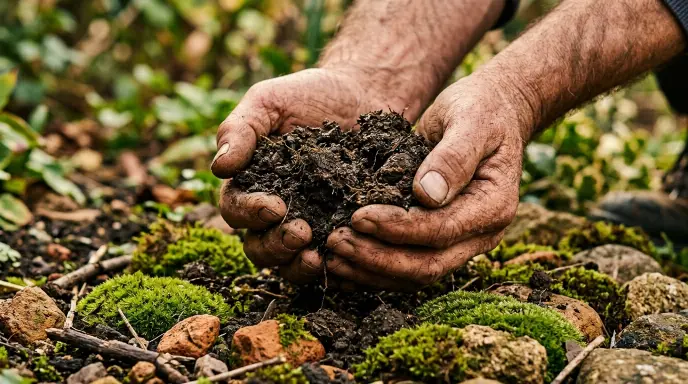
The word earthy can describe something connected with the earth, soil, nature, or a simple rural lifestyle. It can also describe a person who is practical and down-to-earth, a color that feels natural and muted, or a smell and flavor that reminds you of soil, wood, herbs, or the outdoors.
Because earthy has several meanings, the best synonym depends on context. Words such as natural, rustic, organic, grounded, rural, raw, soil-like, and down-to-earth can work in different situations, but they are not always interchangeable. Choosing the right alternative helps your writing sound more precise and natural.
What Does Earthy Mean?
Earthy is an adjective with several related meanings. It can describe something that is strongly connected with the earth or nature. For example, an earthy smell may remind you of soil after rain.
The word can also describe a style that feels natural, rustic, simple, or unrefined. When used for a person, earthy can suggest someone who is practical, natural, relaxed, or down-to-earth.
In descriptions of colors, earthy often refers to natural shades such as brown, beige, olive, terracotta, and muted green.
Quick Answer: Synonyms for Earthy:
Common synonyms and contextual alternatives for earthy include natural, rustic, organic, grounded, rural, terrestrial, raw, soil-like, nature-inspired, unrefined, simple, outdoorsy, down-to-earth, elemental, and earthy-toned. The best choice depends on whether you are describing nature, personality, design, color, smell, flavor, or lifestyle.
Best Synonyms for Earthy:
Here are some of the most useful alternatives:
- Natural
- Rustic
- Organic
- Grounded
- Down-to-earth
- Rural
- Terrestrial
- Soil-like
- Raw
- Unrefined
- Simple
- Outdoorsy
- Nature-inspired
- Elemental
- Earthbound
- Primitive
- Woody
- Herbal
- Muted
- Naturalistic
Formal Synonyms for Earthy:
Natural
Meaning: Connected with nature or occurring without artificial influence.
Explanation: Natural is one of the broadest alternatives to earthy. It works well when earthy means close to nature.
Example: The designer used natural materials throughout the building.
Best Use: Professional writing, product descriptions, design, and general descriptions.
Worst Use: Avoid it when you specifically mean a smell or flavor resembling soil.
Tone: Neutral and professional.
Organic
Meaning: Related to living matter, natural processes, or materials produced without certain artificial methods.
Explanation: Organic can overlap with earthy when discussing food, materials, farming, or design.
Example: The restaurant uses organic ingredients from local farms.
Best Use: Food, agriculture, products, health-related descriptions, and design.
Worst Use: Do not use it simply to mean rustic.
Tone: Professional and modern.
Terrestrial
Meaning: Related to the earth or land.
Explanation: Terrestrial is more technical than earthy and is useful when discussing the physical earth or land.
Example: The study focuses on terrestrial ecosystems.
Best Use: Academic, scientific, and technical writing.
Worst Use: It sounds unnatural when describing someone’s personality.
Tone: Formal and technical.
Grounded
Meaning: Practical, sensible, stable, or closely connected to reality.
Explanation: Grounded can replace earthy when describing a person’s practical or realistic nature.
Example: Despite her success, she remains grounded.
Best Use: Personality descriptions and professional or personal writing.
Worst Use: It does not normally describe soil, smell, or flavor.
Tone: Neutral and positive.
Rustic
Meaning: Characteristic of the countryside or simple rural life.
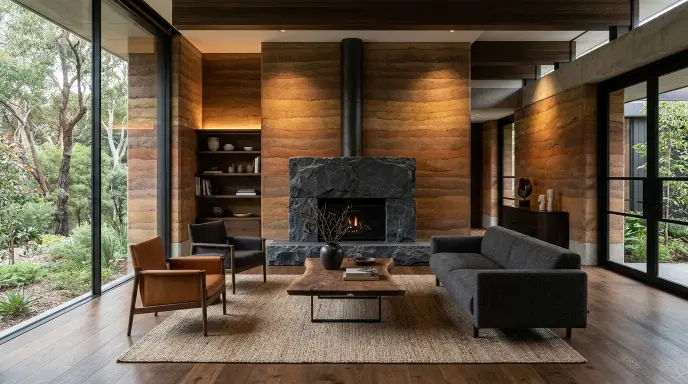
Explanation: Rustic is a strong alternative when earthy refers to a rural, natural, or handmade style.
Example: The restaurant has a rustic interior with wooden tables.
Best Use: Architecture, furniture, interiors, food presentation, and lifestyle writing.
Worst Use: Avoid it when you simply mean natural.
Tone: Warm and descriptive.
Elemental
Meaning: Basic, natural, or related to fundamental forces of nature.
Explanation: Elemental can suggest a powerful connection with basic natural forces.
Example: The landscape has an elemental beauty.
Best Use: Creative, literary, and descriptive writing.
Worst Use: It can sound too dramatic for ordinary conversation.
Tone: Literary and expressive.
Earthbound
Meaning: Connected to or limited to the earth.
Explanation: Earthbound is closer to the literal meaning of earthy in some contexts.
Example: The artwork combines celestial images with earthbound figures.
Best Use: Literary, scientific, and creative writing.
Worst Use: It is not a natural replacement for earthy when describing someone’s personality.
Tone: Formal or literary.
Nature-Inspired
Meaning: Influenced by nature.
Explanation: This phrase works especially well for designs, colors, artwork, and products.
Example: The collection features nature-inspired colors.
Best Use: Design, fashion, branding, interiors, and marketing.
Worst Use: Avoid it when describing a soil-like smell.
Tone: Modern and descriptive.
Unrefined
Meaning: Natural, raw, or lacking extensive processing.
Explanation: Unrefined can overlap with earthy when the word suggests something raw or untreated.
Example: The room has an unrefined charm.
Best Use: Materials, styles, foods, and creative descriptions.
Worst Use: It may sound negative when describing a person.
Tone: Neutral to slightly negative depending on context.
Rural
Meaning: Related to the countryside rather than cities.
Explanation: Rural is useful when earthy refers specifically to countryside life.
Example: The painting captures the beauty of rural life.
Best Use: Geography, lifestyle, agriculture, and social writing.
Worst Use: It does not describe every natural object or earthy color.
Tone: Neutral.
Semi-Formal and Neutral Alternatives:

Raw
Meaning: Natural, untreated, or not heavily processed.
Example: The designer left the wood in its raw state.
Best Use: Materials, food, design, and creative writing.
Worst Use: It can suggest something unfinished or uncooked, so context matters.
Tone: Neutral and direct.
Simple
Meaning: Plain, uncomplicated, or free from unnecessary decoration.
Example: The cabin has a simple, earthy design.
Best Use: Lifestyle, design, and everyday writing.
Worst Use: Simple does not always mean natural.
Tone: Neutral.
Outdoorsy
Meaning: Associated with outdoor activities or an outdoor lifestyle.
Example: He prefers an outdoorsy style with practical clothing.
Best Use: People, fashion, lifestyle, and recreation.
Worst Use: It does not mean soil-related.
Tone: Casual and friendly.
Naturalistic
Meaning: Resembling or representing nature realistically.
Example: The artist created a naturalistic landscape.
Best Use: Art, literature, photography, and design.
Worst Use: It can sound too technical for casual conversation.
Tone: Formal and descriptive.
Nature-Like
Meaning: Similar to or resembling something found in nature.
Example: The room uses nature-like textures and soft colors.
Best Use: Design and visual descriptions.
Worst Use: It is less precise than natural or nature-inspired.
Tone: Neutral.
Woody
Meaning: Having qualities associated with wood, trees, or woody plants.
Example: The fragrance has a warm, woody character.
Best Use: Perfumes, flavors, fragrances, and natural descriptions.
Worst Use: Woody is narrower than earthy.
Tone: Descriptive.
Herbal
Meaning: Related to herbs or having the smell or flavor of herbs.
Example: The tea has a fresh herbal aroma.
Best Use: Food, drinks, fragrances, and natural products.
Worst Use: Herbal does not always mean earthy.
Tone: Neutral.
Muted
Meaning: Soft, subdued, or not highly bright.
Example: The room uses muted earthy colors.
Best Use: Art, fashion, interiors, and photography.
Worst Use: Muted describes intensity, not necessarily a connection to nature.
Tone: Professional and descriptive.
Unpretentious
Meaning: Simple and not designed to impress others.
Example: The café has an unpretentious atmosphere.
Best Use: People, places, businesses, and lifestyles.
Worst Use: It should not replace earthy when discussing soil or natural materials.
Tone: Positive and conversational.
Humble
Meaning: Modest and not overly proud.
Example: He has a humble, down-to-earth personality.
Best Use: Describing people.
Worst Use: Humble does not describe natural colors, smells, or textures.
Tone: Warm and positive.
Informal and Casual Alternatives:
Down-to-Earth
Meaning: Practical, friendly, and realistic.
Example: Our new manager is very down-to-earth.
When Natural: Describing approachable people.
When to Avoid: Scientific, technical, or soil-related contexts.
Tone: Friendly and conversational.
Laid-Back
Meaning: Relaxed and easygoing.
Example: She has a laid-back personality.
When Natural: Casual conversations about people and lifestyles.
When to Avoid: Formal reports or technical descriptions.
Tone: Casual.
Outdoorsy
Meaning: Enjoying or resembling outdoor life.
Example: His clothes have an outdoorsy look.
When Natural: Fashion, lifestyle, hobbies, and personality.
When to Avoid: Describing a smell or soil texture.
Tone: Casual.
Rustic
Meaning: Simple and countryside-inspired.
Example: I love the rustic look of this kitchen.
When Natural: Interiors, furniture, food, and places.
When to Avoid: Personality descriptions unless the context clearly supports it.
Tone: Casual to neutral.
Natural
Meaning: Not artificial and connected with nature.
Example: She prefers a natural look.
When Natural: Everyday speech and writing.
When to Avoid: When a more specific meaning is needed.
Tone: Neutral.
Earthy Synonyms by Meaning and Context:
Earthy Meaning Natural or Organic
Use natural, organic, nature-inspired, naturalistic, or nature-like when earthy means connected with nature.
Example:
Original: The room has an earthy feel.
Alternative: The room has a natural feel.
Earthy Meaning Rustic or Rural
Use rustic, rural, countryside-inspired, simple, or traditional when the word refers to countryside style.
Example:
Original: The restaurant has an earthy atmosphere.
Alternative: The restaurant has a rustic atmosphere.
Earthy Meaning Down-to-Earth
Use grounded, practical, humble, approachable, or unpretentious when describing a person.
Example:
Original: She has an earthy personality.
Alternative: She has a grounded personality.
Earthy Meaning Related to Soil
Use soil-like, earthy-smelling, mineral, or loamy depending on the exact meaning.
Example:
Original: The perfume has an earthy scent.
Alternative: The perfume has a soil-like scent.
Earthy Meaning Raw or Unrefined
Use raw, untreated, unprocessed, natural, or unrefined.
Example:
Original: The furniture has an earthy texture.
Alternative: The furniture has a raw wood texture.
True Synonyms vs Contextual Alternatives:
Not every word in a synonym list can replace earthy in every sentence.
| Type | What It Means | Can It Replace Earthy? |
|---|---|---|
| True synonym | Very similar meaning in a particular context | Usually |
| Near synonym | Similar but with a slightly different meaning | Sometimes |
| Contextual alternative | Works only in a specific situation | Yes, in that context |
| Broader expression | Covers a wider idea | Sometimes |
| Narrower expression | Describes only one part of earthy | Only in specific contexts |
For example, natural is often a useful replacement for earthy, but it is broader. Rustic is more specific because it focuses on countryside style. Grounded applies mainly to personality. Woody describes a wood-like quality rather than earthy qualities in general.
Business Writing:
In business writing, choose precise alternatives instead of using earthy as a vague design or branding term.
For example:
- Earthy branding → nature-inspired branding
- Earthy materials → natural materials
- Earthy design → organic-inspired design
- Earthy atmosphere → natural and relaxed atmosphere
A clear phrase gives the reader a better idea of what you actually mean.
Corporate Communication:
Corporate communication usually benefits from precise wording.
Instead of:
Our office has an earthy atmosphere.
You could write:
Our office uses natural materials and muted colors to create a relaxed atmosphere.
This version explains the idea rather than relying on a broad adjective.
Academic Writing:
Academic writing generally requires more precise terms.
Depending on the subject, replace earthy with words such as:
- terrestrial
- organic
- soil-related
- natural
- rural
- land-based
For example:
Less precise:
The study examined earthy environments.
More precise:
The study examined terrestrial environments.
The correct choice depends on what the research actually describes.
Customer Service:
Customer-facing writing should be clear and easy to understand.
Instead of:
This product has an earthy character.
You might write:
This product has a natural, wood-inspired character.
Or:
This fragrance has a warm, earthy scent with woody notes.
The second example works because earthy is meaningful in fragrance descriptions.
Legal Writing:
Legal writing rarely benefits from vague descriptive words such as earthy. If a document concerns land, soil, property, or environmental conditions, use the specific legal or technical term required by the context.
For example, terrestrial, soil-related, land-based, or a defined property term may be more appropriate than earthy.
Do not replace a legally defined term with a casual synonym simply to make the writing sound different.
Email Communication:
Professional emails often benefit from specific alternatives such as natural, rustic, organic, grounded, or nature-inspired, depending on the subject.
For example:
We recommend a nature-inspired color palette for the new website.
This is clearer than:
We recommend an earthy color palette.
Both can work, but the first explains the intended visual direction more directly.
Email Examples:
Client Design Recommendation
Subject: Recommended Color Direction
Hi Sarah,
For the new website, I recommend a nature-inspired color palette using muted greens, warm beige, and soft brown tones. This combination should create the calm and welcoming look we discussed.
Best,
Daniel
Product Description
Subject: Updated Product Description
Hi Emma,
I revised the product copy to describe the fragrance as warm, woody, and natural rather than simply calling it earthy. The updated wording gives customers a clearer idea of the scent profile.
Best,
James
Project Update
Subject: Cabin Design Update
Hi Mark,
The latest design keeps the rustic character you requested while adding cleaner lines and more modern lighting. The result feels natural without looking overly traditional.
Best,
Alex
Academic Communication
Subject: Clarification About the Assignment
Dear Professor Lee,
I wanted to clarify whether the assignment should focus on terrestrial ecosystems specifically or on natural environments more broadly.
Thank you,
Maya
Vendor Communication
Subject: Material Selection
Hello Chris,
We would like to explore natural and untreated wood options for the display units. Please send the available finishes and material specifications.
Regards,
Michael
Short Dialogue Examples:
Workplace
Person A: How would you describe the new office design?
Person B: I would call it natural and modern. It has a few rustic touches too.
Classroom
Person A: What does terrestrial mean?
Person B: It means related to the earth or land. It can be more precise than earthy in academic writing.
Customer Service
Person A: What kind of scent does this candle have?
Person B: It has a warm, woody fragrance with earthy notes.
Casual Conversation
Person A: What is your new manager like?
Person B: Very down-to-earth. She is easy to talk to.
Professional Discussion
Person A: Should we call the design earthy?
Person B: I would use nature-inspired. It tells clients more clearly what we mean.
How to Replace Earthy in a Sentence:
Example 1
Original: The room has an earthy design.
Alternative: The room has a natural design.
Why it works: Natural is broader and works well when the design is inspired by nature.
Example 2
Original: She has an earthy personality.
Alternative: She has a grounded personality.
Why it works: Grounded better expresses a practical and realistic personality.
Example 3
Original: The restaurant has an earthy interior.
Alternative: The restaurant has a rustic interior.
Why it works: Rustic specifically suggests a countryside-inspired style.
Example 4
Original: The perfume has an earthy smell.
Alternative: The perfume has a soil-like aroma.
Why it works: Soil-like makes the scent description more specific.
Example 5
Original: We chose earthy colors.
Alternative: We chose muted natural colors.
Why it works: This tells the reader that the colors are subdued and nature-inspired.
Example 6
Original: He prefers an earthy lifestyle.
Alternative: He prefers a simple, outdoorsy lifestyle.
Why it works: The alternative explains what earthy means in this context.
Example 7
Original: The artwork has an earthy quality.
Alternative: The artwork has a nature-inspired quality.
Why it works: Nature-inspired fits visual art and avoids ambiguity.
Example 8
Original: The material gives the product an earthy feel.
Alternative: The natural material gives the product a raw, organic feel.
Why it works: The alternative provides more specific information about the material.
Comparison of the Best Earthy Synonyms:
| Phrase | Tone | Meaning / Scope | Best Use | Example |
|---|---|---|---|---|
| Natural | Neutral | Connected with nature | General writing | Natural materials |
| Rustic | Warm | Rural or countryside style | Design | Rustic furniture |
| Organic | Professional | Natural or living-related | Food and products | Organic ingredients |
| Grounded | Positive | Practical and realistic | People | A grounded person |
| Down-to-earth | Casual | Friendly and practical | People | A down-to-earth manager |
| Terrestrial | Formal | Related to earth or land | Science | Terrestrial ecosystems |
| Raw | Direct | Untreated or unprocessed | Materials | Raw wood |
| Outdoorsy | Casual | Connected with outdoor life | Lifestyle | Outdoorsy clothing |
| Woody | Descriptive | Like wood or trees | Scents | Woody fragrance |
| Rural | Neutral | Related to countryside | Geography | Rural communities |
Which Earthy Synonym Should You Choose?
For Formal Writing
Choose terrestrial, natural, organic, rural, or nature-derived, depending on your exact meaning.
For Business Communication
Use natural, nature-inspired, organic, or grounded when appropriate.
For Academic Writing
Prefer precise terms such as terrestrial, soil-related, land-based, organic, or rural.
For Legal Writing
Use the exact technical or legally relevant term rather than a broad adjective such as earthy.
For Professional Email
Natural, rustic, nature-inspired, and organic can work well when the subject is design, products, materials, or branding.
For Everyday Conversation
Natural, rustic, grounded, simple, and down-to-earth are easy and familiar choices.
For Casual Messages
Down-to-earth, outdoorsy, laid-back, natural, and rustic can sound natural depending on the situation.
Grammar and Usage Guide for Earthy:
Earthy is an adjective.
It normally comes before a noun:
- earthy colors
- earthy smell
- earthy tones
- earthy style
- earthy flavor
It can also appear after a linking verb:
- The room feels earthy.
- The fragrance smells earthy.
- Her personality seems earthy.
Comparative Forms
The normal comparative form is earthier:
- This shade is earthier than the original.
The superlative is earthiest:
- This design has the earthiest color palette.
However, comparative forms are less common when earthy is used in technical or highly specific contexts.
Earthy vs Earth
Earth is usually a noun.
Earthy is an adjective.
Correct:
- The soil contains minerals from the earth.
- The fragrance has an earthy scent.
Earthy Tones
The phrase earthy tones is commonly used for colors inspired by natural materials and landscapes. Examples include brown, beige, olive, terracotta, sand, clay, and muted green.
Common Mistakes When Using Earthy Synonyms:
1. Treating Every Alternative as an Exact Synonym
Natural, rustic, grounded, and earthy do not mean exactly the same thing.
2. Using Grounded for Objects
Grounded usually works better for people, personalities, ideas, or emotional states.
3. Using Rustic for Every Natural Style
Rustic specifically suggests a countryside or traditional character.
4. Using Organic Without Checking the Context
Organic can have specific meanings in food, agriculture, chemistry, and biology.
5. Using Casual Language in Formal Writing
Words such as down-to-earth and outdoorsy may sound too conversational in academic or technical writing.
6. Using Terrestrial in Casual Conversation
Terrestrial is accurate but can sound unnecessarily technical in everyday speech.
7. Using Raw as a Positive Synonym Every Time
Raw can also suggest unfinished, uncooked, or unprocessed material.
8. Ignoring the Audience
A product description, academic paper, email, and casual conversation may require different wording.
When Should You Avoid the Word Earthy?
When You Need Technical Precision
Use a specific term such as terrestrial or soil-related.
When the Meaning Is Ambiguous
If readers cannot tell whether you mean natural, rustic, soil-like, or grounded, choose a more precise word.
When Writing Academic Material
A technical term may communicate the idea more accurately.
When Describing a Person
If you mean practical and realistic, grounded or down-to-earth may be clearer.
When Describing a Design
If you mean nature-inspired colors and materials, nature-inspired or organic may provide more information.
When Describing a Fragrance
Earthy is often useful here, but woody, musky, herbal, or soil-like may be more precise when appropriate.
When Earthy Is Actually the Better Choice
Keep earthy when the word captures a combination of natural, soil-like, warm, rustic, or organic qualities that would take several words to explain.
Advanced Tips for Choosing the Right Earthy Synonym:
Tone Control
For a professional tone, try natural, organic, terrestrial, or nature-inspired. For a relaxed tone, rustic, outdoorsy, or down-to-earth may work better.
Professional Email Etiquette
Avoid vague adjectives when a more specific description is possible. Instead of saying something is earthy, explain whether it is natural, rustic, muted, organic, or nature-inspired.
Politeness
When describing people, positive alternatives such as grounded, approachable, humble, and down-to-earth usually sound warmer than words that may suggest being unrefined.
Context Alignment
Always ask what earthy is describing. A person, color, smell, flavor, material, building, and lifestyle may each require a different alternative.
Precision
You mean soil, say soil-like.You mean wood, say woody.You mean rural design, say rustic. If you mean personality, say grounded or down-to-earth.
Readability
A precise synonym can make a sentence shorter and clearer.
Instead of:
The product has an earthy quality that connects it with nature.
Try:
The product has a natural character.
Related Questions About Earthy Synonyms:
What Is Another Word for Earthy?
Depending on the context, another word for earthy can be natural, rustic, organic, grounded, rural, raw, terrestrial, or down-to-earth. The right option depends on whether earthy describes nature, personality, design, smell, flavor, or materials.
What Is a Professional Alternative to Earthy?
Natural, organic, nature-inspired, terrestrial, and grounded can work in professional contexts. The best choice depends on the meaning you need to communicate.
What Is a Formal Alternative to Earthy?
Terrestrial, naturalistic, organic, rural, and nature-derived may work as formal alternatives. However, none should automatically replace earthy in every sentence.
What Can I Use Instead of Earthy?
You can use natural for a general meaning, rustic for countryside style, grounded for personality, woody for scents, soil-like for aromas, and nature-inspired for design.
Is Earthy a Formal Word?
Earthy is a standard English adjective and is not inherently informal. However, it is sometimes less precise than technical alternatives such as terrestrial or soil-related.
Is Earthy the Same as Natural?
Not exactly. Natural is broader. Something can be natural without being earthy. Earthy usually adds a particular association with soil, nature, rustic qualities, warmth, or groundedness.
What Is the Difference Between Earthy and Rustic?
Earthy often suggests nature, soil, warmth, or natural qualities. Rustic specifically suggests a countryside, traditional, rough, or handmade style. They overlap in design but are not interchangeable in every context.
Frequently Asked Questions:
What Is the Best Synonym for Earthy?
There is no single best synonym because earthy has several meanings. Natural works for general nature-related descriptions, rustic for countryside style, grounded for personality, and soil-like for smells or flavors.
What Is a More Formal Word for Earthy?
Terrestrial can be a formal alternative when earthy means related to the earth or land. Naturalistic may work in art or design, while organic can be appropriate in specific scientific, agricultural, or product contexts.
What Is Another Word for Earthy and Natural?
Words such as organic, nature-inspired, naturalistic, rustic, raw, and nature-like can overlap with earthy and natural. The best choice depends on what aspect you want to emphasize.
Is Rustic a Synonym for Earthy?
Rustic can be a contextual synonym, especially when earthy describes a countryside-inspired design, building, or lifestyle. However, rustic focuses more strongly on rural or traditional character.
Can Natural Replace Earthy?
Sometimes. Natural is a broad and useful replacement, but it may lose the specific suggestion of soil, warmth, rustic style, or grounded character that earthy can carry.
What Is the Difference Between Earthy and Grounded?
Earthy can describe nature, materials, colors, scents, flavors, or people. Grounded usually describes someone who is practical, emotionally stable, realistic, or connected to reality.
Is Earthy a Positive or Negative Word?
Earthy is usually neutral or positive, but its effect depends on context. It can suggest warmth and natural beauty, while in some descriptions it may imply rawness, soil-like qualities, or a lack of refinement.
Key Takeaways:
- Earthy has several meanings, so the right synonym depends on context.
- Natural is one of the broadest alternatives, while rustic focuses on rural style.
- Use grounded or down-to-earth when describing a practical personality.
- Choose precise words such as woody, herbal, or soil-like for specific smells and flavors.
- In professional and academic writing, prioritize precision over simply replacing earthy with another broad adjective.
Conclusion:
The best synonym for earthy depends on what you are trying to describe. For general nature-related meaning, natural is often the easiest choice. If you are talking about countryside style, rustic may be more accurate. For a practical personality, grounded or down-to-earth works better.
When describing scents and flavors, more specific words such as woody, herbal, mineral, or soil-like can provide greater clarity.The key is not to treat every synonym as interchangeable.
Earthy can describe colors, materials, personalities, lifestyles, environments, smells, flavors, and design, and each context can call for a different word. Choose the alternative that preserves the original meaning while matching your audience, tone, and purpose. Precise word choice will make your writing clearer, more natural, and more effective.