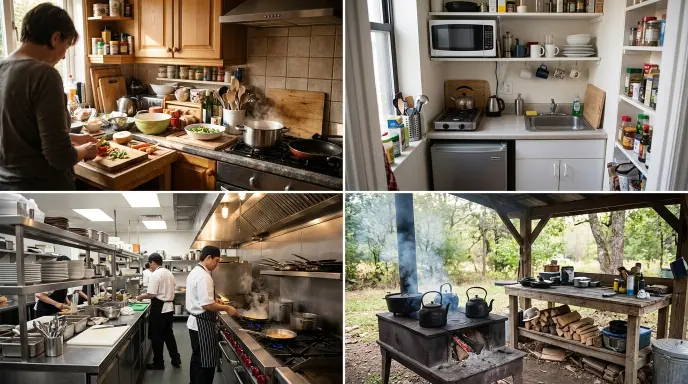
A kitchen is one of the most important spaces in a home. It is where people prepare meals, cook food, wash dishes, and spend time with family. However, the word kitchen does not always fit every sentence. Writers, homeowners, interior designers, and students may need different words to describe cooking spaces, food preparation areas, or professional cooking facilities.
There are several words and expressions related to kitchens, including cookroom, galley, kitchenette, cooking area, culinary space, food preparation area, and cooking facility. Some are close alternatives, while others describe specific types of kitchens or serve different purposes. Choosing the right expression depends on the setting, audience, and meaning you want to communicate.
Quick Answer: What Is Another Word for Kitchen?
Another word for kitchen is cookroom, cooking area, kitchenette, galley, or food preparation area. Other related expressions include culinary space, cooking facility, kitchen area, and meal preparation space. The best alternative depends on whether you are describing a home kitchen, restaurant kitchen, small cooking space, or professional food preparation facility.
Words and Phrases Related to Kitchen
Here are useful alternatives, related expressions, and specialized terms for describing kitchens in different situations.
Closest Alternatives:
- Cookroom
- Cooking area
- Kitchenette
- Galley
- Food preparation area
- Cooking space
- Culinary space
- Kitchen area
- Meal preparation area
- Cooking room
Formal and Professional Alternatives:
- Food preparation facility
- Culinary facility
- Food service area
- Commercial kitchen
- Food production area
- Meal preparation facility
- Catering kitchen
- Institutional kitchen
- Food preparation station
- Culinary workspace
Neutral and Everyday Alternatives:
- Home kitchen
- Cooking corner
- Cooking zone
- Kitchen space
- Food prep area
- Meal prep space
- Cooking section
- Household kitchen
- Domestic kitchen
- Kitchen room
Informal and Creative Alternatives:
- Cook space
- Cooking nook
- Food corner
- Chef’s corner
- Home cooking space
- Cooking hub
- Food station
- Culinary corner
- Meal-making space
- Cooking spot
Specific Kitchen Types and Related Spaces:
- Pantry
- Scullery
- Kitchen island
- Breakfast nook
- Prep kitchen
- Outdoor kitchen
- Summer kitchen
- Ghost kitchen
- Commissary kitchen
- Restaurant kitchen
- Hotel kitchen
- Test kitchen
- Demonstration kitchen
- Teaching kitchen
- Catering space
- Service kitchen
- Staff kitchen
- Galley kitchen
- Open-plan kitchen
- Compact kitchen
- Modular kitchen
- Farmhouse kitchen
- Chef’s kitchen
Note: Not every expression above is an exact synonym. Some describe a particular kitchen design, a smaller cooking space, or a specialized food preparation area.
Formal Alternatives for Kitchen
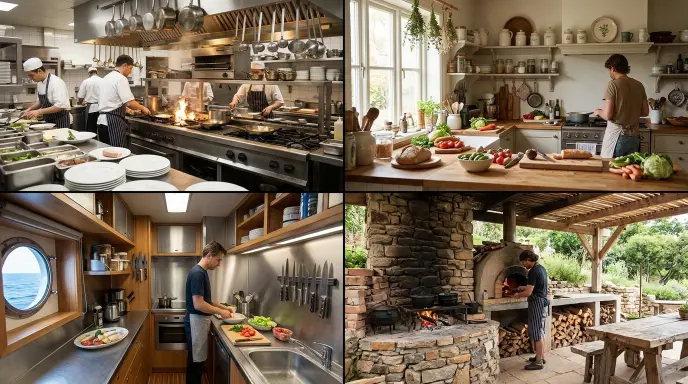
Formal alternatives are useful in professional documents, architectural descriptions, property listings, restaurant reports, and institutional communication.
1. Food Preparation Area:
Meaning: A designated place where food is prepared before cooking or serving.
Explanation: This is a practical alternative when the focus is on preparing ingredients rather than the entire kitchen.
Example: The restaurant has a separate food preparation area for fresh vegetables.
Best Use: Restaurant descriptions, workplace instructions, and food safety documents.
Worst Use: Avoid it when discussing a comfortable family kitchen or decorating style.
Tone: Professional and descriptive.
2. Culinary Facility:
Meaning: A place designed for cooking and food-related activities.
Explanation: This expression sounds more formal than kitchen and may describe a professional cooking environment.
Example: The hotel recently upgraded its culinary facility.
Best Use: Hospitality reports, educational institutions, and professional food services.
Worst Use: It may sound excessive when describing a small home kitchen.
Tone: Formal and technical.
3. Food Service Area:
Meaning: A designated space where food is prepared, handled, or served.
Explanation: It has a broader meaning than kitchen because it may include serving and distribution spaces.
Example: Employees must keep the food service area clean.
Best Use: Schools, hospitals, cafeterias, and commercial buildings.
Worst Use: Do not use it when you specifically mean a residential cooking room.
Tone: Professional and administrative.
4. Food Preparation Facility:
Meaning: An organized location equipped for preparing food.
Explanation: This phrase often refers to a larger or specialized cooking operation.
Example: The company operates a food preparation facility for its catering business.
Best Use: Business reports, catering operations, and food production.
Worst Use: It sounds too technical for ordinary household conversations.
Tone: Formal and operational.
5. Commercial Kitchen:
Meaning: A kitchen designed for preparing food for customers or large groups.
Explanation: This is not a universal replacement because it specifically refers to a business or professional cooking environment.
Example: The new restaurant includes a fully equipped commercial kitchen.
Best Use: Restaurant planning, business documents, and food industry descriptions.
Worst Use: Avoid it when describing a private home kitchen.
Tone: Professional and industry-specific.
6. Culinary Workspace:
Meaning: An area arranged for cooking and food preparation.
Explanation: It emphasizes the kitchen as a functional workspace.
Example: The designer created a modern culinary workspace with additional storage.
Best Use: Interior design descriptions and professional presentations.
Worst Use: It may sound unnatural in simple everyday conversation.
Tone: Polished and professional.
7. Food Production Area:
Meaning: A place where food is prepared or produced in an organized process.
Explanation: This term is broader and more industrial than kitchen.
Example: The food production area must follow strict cleaning procedures.
Best Use: Food manufacturing, catering, and institutional operations.
Worst Use: It is not suitable for describing a decorative home cooking space.
Tone: Technical and formal.
8. Institutional Kitchen:
Meaning: A kitchen that prepares meals for an organization or large group.
Explanation: It commonly describes cooking facilities in schools, hospitals, and care centers.
Example: The hospital renovated its institutional kitchen last year.
Best Use: Healthcare, education, and public facilities.
Worst Use: Do not use it for an ordinary residential kitchen.
Tone: Formal and specialized.
9. Catering Kitchen:
Meaning: A kitchen used to prepare meals for events, functions, and customers.
Explanation: It describes a specialized cooking facility rather than every kind of kitchen.
Example: The catering kitchen can prepare meals for several events each day.
Best Use: Catering businesses, event planning, and hospitality.
Worst Use: It is inaccurate for a standard family cooking area.
Tone: Professional and commercial.
10. Culinary Center:
Meaning: A place dedicated to cooking, food education, or culinary activities.
Explanation: A culinary center may include several kitchens, classrooms, and demonstration spaces. It is broader than a single kitchen.
Example: The culinary center offers practical cooking classes.
Best Use: Cooking schools, training centers, and food education.
Worst Use: Avoid using it as a direct replacement for a home kitchen.
Tone: Formal and educational.
11. Meal Preparation Facility:
Meaning: A location designed to prepare meals.
Explanation: This phrase highlights meal preparation and may describe a professional or institutional setting.
Example: The school built a new meal preparation facility.
Best Use: Schools, hospitals, and catering organizations.
Worst Use: It is unnecessarily long for casual writing.
Tone: Formal and descriptive.
12. Food Handling Area:
Meaning: A space where food is stored, prepared, or handled.
Explanation: This phrase focuses on food handling rather than cooking alone.
Example: Staff must wash their hands before entering the food handling area.
Best Use: Workplace procedures and food safety instructions.
Worst Use: It does not describe the full design or function of a kitchen.
Tone: Technical and professional.
Semi-Formal and Neutral Alternatives for Kitchen
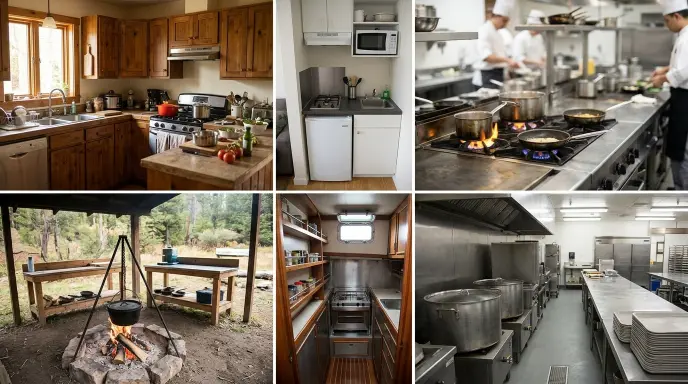
These expressions work well in everyday writing, home descriptions, property advertisements, and general communication.
13. Cooking Area:
Meaning: A place where meals are cooked.
Explanation: This is one of the most natural alternatives. It describes the cooking function without necessarily referring to a separate room.
Example: The apartment has a small cooking area near the living room.
Best Use: Everyday descriptions, property listings, and general writing.
Worst Use: Avoid it if you need to describe the entire kitchen, including storage and washing facilities.
Tone: Neutral and clear.
14. Cooking Space:
Meaning: An area used for cooking food.
Explanation: This expression can describe both small and large cooking environments.
Example: We created more cooking space by moving the refrigerator.
Best Use: Home improvement, interior design, and casual writing.
Worst Use: It may be too broad when a precise room description is required.
Tone: Neutral and conversational.
15. Kitchenette:
Meaning: A small kitchen or compact cooking area.
Explanation: A kitchenette is a narrower term than kitchen. It often includes limited cooking and storage facilities.
Example: The hotel room includes a kitchenette with a microwave and sink.
Best Use: Hotels, studios, small apartments, and office spaces.
Worst Use: Do not use it for a large, fully equipped kitchen.
Tone: Neutral and descriptive.
16. Galley:
Meaning: A narrow cooking area, especially on a ship or aircraft.
Explanation: In home design, a galley kitchen is a narrow layout with work surfaces or cabinets arranged along parallel sides.
Example: The apartment has a compact galley kitchen.
Best Use: Interior design, boats, aircraft, and small homes.
Worst Use: It is not a general replacement for every kitchen.
Tone: Neutral and specialized.
17. Kitchen Area:
Meaning: The part of a building used for cooking and related activities.
Explanation: This phrase is useful when the kitchen is part of a larger open-plan room.
Example: The kitchen area opens directly into the dining room.
Best Use: Real estate listings and home descriptions.
Worst Use: It can be repetitive if the surrounding text already mentions the kitchen.
Tone: Neutral and practical.
18. Meal Preparation Area:
Meaning: A place where ingredients and meals are prepared.
Explanation: It focuses on preparing food rather than the entire cooking environment.
Example: Keep the meal preparation area free from unnecessary items.
Best Use: Household instructions and workplace communication.
Worst Use: It may sound overly descriptive in casual conversation.
Tone: Clear and neutral.
19. Home Kitchen:
Meaning: A kitchen located in a private residence.
Explanation: The word home clarifies that the space is residential rather than commercial.
Example: Her home kitchen has wooden cabinets and a large island.
Best Use: Home design, lifestyle writing, and property descriptions.
Worst Use: It is unnecessary when the residential setting is already obvious.
Tone: Friendly and neutral.
20. Domestic Kitchen:
Meaning: A kitchen used for household cooking.
Explanation: Domestic identifies the kitchen as part of a home rather than a commercial operation.
Example: The guide explains how to organize a domestic kitchen.
Best Use: Home design, household guides, and educational writing.
Worst Use: It may sound formal in casual conversations.
Tone: Neutral and slightly formal.
21. Food Prep Area:
Meaning: A place where ingredients are prepared before cooking.
Explanation: This shorter expression is common in cooking instructions and professional settings.
Example: Place the cutting board in the food prep area.
Best Use: Recipes, cooking guides, and restaurant instructions.
Worst Use: It does not represent the entire kitchen.
Tone: Practical and straightforward.
22. Cooking Corner:
Meaning: A small section of a room arranged for cooking.
Explanation: This expression works when cooking facilities occupy only one part of a larger space.
Example: The studio apartment has a neat cooking corner.
Best Use: Small homes, apartments, and casual descriptions.
Worst Use: Avoid it when referring to a large, separate kitchen.
Tone: Friendly and informal-neutral.
23. Culinary Space:
Meaning: An area designed for cooking and food preparation.
Explanation: This expression gives a more polished feel to a kitchen description.
Example: Natural lighting makes the culinary space feel more welcoming.
Best Use: Home improvement blogs and interior design writing.
Worst Use: It may sound unnecessarily fancy in simple instructions.
Tone: Modern and descriptive.
24. Cooking Zone:
Meaning: A designated section for cooking.
Explanation: It often describes a specific functional area within a larger kitchen.
Example: Keep the cooking zone away from the main walking path.
Best Use: Kitchen layouts and organization guides.
Worst Use: It is not always suitable as a name for an entire kitchen.
Tone: Neutral and functional.
Informal and Casual Alternatives for Kitchen
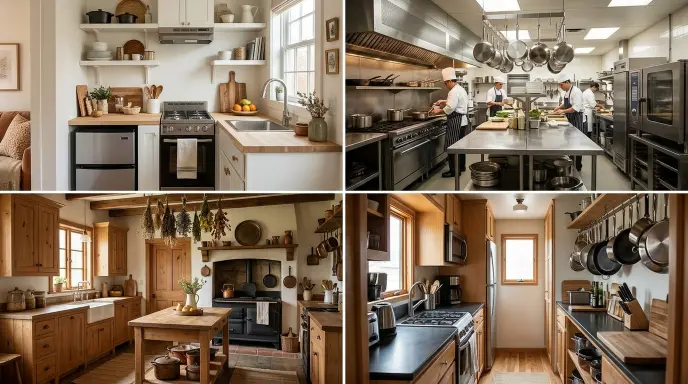
Casual expressions can make conversations sound relaxed and natural. However, some of these are creative descriptions rather than standard dictionary synonyms.
25. Cook Space:
Meaning: An informal way to describe an area used for cooking.
Example: We need more storage in our cook space.
When It Sounds Natural: Casual home improvement conversations.
When to Avoid It: Formal reports and professional property descriptions.
Tone: Relaxed and simple.
26. Cooking Nook:
Meaning: A small, cozy place for cooking.
Example: She turned the tiny corner into a lovely cooking nook.
When It Sounds Natural: Small apartments and home decoration discussions.
When to Avoid It: Large commercial kitchens.
Tone: Warm and friendly.
27. Food Corner:
Meaning: An informal expression for a small area associated with preparing or enjoying food.
Example: Let’s organize the food corner before the guests arrive.
When It Sounds Natural: Casual household conversations.
When to Avoid It: Technical cooking instructions.
Tone: Casual and descriptive.
28. Chef’s Corner:
Meaning: A creative name for a cooking area.
Example: My favorite place in the house is the chef’s corner.
When It Sounds Natural: Home decoration, social media, and playful writing.
When to Avoid It: Standard business documents.
Tone: Creative and friendly.
29. Cooking Spot:
Meaning: An informal name for a place where someone cooks.
Example: This little cooking spot is perfect for quick meals.
When It Sounds Natural: Everyday conversation.
When to Avoid It: Formal architectural descriptions.
Tone: Relaxed and conversational.
30. Cooking Hub:
Meaning: A central place where cooking activities take place.
Example: The family kitchen has become the cooking hub of the house.
When It Sounds Natural: Lifestyle blogs and informal home descriptions.
When to Avoid It: When precision is required in technical writing.
Tone: Modern and casual.
31. Meal-Making Space:
Meaning: A place used to prepare meals.
Example: We designed a simple meal-making space for our new apartment.
When It Sounds Natural: Casual discussions about home organization.
When to Avoid It: Formal reports and academic papers.
Tone: Friendly and descriptive.
Creative and Stylish Names for Kitchen
If you are naming a kitchen, creating a home design blog, or describing a stylish cooking space, these expressions may offer inspiration.
- The Culinary Corner
- The Cooking Studio
- The Chef’s Space
- The Food Haven
- The Home Bistro
- The Cooking Lounge
- The Flavor Station
- The Meal Studio
- The Gourmet Corner
- The Kitchen Hub
These are creative names, not established synonyms. They work best as decorative labels, blog headings, or names for a cooking space.
Traditional and Modern Kitchen Names
Different expressions are used to describe kitchens based on their design, history, and purpose.
Traditional Kitchen:
A traditional kitchen often features classic cabinets, familiar layouts, and timeless decorative details.
Farmhouse Kitchen:
A farmhouse kitchen uses rustic materials, practical storage, and warm design elements.
Modern Kitchen:
A modern kitchen often includes clean lines, simple surfaces, and contemporary appliances.
Modular Kitchen:
A modular kitchen uses separate cabinet units and components arranged to fit a particular space.
Open-Plan Kitchen:
An open-plan kitchen connects with another living area instead of being separated by full walls.
Outdoor Kitchen:
An outdoor kitchen is designed for cooking outside the main house.
Summer Kitchen:
A summer kitchen is a separate or outdoor cooking space traditionally used during warmer months.
Galley Kitchen:
A galley kitchen has a narrow layout with work areas arranged along two parallel sides or one main wall.
Different Types of Kitchens and Their Names
Some kitchen-related terms describe specific facilities rather than interchangeable words.
Pantry:
A pantry is a storage area for food, ingredients, and kitchen supplies. It is not usually a complete cooking space.
Scullery:
A scullery is a separate room or area used for washing dishes, cleaning, and food preparation.
Prep Kitchen:
A prep kitchen is a dedicated space for preparing ingredients, often separate from the main cooking area.
Ghost Kitchen:
A ghost kitchen prepares food for delivery or takeout without a traditional dine-in restaurant.
Commissary Kitchen:
A commissary kitchen is a shared or centralized commercial cooking facility used by food businesses.
Test Kitchen:
A test kitchen is used to develop, test, and improve recipes.
Demonstration Kitchen:
A demonstration kitchen is designed for cooking lessons, presentations, and live demonstrations.
Teaching Kitchen:
A teaching kitchen provides facilities for learning cooking skills and food preparation.
Service Kitchen:
A service kitchen supports meal preparation and delivery in places such as hotels, restaurants, and institutions.
Breakfast Nook:
A breakfast nook is a small dining area, often located near the kitchen. It is not a synonym for the cooking room.
Kitchen-Related Words for Home and Interior Design
Interior designers use different terms to describe kitchen layouts, features, and functional areas.
- Kitchen island: A freestanding counter in the kitchen.
- Countertop: The flat work surface used for food preparation.
- Backsplash: A protective wall surface behind a sink or stove.
- Cabinetry: The cabinets used for storage.
- Pantry cabinet: A tall cabinet designed to store food.
- Breakfast bar: A counter designed for informal dining.
- Work triangle: The relationship between the sink, stove, and refrigerator.
- Utility area: A space used for household tasks and equipment.
- Scullery room: A separate space for washing and preparation.
- Dining area: A place where people eat meals.
These terms describe parts or functions of a kitchen, not the entire room.
Professional Terms Used for Kitchen
Professional cooking environments use specialized terminology.
| Term | Meaning | Common Setting |
|---|---|---|
| Commercial kitchen | Kitchen used for business food preparation | Restaurants |
| Prep station | Area for preparing ingredients | Restaurants |
| Cooking station | Area where food is cooked | Professional kitchens |
| Pastry kitchen | Area for preparing baked goods and desserts | Hotels and bakeries |
| Cold kitchen | Area for preparing cold dishes | Hotels and restaurants |
| Production kitchen | Facility for preparing food in quantity | Catering |
| Service area | Space for handling or serving food | Hospitality |
| Dishwashing area | Section for cleaning dishes | Commercial kitchens |
| Catering facility | Place for preparing catering orders | Catering companies |
| Commissary | Centralized food preparation facility | Food businesses |
True Synonyms vs. Contextual Alternatives
Not every kitchen-related word can replace kitchen in every sentence. Understanding the difference helps you choose accurate wording.
| Type | What It Means | Can It Replace the Original? |
|---|---|---|
| True synonym | A word with nearly the same meaning | Yes, when the context fits |
| Near synonym | A similar word with a small difference | Sometimes |
| Contextual alternative | A phrase suitable for a particular situation | Only in that context |
| Broader expression | A phrase covering a larger area or function | Sometimes |
| Narrower expression | A phrase describing a specific kitchen type | Only for that type |
For example, cookroom is a close alternative, although it is uncommon in modern American English. Kitchenette means a small kitchen, while pantry refers mainly to storage. Similarly, commercial kitchen describes a business cooking facility rather than a residential kitchen.
Business and Professional Usage
In business writing, the best alternative depends on the type of facility and its purpose.
Use these expressions when describing professional cooking operations:
- Commercial kitchen
- Food preparation facility
- Culinary workspace
- Catering kitchen
- Food production area
Example:
Original: The company opened a new kitchen for its catering service.
Alternative: The company opened a new food preparation facility for its catering service.
The second sentence sounds more operational and professional. However, it also suggests a dedicated facility rather than an ordinary room.
Kitchen Terminology in Interior Design
Interior design writing often benefits from specific terms instead of general alternatives.
For example:
- Use culinary space for a polished design description.
- Use cooking area for a functional section.
- Use galley kitchen for a narrow layout.
- Use open-plan kitchen for a connected living space.
- Use kitchenette for a compact cooking arrangement.
Example:
Original: The kitchen looks bright and spacious.
Alternative: The open-plan culinary space looks bright and spacious.
The alternative adds design detail, but it also changes the description by identifying a particular layout.
Kitchen Terms in Real Estate
Property descriptions should use accurate terms to help buyers and renters understand the available facilities.
Examples include:
- Fully equipped kitchen
- Modern kitchen
- Compact kitchenette
- Open-plan cooking area
- Separate kitchen
- Galley-style kitchen
- Outdoor cooking space
- Renovated kitchen
Example:
The apartment features a compact kitchenette with modern appliances.
This is more informative than simply saying the apartment has a small kitchen.
Kitchen-Related Email Examples
The following examples demonstrate how kitchen-related alternatives work in professional communication.
1. Email About a Commercial Kitchen:
Subject: Commercial Kitchen Inspection
Hello Mark,
We are planning an inspection of the commercial kitchen next Monday. Please ensure that all cooking equipment is clean and ready for review.
Thank you for your cooperation.
Best regards,
Daniel
2. Email About a Food Preparation Area:
Subject: Cleaning Schedule Update
Hello Team,
Please review the updated cleaning schedule for the food preparation area. Each section must be cleaned after use to maintain a safe working environment.
Thank you,
Sarah
3. Email About a Kitchen Renovation:
Subject: Kitchen Renovation Proposal
Hello James,
I have attached the proposed design for the new culinary space. It includes additional storage, improved lighting, and a larger preparation counter.
Please share your feedback before we finalize the plan.
Best,
Emily
4. Email About a Restaurant Facility:
Subject: Restaurant Facility Maintenance
Dear Operations Team,
The food service area requires maintenance this week. Please arrange the necessary repairs and confirm when the work is complete.
Regards,
Michael
5. Email About a Small Apartment Kitchen:
Subject: Apartment Facilities
Hello,
Could you please confirm whether the apartment kitchenette includes a refrigerator, microwave, and cooking stove?
I would appreciate your response before completing the booking.
Kind regards,
Alex
6. Email About a Catering Facility:
Subject: Catering Kitchen Equipment
Hello David,
We need to review the equipment available in the catering kitchen before the upcoming event. Please send the updated inventory when convenient.
Thank you,
Rachel
Short Dialogue Examples Using Kitchen Alternatives
1. Workplace Conversation:
Person A: Where should I prepare the vegetables?
Person B: Use the food preparation area near the refrigerator.
2. Interior Design Discussion:
Person A: What do you think about this layout?
Person B: The open-plan kitchen makes the living space feel larger.
3. Hotel Conversation:
Person A: Does this room have cooking facilities?
Person B: Yes, it includes a small kitchenette.
4. Casual Conversation:
Person A: Where are you making dinner?
Person B: In my little cooking nook.
5. Professional Discussion:
Person A: Where will the restaurant prepare its meals?
Person B: We are building a separate commercial kitchen.
How to Replace Kitchen in a Sentence
Here are practical examples showing how different alternatives can improve sentence clarity.
1. Using Cooking Area:
Original: The kitchen needs more lighting.
Alternative: The cooking area needs more lighting.
Why it works: Cooking area is a natural alternative when discussing the functional part of a room.
2. Using Kitchenette:
Original: The hotel room has a small kitchen.
Alternative: The hotel room has a kitchenette.
Why it works: Kitchenette specifically describes a compact cooking space.
3. Using Culinary Space:
Original: The kitchen has a beautiful modern design.
Alternative: The culinary space has a beautiful modern design.
Why it works: Culinary space gives the description a more polished interior design tone.
4. Using Food Preparation Area:
Original: Keep the kitchen clean during work.
Alternative: Keep the food preparation area clean during work.
Why it works: The alternative focuses on the area where food is handled and prepared.
5. Using Commercial Kitchen:
Original: The restaurant needs a larger kitchen.
Alternative: The restaurant needs a larger commercial kitchen.
Why it works: Commercial kitchen identifies the professional setting.
6. Using Galley Kitchen:
Original: Their apartment has a narrow kitchen.
Alternative: Their apartment has a galley kitchen.
Why it works: Galley kitchen gives a more specific description of the layout.
7. Using Cooking Space:
Original: We need more room in the kitchen.
Alternative: We need more room in the cooking space.
Why it works: Cooking space sounds natural in home improvement discussions, although it may be less precise.
8. Using Prep Kitchen:
Original: The restaurant has a separate kitchen for preparing ingredients.
Alternative: The restaurant has a separate prep kitchen.
Why it works: Prep kitchen is a shorter, more specific term for a dedicated preparation space.
9. Using Food Service Area:
Original: Staff must clean the kitchen after every shift.
Alternative: Staff must clean the food service area after every shift.
Why it works: The alternative may cover preparation and serving spaces, making it broader than kitchen.
10. Using Domestic Kitchen:
Original: This kitchen is designed for family use.
Alternative: This domestic kitchen is designed for family use.
Why it works: Domestic emphasizes the residential purpose, although the original sentence sounds more natural in everyday English.
Kitchen Synonyms Comparison Table
| Phrase | Tone | Meaning / Scope | Best Use | Example |
|---|---|---|---|---|
| Cookroom | Uncommon | Room for cooking | Historical or descriptive writing | The cookroom was spacious. |
| Cooking area | Neutral | Place for cooking | Everyday writing | Clean the cooking area. |
| Kitchenette | Neutral | Small kitchen | Hotels and apartments | The room has a kitchenette. |
| Galley | Specialized | Narrow kitchen layout | Interior design | We have a galley kitchen. |
| Culinary space | Polished | Cooking environment | Design writing | The culinary space looks elegant. |
| Food preparation area | Formal | Ingredient preparation space | Restaurants | Clean the preparation area. |
| Commercial kitchen | Professional | Business cooking facility | Restaurants | The commercial kitchen is new. |
| Cooking nook | Casual | Small cooking corner | Home descriptions | The cooking nook is cozy. |
| Prep kitchen | Professional | Dedicated preparation space | Restaurants | Use the prep kitchen. |
| Domestic kitchen | Formal-neutral | Residential cooking room | Home guides | The domestic kitchen is bright. |
| Food service area | Professional | Food preparation and serving space | Institutions | The food service area is clean. |
| Scullery | Traditional | Washing and preparation room | Architecture | The house has a scullery. |
Which Alternative Should You Choose?
The best replacement depends on your audience and the type of cooking space you are describing.
For Formal Writing:
Choose food preparation facility, culinary facility, or food service area. These expressions suit professional documents and institutional descriptions.
For Business Communication:
Use commercial kitchen, catering kitchen, or food production area. Each term describes a different type of professional operation.
For Academic Writing:
Choose food preparation area, domestic kitchen, or culinary facility. Make sure the expression matches the subject of your research.
For Legal Writing:
Use kitchen unless a more specific term is defined in the relevant document. Do not replace it with a broader expression if the exact space matters.
For Professional Emails:
Use cooking area, food preparation area, or commercial kitchen. These expressions are clear and easy to understand.
For Everyday Conversation:
Choose kitchen, cooking area, or cooking space. These expressions sound natural and do not feel overly formal.
For Casual Messages:
Use cooking nook, cooking spot, or chef’s corner when a playful tone fits the conversation.
Grammar and Usage Guide
Understanding how to use kitchen-related words correctly helps you write natural sentences.
1. Kitchen Is a Countable Noun
The word kitchen is a countable noun. Use a or the before it when appropriate.
Correct: We have a beautiful kitchen.
Correct: The kitchen needs cleaning.
Incorrect: We have beautiful kitchen.
2. Use Kitchens for More Than One
The plural form of kitchen is kitchens.
Example: The hotel has three kitchens.
Do not use kitchen’s as the plural form. An apostrophe indicates possession or a contraction.
3. Use Kitchen as an Adjective
Kitchen can describe another noun.
Examples:
- Kitchen cabinets
- Kitchen equipment
- Kitchen appliances
- Kitchen utensils
- Kitchen design
- Kitchen flooring
In these combinations, kitchen usually identifies the purpose or location of the object.
4. Understand Kitchen and Kitchenette
A kitchen is a general cooking room or area. A kitchenette is a smaller version with limited facilities.
Example: The house has a large kitchen, but the guest room only has a kitchenette.
5. Use Prepositions Correctly
Common combinations include:
- In the kitchen
- Near the kitchen
- Outside the kitchen
- Inside the kitchen
- Next to the kitchen
- Across from the kitchen
Example: She is preparing dinner in the kitchen.
6. Capitalization Rules
Kitchen is not normally capitalized unless it begins a sentence or appears in a proper name or title.
Correct: The kitchen looks beautiful.
Correct: Kitchen Design Ideas for Small Homes.
7. Understand Compound Expressions
Some kitchen-related expressions use two words, while others use hyphens depending on their grammatical role.
Examples:
- Kitchen area
- Food preparation area
- Galley kitchen
- Open-plan kitchen
- Meal-preparation space
Follow the style guide used by your publication.
8. Choose Natural Word Combinations
Some combinations sound more natural than others.
Natural:
- Clean the kitchen.
- Renovate the kitchen.
- Design a kitchen.
- Prepare food in the kitchen.
- Install kitchen cabinets.
Less natural: Renovate the culinary facility of my small home.
A simple word is often better than a complicated alternative.
Common Mistakes When Using Kitchen Synonyms
Even closely related words can create confusion if you use them incorrectly.
1. Treating Every Alternative as an Exact Synonym
A pantry, scullery, and kitchenette have different meanings. Do not use them interchangeably.
2. Using Overly Formal Expressions
Calling a small home kitchen a culinary facility may sound unnatural. Choose language that matches the situation.
3. Confusing a Kitchenette With a Full Kitchen
A kitchenette is generally smaller and has fewer facilities. Avoid using it to describe a large cooking room.
4. Using Galley for Every Kitchen
Galley refers to a particular layout or specialized cooking space. It does not describe every residential kitchen.
5. Confusing a Pantry With a Kitchen
A pantry is mainly used for storing food and supplies. It may be inside or near a kitchen, but it is not the same thing.
6. Choosing Creative Terms in Professional Writing
Expressions such as chef’s corner and cooking spot can work in casual content but may seem unprofessional in business reports.
7. Repeating the Same Alternative
Using cooking area in every sentence makes writing repetitive. Vary your wording only when another expression fits the meaning.
8. Ignoring the Audience
A restaurant owner, homeowner, interior designer, and hotel guest may use different terminology. Think about your reader before choosing an alternative.
When Not to Use the Word Kitchen
Although kitchen is a clear and familiar word, certain situations call for a more specific expression.
1. When Describing a Small Cooking Space
Use kitchenette when the area is compact and has limited facilities.
2. When Discussing a Professional Facility
Use commercial kitchen when describing a restaurant or business cooking operation.
3. When Explaining a Particular Layout
Use galley kitchen or open-plan kitchen to communicate the design more accurately.
4. When Discussing Food Storage
Use pantry if you mean a dedicated storage area rather than the cooking room.
5. When Describing Ingredient Preparation
Use food preparation area when the focus is on washing, cutting, and organizing ingredients.
6. When Writing Interior Design Content
Expressions such as culinary space and cooking area can add variety, especially when discussing layout and functionality.
When Kitchen Is the Better Choice
The original word is often the strongest option. Use kitchen in everyday instructions, simple descriptions, property details, and general communication. It is familiar, direct, and rarely misunderstood.
Advanced Writing Tips for Choosing the Right Alternative
Tone Control:
Match the expression to your writing style. Use commercial kitchen in business documents, cooking area in general writing, and cooking nook in relaxed descriptions.
Professional Email Etiquette:
Keep your emails simple. Instead of writing, “The culinary facility requires immediate attention,” say, “The commercial kitchen needs maintenance.”
Politeness:
A polite sentence focuses on the request rather than making the wording unnecessarily complicated.
Example: Please keep the food preparation area clean after use.
Context Alignment:
Think about the actual space before choosing an alternative. A restaurant kitchen, home kitchen, and hotel kitchenette serve different purposes.
Precision:
Use specific terminology when the layout or function matters. Galley kitchen gives more information than simply saying small kitchen.
Readability:
Do not replace familiar words just to make your writing sound sophisticated. Simple wording often communicates ideas more effectively.
Related Words and Expressions for Kitchen
Several related terms can help expand your vocabulary when writing about cooking, home design, and food preparation.
- Cooking: The process of preparing food using heat.
- Culinary: Related to cooking or food preparation.
- Cookware: Pots, pans, and other cooking equipment.
- Tableware: Items used for serving and eating food.
- Utensils: Tools used for preparing and serving meals.
- Appliances: Electrical or mechanical equipment used in the kitchen.
- Pantry: A storage area for food.
- Scullery: A room used for washing dishes and other kitchen tasks.
- Countertop: A flat working surface.
- Cabinetry: Cabinets used for storage.
- Refrigerator: An appliance used to keep food cold.
- Stove: An appliance used for cooking.
- Oven: An enclosed appliance used for baking and roasting.
- Sink: A fixture used for washing dishes and food.
- Backsplash: A protective surface behind a counter or stove.
Frequently Asked Questions About Kitchen Synonyms
1. What Is Another Word for Kitchen?
Another word for kitchen is cookroom, although it is uncommon in modern English. More natural alternatives include cooking area, kitchenette, culinary space, and food preparation area. The best choice depends on the size, design, and purpose of the cooking space.
2. What Is a Professional Word for Kitchen?
A commercial kitchen, culinary facility, or food preparation area can work in professional writing. However, these expressions have different meanings. A commercial kitchen is used for business, while a food preparation area refers to a specific functional space.
3. What Is a Fancy Name for a Kitchen?
Culinary space, chef’s corner, cooking studio, and gourmet kitchen are stylish expressions. They work well in home design descriptions, branding, and creative writing. Some are decorative names rather than standard synonyms.
4. Is Kitchen a Formal or Informal Word?
Kitchen is a neutral word that works in both formal and informal communication. You can use it in academic writing, professional emails, everyday conversations, and property descriptions without sounding too casual.
5. Is a Pantry the Same as a Kitchen?
No. A pantry is primarily used to store food, ingredients, and household supplies. A kitchen is the broader space where people prepare and cook meals. Some homes have a pantry inside or next to the kitchen.
6. What Is the Difference Between a Kitchen and a Kitchenette?
A kitchen is a general cooking space, often with appliances, cabinets, counters, and a sink. A kitchenette is a smaller cooking area with limited facilities. Kitchenettes are common in hotel rooms, studio apartments, and small living spaces.
7. What Is an Old-Fashioned Word for Kitchen?
Cookroom is an old-fashioned or uncommon alternative for a room used for cooking. Scullery is another traditional term, but it describes a separate washing and preparation area rather than the entire kitchen.
Key Takeaways
- Cooking area, cooking space, and cookroom are useful alternatives, but they differ in naturalness and usage.
- Kitchenette describes a small cooking space, while galley kitchen identifies a particular layout.
- Commercial kitchen and food preparation facility are suitable for professional settings.
- Pantry and scullery are related terms, not exact replacements for kitchen.
- Choose alternatives based on the space, purpose, audience, and tone of your writing.
Conclusion
Finding the right alternative for kitchen depends on what you want to describe. Words such as cooking area, cooking space, and culinary space work well in general descriptions, while kitchenette and galley kitchen identify specific layouts.
Professional expressions such as commercial kitchen, food preparation facility, and catering kitchen are more suitable for restaurants and food businesses.
Remember that related terms do not always have identical meanings. A pantry stores food, a scullery supports washing and preparation, and a kitchenette provides a compact cooking arrangement. Using these expressions correctly makes your writing clearer and more informative.
For everyday communication, kitchen remains the simplest and most natural choice. However, when you need greater detail, select an alternative that accurately describes the space, its function, and its setting.