
The word phantom describes a ghostly figure, something that seems to exist but may not be real, or something difficult to see or explain. It can refer to a mysterious presence, an imagined object, or a problem that appears without a clear cause. The best synonym depends on how you use the word.
Writers often look for alternatives to make their sentences clearer, more descriptive, or less repetitive. Words such as ghost, apparition, specter, wraith, and illusion can work in different situations, but they do not all mean exactly the same thing. This guide explains more than 33 useful alternatives, their meanings, and examples to help you choose the right word for stories, schoolwork, professional writing, and everyday conversation.
Quick Answer:
Common synonyms for phantom include ghost, apparition, specter, wraith, spirit, shadow, illusion, mirage, vision, and figment. Use ghost for a spirit of the dead, apparition for a ghostlike figure, and illusion for something that appears real but is not. The best alternative depends on the intended meaning and context.
Quick List of Synonyms for Phantom:
Here are 33+ alternatives, grouped by meaning and usage.
Closest Synonyms
- Ghost
- Apparition
- Specter
- Wraith
- Spirit
- Phantasm
- Ghostly figure
- Supernatural presence
Words for Something Imaginary or Unreal
- Illusion
- Mirage
- Figment
- Fantasy
- Hallucination
- Vision
- Imagination
- Delusion
- Unreal image
Words for Something Mysterious or Hard to See
- Shadow
- Silhouette
- Shade
- Presence
- Figure
- Shape
- Manifestation
- Enigma
Contextual Alternatives
- False appearance
- Imaginary figure
- Elusive presence
- Nonexistent object
- Ghost image
- Phantom-like figure
- Apparent presence
Note: These alternatives are not all interchangeable. For example, silhouette describes an outline, while hallucination refers to a perception without a corresponding external stimulus. Choose the word that matches the meaning you intend.
Formal Alternatives to Phantom:
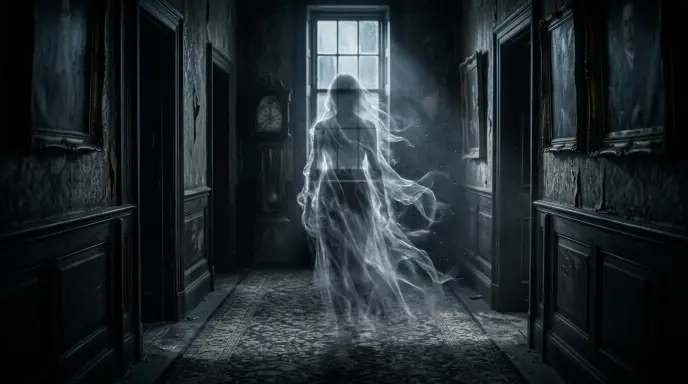
Formal alternatives are useful in literature, research, reports, and detailed descriptions. However, some words have specific meanings and should not replace phantom automatically.
1. Apparition
Meaning: A ghostlike figure that appears unexpectedly.
Explanation: Apparition is one of the closest alternatives when a phantom refers to a mysterious or supernatural figure. It often suggests a sudden appearance.
Example: An apparition appeared near the abandoned mansion at midnight.
Best Use: Ghost stories, literary descriptions, and accounts of mysterious appearances.
Worst Use: Describing a simple software error or an ordinary shadow.
Tone: Formal, mysterious, and literary.
2. Specter
Meaning: A ghost or something frightening that seems to threaten the future.
Explanation: Specter is a close synonym when referring to a ghost. It can also describe an unpleasant possibility, as in the specter of war.
Example: The specter moved silently through the empty hallway.
Best Use: Gothic fiction, serious writing, and figurative descriptions of fear.
Worst Use: Casual descriptions of ordinary objects or routine problems.
Tone: Serious, dramatic, and sometimes ominous.
3. Wraith
Meaning: A ghostlike or supernatural figure, often frightening.
Explanation: A wraith usually carries a darker feeling than the general word phantom. It is especially common in fantasy and horror writing.
Example: A pale wraith wandered through the ruined castle.
Best Use: Fantasy novels, horror stories, and atmospheric descriptions.
Worst Use: Neutral business writing or ordinary technical reports.
Tone: Dark, eerie, and imaginative.
4. Phantasm
Meaning: An unreal image, imagined figure, or ghostlike appearance.
Explanation: Phantasm is a close alternative when the emphasis is on something unreal or imaginary. It is less common in everyday speech.
Example: The figure vanished like a phantasm in the mist.
Best Use: Literary writing, fantasy, and philosophical discussion.
Worst Use: Simple messages where illusion or imaginary figure would be clearer.
Tone: Literary, sophisticated, and mysterious.
5. Spirit
Meaning: A nonphysical being or the supposed essence of a person.
Explanation: Spirit may replace phantom when the intended meaning is a supernatural being. However, it can also mean courage, mood, or enthusiasm, so context matters.
Example: The villagers believed a spirit protected the old forest.
Best Use: Folklore, spiritual discussions, and supernatural fiction.
Worst Use: When describing an unreal object rather than a being.
Tone: Neutral, spiritual, or mysterious.
6. Shade
Meaning: A ghost or spirit, especially in literary or classical usage.
Explanation: Shade can refer to the spirit of a dead person. In everyday English, it more often means an area protected from sunlight or a variation of a color.
Example: In the legend, the shade of the king returned to the palace.
Best Use: Poetry, mythology, and classical literature.
Worst Use: General writing where readers may confuse it with darkness or color.
Tone: Literary and understated.
7. Manifestation
Meaning: An appearance or visible expression of something.
Explanation: A manifestation can describe how an invisible force, feeling, or idea becomes noticeable. It is broader than phantom and does not necessarily imply a ghost.
Example: The strange figure was described as a manifestation of the forest’s mysterious energy.
Best Use: Academic, philosophical, and descriptive writing.
Worst Use: Simple ghost stories where a direct word would sound more natural.
Tone: Formal and analytical.
8. Hallucination
Meaning: A sensory experience that occurs without a corresponding external stimulus.
Explanation: This word can describe a phantomlike image perceived by someone, but it is not a general synonym for a ghost. It has a specific meaning in psychology and medicine.
Example: The report considered whether the visual experience was a hallucination.
Best Use: Accurate discussions of perception and relevant clinical or scientific contexts.
Worst Use: Describing a fictional ghost as though it were automatically a hallucination.
Tone: Technical and clinical.
9. Illusion
Meaning: Something that appears real but misleads the senses or mind.
Explanation: Illusion works when a phantom is an appearance that is not what it seems. It does not necessarily involve a supernatural being.
Example: The figure in the distance turned out to be an illusion created by the fog.
Best Use: Visual effects, optical tricks, mistaken appearances, and figurative writing.
Worst Use: A story in which a character is explicitly meant to be a ghost.
Tone: Neutral and explanatory.
10. Mirage
Meaning: An optical phenomenon that makes something appear where it is not actually located.
Explanation: Mirage is appropriate when a phantom refers to an appearance caused by visual distortion. Figuratively, it can describe an unrealistic hope or goal.
Example: The travelers mistook the distant shimmer for water, but it was a mirage.
Best Use: Descriptions of visual phenomena and unattainable hopes.
Worst Use: Referring to an actual supernatural character without a comparison.
Tone: Descriptive and sometimes poetic.
11. Figment
Meaning: Something created by the imagination.
Explanation: The phrase figment of the imagination is useful when a phantom is an invented or unreal figure.
Example: The frightening face was only a figment of his imagination.
Best Use: Explaining that something imagined does not exist in reality.
Worst Use: Describing a ghost within a story where its existence is established.
Tone: Neutral and conversational.
12. Vision
Meaning: An image seen in the mind or an unusual visual experience.
Explanation: Vision may describe a phantomlike image, particularly in dreams, stories, or spiritual accounts. It also means a plan for the future, so the context must be clear.
Example: She described seeing a strange vision in the candlelight.
Best Use: Dreams, imaginative writing, and accounts of unusual experiences.
Worst Use: Ordinary business planning unless the intended meaning is a future goal.
Tone: Neutral, literary, or spiritual.
Semi-Formal and Neutral Alternatives:

These words are often easier to understand than highly literary alternatives. They work well in school assignments, websites, everyday writing, and professional communication when their meanings fit.
13. Ghost
Meaning: The spirit of a dead person, especially in traditional stories and beliefs.
Explanation: Ghost is probably the most familiar everyday alternative to phantom. It is a strong choice when a phantom represents a supernatural figure.
Example: A ghost was said to haunt the old theater.
Best Use: General writing, storytelling, and everyday conversation.
Worst Use: Describing a nonexistent account or a false expectation when no supernatural meaning is intended.
Tone: Familiar and direct.
14. Shadow
Meaning: A dark shape created when an object blocks light; figuratively, a vague or threatening presence.
Explanation: Shadow works when a phantom is barely visible or appears as a dark shape. It does not necessarily mean a ghost.
Example: A shadow moved across the wall, but no one was in the room.
Best Use: Suspense, descriptive writing, and figurative expressions.
Worst Use: When you need to identify a clear supernatural figure.
Tone: Neutral, descriptive, and sometimes unsettling.
15. Silhouette
Meaning: The dark outline of a person or object seen against a lighter background.
Explanation: A silhouette may look phantomlike, especially in dim light, but the word describes an outline rather than a supernatural being.
Example: A human silhouette stood behind the frosted glass.
Best Use: Visual descriptions, photography, art, and suspenseful scenes.
Worst Use: Referring to a ghost when its supernatural nature matters.
Tone: Neutral and visual.
16. Figure
Meaning: A person, shape, or form that can be seen or imagined.
Explanation: Figure is useful when the identity or nature of a phantom is uncertain. It is less dramatic and more neutral than apparition.
Example: A distant figure appeared between the trees.
Best Use: Reports, storytelling, and descriptions of unclear shapes.
Worst Use: When a specific supernatural meaning needs to be preserved.
Tone: Neutral and straightforward.
17. Presence
Meaning: The state of being present or the feeling that someone or something is nearby.
Explanation: Presence can describe an unexplained feeling or mysterious entity. Unlike phantom, it does not necessarily suggest a visible form.
Example: She sensed an unfamiliar presence in the empty room.
Best Use: Suspense, personal accounts, and descriptions of an unseen entity.
Worst Use: When the sentence specifically describes a visible figure.
Tone: Neutral and suggestive.
18. Fantasy
Meaning: An imagined situation, idea, or experience.
Explanation: Fantasy can replace phantom when the emphasis is on an unreal idea rather than a ghostly figure.
Example: The promise of instant success proved to be a fantasy.
Best Use: Creative writing, imagined scenarios, and unrealistic expectations.
Worst Use: Describing a ghost that appears as a character in a story.
Tone: Neutral and imaginative.
19. Delusion
Meaning: A firmly held belief that conflicts with reality, despite strong contrary evidence.
Explanation: Delusion is not a general substitute for phantom. It describes a belief, not simply an image or mysterious figure, and it can have clinical implications.
Example: The character’s belief that an invisible enemy controlled the town became central to the novel.
Best Use: Carefully framed discussions of mistaken beliefs or fictional characterization.
Worst Use: Casual writing that labels someone without adequate context.
Tone: Serious and potentially clinical.
20. Enigma
Meaning: A person, thing, or situation that is difficult to understand.
Explanation: An enigma can replace phantom figuratively when the intended meaning is something mysterious or hard to explain. It does not mean a ghost.
Example: The unexplained signal remained an enigma to the research team.
Best Use: Reports, mysteries, and descriptions of puzzling situations.
Worst Use: Directly identifying a supernatural being.
Tone: Neutral to formal.
21. Elusive presence
Meaning: Someone or something that is difficult to find, identify, or observe.
Explanation: This phrase works when a phantom seems to appear and disappear or cannot be clearly located. It describes uncertainty rather than proving that the presence is supernatural.
Example: The animal remained an elusive presence in the forest.
Best Use: Descriptive writing, investigations, and reports about something difficult to observe.
Worst Use: When a short, familiar word such as ghost would communicate the idea better.
Tone: Descriptive and measured.
22. False appearance
Meaning: An appearance that gives an incorrect impression of reality.
Explanation: This phrase is useful in analytical writing when a phantom refers to something that seems real but is misleading.
Example: The reflection created a false appearance of a second doorway.
Best Use: Explanatory writing, visual analysis, and reports.
Worst Use: Creative descriptions that need a mysterious or emotional effect.
Tone: Clear and analytical.
Informal and Casual Alternatives:

Casual alternatives work best in conversation, texts, and informal storytelling. Some describe ghosts directly, while others explain that something is imagined or difficult to see.
23. Spook
Meaning: A ghost or frightening supernatural figure.
Example: The kids thought they saw a spook in the old house.
When It Sounds Natural: Informal ghost stories, playful conversations, and lighthearted Halloween discussions.
When to Avoid It: Academic papers, formal reports, or serious descriptions of unexplained events.
Tone: Casual, playful, and sometimes spooky.
24. Ghostly figure
Meaning: A figure that looks like a ghost.
Example: We spotted a ghostly figure through the fog.
When It Sounds Natural: Informal storytelling and descriptions of mysterious shapes.
When to Avoid It: Technical writing that requires a precise explanation of what was observed.
Tone: Accessible and descriptive.
25. Imaginary figure
Meaning: A person or shape created by the imagination.
Example: The child imagined an imaginary figure standing beside the bed.
When It Sounds Natural: Casual explanations of imagined characters or shapes.
When to Avoid It: Describing a character that is established as a real ghost within a story.
Tone: Simple and explanatory.
26. Something that isn’t really there
Meaning: Something perceived or imagined that has no corresponding real object or presence.
Example: In the dark, I thought I saw something that wasn’t really there.
When It Sounds Natural: Everyday conversation when you want to explain an uncertain experience in plain English.
When to Avoid It: Formal reports or situations where the distinction between an illusion and an actual object must be precise.
Tone: Conversational and direct.
27. A ghostly presence
Meaning: A feeling or appearance associated with a ghost.
Example: He felt a ghostly presence near the staircase.
When It Sounds Natural: Informal storytelling, suspense, and conversations about eerie experiences.
When to Avoid It: Objective reports that should distinguish between observed facts and personal impressions.
Tone: Mysterious and expressive.
True Synonyms vs. Contextual Alternatives:
Not every word associated with a phantom has the same meaning. A good replacement preserves the main idea of the sentence.
| Type | What It Means | Can It Replace Phantom? |
|---|---|---|
| True or close synonym | A ghostlike or supernatural figure | Yes, when the context matches |
| Near synonym | A related word with a slightly different meaning | Sometimes |
| Contextual alternative | A word suitable for a specific situation | Only in that context |
| Broader expression | A general term for an unclear or unreal thing | Sometimes, but detail may be lost |
| Narrower expression | A term with a more specific meaning | Only when that detail is intended |
For example, ghost is a close synonym when phantom means a spirit. Illusion works when the emphasis is on a misleading appearance. Silhouette describes an outline, and enigma describes something difficult to understand.
What Is the Difference Between a Phantom and a Ghost?
A ghost usually refers to the spirit of a dead person. A phantom can mean a ghost, but it can also describe an imagined figure, an unreal appearance, or something that seems to exist without being real.
For example:
- Ghost: The story tells of a ghost haunting the house.
- Phantom: The detective followed a phantom lead that turned out to be imaginary.
Which Alternatives Have the Closest Meaning?
The closest alternatives depend on the intended meaning:
- For a supernatural figure: ghost, apparition, specter, or wraith.
- For an imagined image: phantasm, figment, or vision.
- For a misleading appearance: illusion or mirage.
- For an unclear shape: shadow, silhouette, or figure.
- For something mysterious: enigma or elusive presence.
Industry-Specific Usage:
The word phantom has uses beyond ghost stories. In technology, business, and other fields, it can describe something that appears to exist but is missing, false, or difficult to trace. The best alternative depends on the specific subject.
Phantom in Business Writing
Business writing often uses phantom figuratively to describe nonexistent demand, false expectations, or an item that appears in records but cannot be verified.
Example: The team discovered phantom expenses in the draft budget.
Possible alternatives include:
- Unrecorded or unexplained expenses: Use when the actual issue concerns accounting records.
- False demand: Use when reported customer demand does not reflect real demand.
- Nonexistent costs: Use when the costs do not actually exist.
- Discrepancies: Use when figures or records do not agree.
Choose a specific term when the facts are known instead of relying on a vague description.
Phantom in Corporate Communication
In reports and internal announcements, phantom can describe a suspected but unverified issue.
Example: The audit identified several entries that could not be matched to supporting documents.
Unverified entries is clearer than phantom entries when the records have not yet been confirmed. Avoid implying fraud or deliberate wrongdoing without evidence.
Phantom in Academic Writing
Academic writing benefits from precise descriptions rather than dramatic terms.
Example: The researchers investigated whether the reported effect was an illusion caused by measurement error.
Depending on the subject, alternatives may include apparent effect, imagined figure, false perception, or unverified observation. These terms are not interchangeable, so select the one supported by the evidence.
Phantom in Customer Service
Customer service teams may encounter a phantom charge, phantom notification, or phantom error. These expressions suggest something that appears in a system but cannot immediately be explained.
Example: We are investigating a charge that appears on your statement but is not linked to a completed order.
Useful alternatives include unrecognized charge, duplicate notification, unexplained error, and incorrect entry. Clear wording helps customers understand what is being investigated without suggesting a cause before it is confirmed.
Phantom in Legal Writing
Legal writing requires particular care because phantom may be informal or ambiguous.
Depending on the facts, a writer might use alleged, fictitious, nonexistent, or unverified. These words have different meanings:
- Alleged: Claimed but not necessarily established.
- Fictitious: Invented or not genuine.
- Nonexistent: Not existing.
- Unverified: Not yet confirmed.
For example, alleged account and fictitious account do not mean the same thing. Do not replace a legal term with a casual synonym unless it preserves the intended meaning. Specific legal wording may also depend on the jurisdiction and document.
Phantom in Email Communication
For professional emails, choose alternatives that explain the issue directly.
- Client email: “We are reviewing the unexplained charge.”
- Internal update: “The team is investigating a recurring error.”
- Project report: “The forecast includes demand that has not been verified.”
- Technical request: “Could you investigate the intermittent notification?”
- Follow-up: “We have not yet identified the source of the discrepancy.”
These phrases sound professional because they describe the problem rather than relying on a dramatic label.
Email Examples Using Alternatives to Phantom:
Email 1: Client Communication
Subject: Update on the Unrecognized Charge
Hello Morgan,
Thank you for bringing the charge to our attention. Our team is reviewing the transaction to determine why it appears on your statement.
We will share an update as soon as we have verified the details. In the meantime, please let us know if you have any additional information about the transaction.
Best regards,
Customer Support
Email 2: Internal Project Update
Subject: Review of Unverified Forecast Figures
Hi Team,
I noticed that the latest forecast includes several demand estimates that have not yet been confirmed.
Could you review the supporting data and update the figures where needed? We should finalize the report after the assumptions have been checked.
Thanks,
Alex
Email 3: Technical Support Request
Subject: Investigation of an Intermittent Error
Hello IT Team,
A recurring error appears when I open the reporting dashboard, but it disappears after I refresh the page.
Could you investigate the issue and let me know if you need any additional details? I can provide the approximate times when it occurred.
Thank you,
Taylor
Email 4: Academic Communication
Subject: Clarification About the Reported Observation
Dear Professor Lee,
I am reviewing the observation described in the assigned reading and would appreciate clarification about how the authors distinguish a genuine effect from an apparent one.
Could you recommend a section of the text that explains this distinction?
Thank you for your time.
Sincerely,
Jordan
Email 5: Vendor Communication
Subject: Request to Review an Unexplained Invoice Entry
Hello,
We found an entry on the latest invoice that does not appear to match our purchase records.
Would you please review the entry and confirm what it relates to? We will hold our internal approval until we can reconcile the details.
Thank you for your assistance.
Best,
Purchasing Team
Short Dialogue Examples:
These short conversations show how different alternatives sound in everyday situations.
Workplace Conversation
Person A: Why does this customer appear in the report twice?
Person B: It may be a duplicate entry. I’ll check the records before removing anything.
Classroom Discussion
Person A: What word can we use instead of phantom in this story?
Person B: Apparition works if the character is a ghostlike figure.
Customer Service Conversation
Person A: My account shows a charge I don’t recognize.
Person B: I understand. We’ll investigate the unexplained charge and review the transaction details.
Casual Conversation
Person A: I thought I saw someone outside the window.
Person B: Maybe it was just a shadow moving in the light.
Professional Discussion
Person A: Can we call this a phantom problem in the report?
Person B: I’d use unverified issue until we know exactly what caused it.
How to Replace “Phantom” in a Sentence:
The right alternative should preserve the original meaning. Here are eight examples showing how to make that choice.
Example 1: Ghost
Original: A phantom appeared in the hallway.
Alternative: A ghost appeared in the hallway.
Why it works: Both words can describe a supernatural figure. Ghost is more familiar and direct.
Example 2: Apparition
Original: The phantom appeared without warning.
Alternative: The apparition appeared without warning.
Why it works: Apparition emphasizes the sudden appearance of a ghostlike figure and gives the sentence a more literary tone.
Example 3: Illusion
Original: The distant phantom disappeared in the sunlight.
Alternative: The distant image turned out to be an illusion.
Why it works: This revision is suitable if the figure was only a misleading appearance, not a real supernatural being.
Example 4: Shadow
Original: A phantom moved across the wall.
Alternative: A shadow moved across the wall.
Why it works: Use shadow if the character saw a dark shape rather than a clearly identified ghost.
Example 5: Figment
Original: The phantom was only in his imagination.
Alternative: The figure was only a figment of his imagination.
Why it works: The revised sentence makes it clear that the figure was imagined.
Example 6: Unexplained error
Original: The software keeps producing phantom errors.
Alternative: The software keeps producing unexplained errors.
Why it works: In technical writing, unexplained errors is more precise if the errors occur but their cause is unknown.
Example 7: Nonexistent
Original: The report included phantom expenses.
Alternative: The report included expenses that did not exist.
Why it works: The alternative is clearer if the expenses were confirmed to be nonexistent. If they are merely under investigation, use unverified expenses instead.
Example 8: Elusive presence
Original: The phantom remained hidden in the forest.
Alternative: The elusive presence remained difficult to locate in the forest.
Why it works: The alternative emphasizes difficulty in finding something without claiming that it is supernatural.
Comparison Table of Phantom Synonyms:
| Phrase | Tone | Meaning / Scope | Best Use | Example |
|---|---|---|---|---|
| Ghost | Familiar | Spirit of a dead person | Everyday writing | The ghost entered the house. |
| Apparition | Literary | Ghostlike appearance | Fiction | An apparition appeared in the mist. |
| Specter | Dramatic | Ghost or threatening possibility | Serious fiction | A specter crossed the room. |
| Wraith | Dark | Frightening ghostlike figure | Horror and fantasy | A wraith guarded the gate. |
| Phantasm | Literary | Imagined or unreal figure | Poetry and fiction | The phantasm faded away. |
| Illusion | Neutral | Misleading appearance | Explanation | The image was an illusion. |
| Mirage | Descriptive | Optical phenomenon or unrealistic hope | Nature and figurative writing | The lake was a mirage. |
| Figment | Neutral | Creation of the imagination | Everyday explanation | It was a figment of her imagination. |
| Shadow | Neutral | Dark shape or vague presence | Description | A shadow moved outside. |
| Silhouette | Neutral | Visible outline | Art and observation | A silhouette stood by the door. |
| Hallucination | Technical | Perception without a corresponding external stimulus | Clinical or scientific contexts | The report discussed a hallucination. |
| Enigma | Formal | Something difficult to understand | Analysis | The mystery remained an enigma. |
| Unverified issue | Professional | A problem not yet confirmed | Business and technology | We are reviewing an unverified issue. |
| Nonexistent | Direct | Something that does not exist | Reports and explanations | The account was nonexistent. |
Which Alternative Should You Choose?
The best word depends on what you want to communicate and who will read your writing.
Best Alternative for Formal Writing
Choose apparition, manifestation, or unverified presence when the context supports the meaning. In analytical writing, prefer a specific description over a dramatic term.
Best Alternative for Business Communication
Use unexplained error, unverified entry, discrepancy, or nonexistent item when describing a practical problem. These terms make reports clearer and help readers understand what needs attention.
Best Alternative for Academic Writing
Use apparent phenomenon, imagined figure, or hallucination only when the term accurately describes the subject. Academic writing should distinguish observation from interpretation.
Best Alternative for Legal Writing
Choose precise terms such as alleged, fictitious, nonexistent, or unverified based on the evidence and intended meaning. These words are not interchangeable, and legal documents may require more specific terminology.
Best Alternative for Professional Emails
Use direct expressions such as unexplained charge, apparent error, or unverified entry. They are clear, polite, and easy to understand.
Best Alternative for Everyday Conversation
Choose ghost for a supernatural figure, shadow for a dark shape, or something imaginary when describing an unreal image.
Best Alternative for Casual Messages
Use spook for a playful reference to a ghost or something that wasn’t really there when explaining an uncertain experience.
Grammar and Usage Guide:
How to Use Phantom as a Noun
As a noun, phantom can refer to a ghostlike figure, an imagined object, or something that seems to exist but does not.
Examples:
- A phantom appeared near the tower.
- The team investigated a phantom error.
- He feared a phantom that existed only in the story.
The plural form is phantoms.
Example: Several phantoms appeared in the legend.
How to Use Phantom as an Adjective
Phantom can also describe another noun, especially when something appears to exist but is false, unexplained, or not physically present.
Examples:
- phantom account
- phantom pain
- phantom signal
- phantom threat
- phantom notification
The meaning changes with the noun. For instance, phantom pain is a specific medical term for pain felt in a body part that has been lost, such as after an amputation. It should not be replaced casually with imaginary pain.
Singular and Plural Forms
Use a phantom for one figure and phantoms for more than one.
- Singular: A phantom appeared.
- Plural: Two phantoms appeared.
When phantom acts as an adjective, it normally stays singular even when the noun is plural.
- Correct: phantom accounts
- Incorrect: phantoms accounts
Common Word Combinations
The following expressions are commonly used:
- Phantom figure
- Phantom image
- Phantom pain
- Phantom account
- Phantom signal
- Phantom threat
- Phantom error
Choose a replacement based on the expression, not just the word. For example, ghost account may work informally in some settings, but it may not have the same meaning as phantom account in a technical report.
Capitalization and Punctuation
Write phantom in lowercase unless it begins a sentence or forms part of a proper name or title.
Examples:
- The phantom disappeared.
- Phantom was the title of the short story.
Use quotation marks only when discussing the word itself or quoting someone else’s wording. Ordinary uses do not need quotation marks.
Common Mistakes to Avoid:
1. Treating Every Alternative as an Exact Synonym
A ghost may be a supernatural being, while an illusion is a misleading appearance. Choose the term that matches the intended meaning.
2. Confusing a Phantom With a Hallucination
A phantom can be a fictional or supernatural figure. A hallucination is a specific kind of perceptual experience. Do not treat the terms as equivalent in scientific or clinical writing.
3. Using Overly Formal Language
Words such as phantasm and wraith can sound unnatural in a simple message. Use ghost or strange figure when those expressions are clearer.
4. Changing the Intended Meaning
Replacing phantom with shadow changes the focus to a dark shape. Replacing it with enigma changes the focus to a mystery. Check the meaning before editing.
5. Using Casual Language in Professional Writing
Terms such as spook may suit a friendly conversation but rarely belong in formal reports or client communications.
6. Repeating the Same Phrase Too Often
Do not replace every occurrence of phantom with ghost. Sometimes the best revision is to describe the figure, appearance, or problem directly.
7. Using Incorrect Grammar
Remember that phantom becomes phantoms when it is a plural noun, but it usually remains unchanged when used as an adjective.
8. Ignoring the Audience
A horror reader may appreciate wraith, while a business reader may prefer unverified entry. Match your word choice to the reader’s needs.
When Not to Use the Word Phantom:
Although phantom is useful, some situations call for a more precise word.
When a Clearer Word Is Available
If you mean a ghost, say ghost. If you mean a false visual appearance, say illusion. A familiar word often communicates the idea more quickly.
When Describing a Real Person or Object
If you saw a person but could not identify them, unknown figure or unidentified person may be more accurate than phantom.
When Writing for a General Audience
Avoid literary words such as phantasm if readers may not know them. Choose familiar terms and explain unusual concepts.
When the Meaning Could Be Misunderstood
In a technical report, phantom error may be unclear. Use intermittent error if it appears and disappears, or unexplained error if its cause is unknown.
When Phantom Is Actually the Best Choice
Keep phantom when it creates the right atmosphere, appears in an established term, or accurately expresses the idea. Examples include phantom pain in medical writing and phantom figure in a ghost story.
Advanced Writer Tips:
Tone Control
A dramatic effect, consider specter or wraith.Ordinary communication, use ghost or figure. For technical accuracy, describe the specific problem instead.
Professional Email Etiquette
Avoid vague phrases such as “phantom issue” when you can explain what happened. Write “an intermittent error appears when the report loads” instead. Specific wording makes it easier for colleagues to investigate.
Politeness and Clarity
When you are unsure about the cause of a problem, use neutral wording. Saying “unverified entry” avoids making an unsupported claim that an entry is false or fraudulent.
Context Alignment
Think about the purpose of the sentence. A story may need mystery, a report may need evidence, and an email may need a clear next step. Select the alternative accordingly.
Precision
Ask yourself whether the phantom is a ghost, an image, a belief, an unexplained event, or a nonexistent item. Identifying the meaning first will help you avoid inaccurate synonyms.
Readability
Prefer direct sentences. Instead of “The phantom-like manifestation of an unexplained issue persisted,” write “The unexplained problem continued.” Keep the detail that matters and remove wording that adds confusion.
Related Questions About Phantom Synonyms:
What Is Another Word for Phantom?
Ghost is a common alternative when phantom means a supernatural figure. Apparition and specter are more literary choices, while illusion is better when the subject is a misleading appearance.
What Is a Professional Alternative to Phantom?
Professional alternatives include unexplained issue, unverified entry, apparent error, and nonexistent item. Choose the one that accurately describes the facts instead of using a dramatic or vague expression.
What Is a Formal Alternative to Phantom?
Apparition, specter, and manifestation can work in formal or literary writing, depending on the meaning. For analytical writing, a precise description may be more appropriate than a literary synonym.
Can Illusion Be Used Instead of Phantom?
Yes, when the phantom refers to something that appears real but is not what it seems. However, illusion does not usually mean a ghost or spirit, so it cannot replace phantom in every sentence.
What Is the Difference Between Phantom and Specter?
Both can refer to a ghostlike figure. Specter often sounds more ominous or dramatic and can also describe a threatening possibility, as in “the specter of failure.” Phantom has broader uses.
Frequently Asked Questions:
What Is the Closest Synonym for Phantom?
The closest synonyms are ghost, apparition, and specter. All three can describe a ghostlike figure, although apparition emphasizes an appearance and specter often sounds more dramatic. The best choice depends on the tone and meaning of your sentence.
What Is a More Formal Word for Phantom?
Apparition and specter are formal or literary alternatives when describing a supernatural figure. In business or technical writing, unexplained issue or unverified entry may be more suitable if the word refers to a problem rather than a ghost.
Are Phantom and Ghost the Same?
They can have the same meaning when both refer to a supernatural figure. However, phantom can also describe something imaginary, nonexistent, or apparently present, while ghost more commonly refers to the spirit of a dead person.
What Is the Difference Between Phantom and Apparition?
A phantom can be a ghostlike figure or something that seems to exist without being real. An apparition specifically emphasizes the appearance of a figure, often a supernatural one. The words overlap, but apparition focuses more on the act or experience of seeing it.
Can Phantom Describe Something That Is Not Real?
Yes. Phantom can describe something imaginary, nonexistent, or apparently present but not actually there. For example, a phantom error may be an error that appears unexpectedly or cannot easily be reproduced. The exact meaning depends on the context.
What Does Phantom Mean in Business or Technology?
In business and technology, phantom can describe an account, error, charge, or signal that appears to exist but cannot be properly verified or explained. The term’s meaning depends on the system. More precise wording, such as unverified entry or intermittent error, may be clearer.
Is Phantom a Formal or Informal Word?
Phantom is suitable for both formal and informal writing. It appears in literary descriptions, everyday speech, and technical expressions. Its tone depends on the context: it may sound mysterious in fiction but descriptive in a phrase such as phantom signal.
Key Takeaways:
- Ghost, apparition, and specter are close alternatives when phantom means a supernatural figure.
- Illusion, mirage, and figment are useful when describing something unreal or imagined.
- Shadow, silhouette, and figure describe visible shapes without necessarily implying a ghost.
- Unexplained issue, unverified entry, and nonexistent item can be clearer in professional writing when discussing problems or records.
- Always check the meaning, audience, and tone before replacing phantom with another word.
Conclusion:
Choosing the right synonym for phantom depends on what you want your sentence to express. If you are writing a ghost story, ghost, apparition, specter, and wraith can create different levels of mystery and suspense.
If you are describing something imagined or misleading, illusion, mirage, and figment may be more accurate. For an unclear shape, shadow or silhouette can communicate the idea without suggesting anything supernatural.Professional and academic writing often benefits from specific expressions such as unexplained error, unverified entry, or apparent phenomenon. These alternatives help readers understand the facts without confusion. Remember that related words are not always interchangeable: a hallucination, an illusion, and a ghost describe different things.
Before choosing a replacement, identify the intended meaning, consider your audience, and decide whether you need a dramatic, neutral, or technical tone. The strongest word is the one that communicates your meaning clearly and naturally.