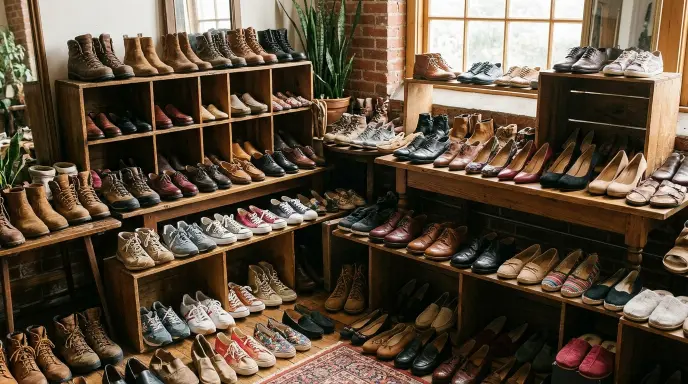
Shoes are an everyday part of life, but the word shoes is not always the best choice for every sentence. Depending on the situation, you might use words such as footwear, sneakers, boots, sandals, trainers, or kicks. Each alternative describes a particular type of footwear or creates a slightly different tone.
Finding the right synonym can make your writing more natural, clear, and interesting. You may need a professional term for a product description, a fashionable expression for a blog post, or a casual word for everyday conversation. Below, you will discover useful alternatives, their meanings, realistic examples, and the situations where each word works best.
Quick Answer: What Are Synonyms for Shoes?
Common synonyms and alternatives for shoes include footwear, footgear, sneakers, trainers, boots, sandals, loafers, slippers, heels, pumps, flats, moccasins, and kicks. Footwear is the closest broad alternative, while other words describe specific styles or types of shoes.
Other Words and Alternatives for Shoes
Here is a useful list of words related to shoes. Some are broad alternatives, while others refer to particular styles, designs, or uses.
Closest Synonyms for Shoes
- Footwear
- Footgear
- Shoes
- Foot coverings
- Protective footwear
- Dress footwear
- Casual footwear
- Athletic footwear
- Leather footwear
- Outdoor footwear
Common Types of Shoes
- Sneakers
- Trainers
- Boots
- Sandals
- Slippers
- Loafers
- Moccasins
- Flats
- Heels
- Pumps
- Oxfords
- Brogues
- Derby shoes
- Espadrilles
- Clogs
- Mules
- Wedges
- Ballet flats
- Ankle boots
- Chelsea boots
Casual and Informal Alternatives
- Kicks
- Runners
- Slip-ons
- Slides
- Flip-flops
- High-tops
- Low-tops
- Plimsolls
- Skate shoes
- Walking shoes
Fashion and Specialty Footwear
- Dress shoes
- Work boots
- Hiking boots
- Running shoes
- Court shoes
- Athletic shoes
- Dance shoes
- Golf shoes
- Cycling shoes
- Safety shoes
- Steel-toe boots
- Snow boots
- Rain boots
- Riding boots
- Combat boots
- Platform shoes
- Stilettos
- Mary Janes
- Kitten heels
- Slingbacks
Additional Footwear Expressions
- Formal shoes
- Casual shoes
- Designer shoes
- Fashion shoes
- Dress boots
- House shoes
- Indoor slippers
- Outdoor sandals
- Waterproof boots
- Work footwear
- Travel shoes
- School shoes
- Sports shoes
- Trail shoes
- Trail runners
- Walking footwear
- Orthopedic shoes
- Minimalist shoes
- Slip-resistant shoes
- Lightweight footwear
Remember: Not all these expressions are exact synonyms. For example, footwear is a broad alternative, while sneakers, boots, and sandals describe specific types of shoes.
Formal Alternatives for Shoes
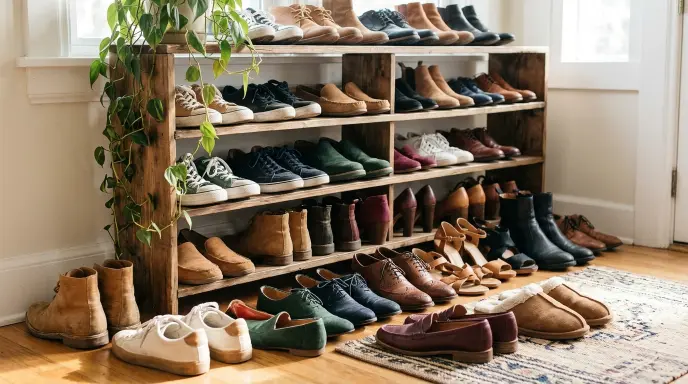
Formal writing often benefits from precise words rather than repeating the same general term. These alternatives work well in business documents, product descriptions, reports, and professional communication.
1. Footwear
Meaning: Items designed to cover and protect the feet.
Explanation: Footwear is the closest broad alternative to shoes. It includes boots, sandals, slippers, and other types of items worn on the feet.
Example: The company offers durable footwear for outdoor workers.
Best Use: Product descriptions, business reports, fashion articles, and professional writing.
Worst Use: Avoid it when discussing one specific style if a more precise word is available.
Tone: Professional, neutral, and polished.
2. Footgear
Meaning: Clothing or equipment worn on the feet.
Explanation: Footgear is a less common broad term related to footwear. It can sound technical or slightly old-fashioned.
Example: Proper footgear is required before entering the construction area.
Best Use: Technical descriptions and safety-related instructions.
Worst Use: Everyday conversations where shoes sounds more natural.
Tone: Technical and formal.
3. Protective Footwear
Meaning: Shoes designed to protect feet from injury.
Explanation: This expression refers to safety-focused footwear, such as steel-toe boots and slip-resistant shoes. It is more specific than shoes.
Example: Employees must wear protective footwear inside the warehouse.
Best Use: Workplace safety policies and industrial documents.
Worst Use: Fashion descriptions or ordinary conversations about everyday shoes.
Tone: Professional and safety-focused.
4. Professional Footwear
Meaning: Shoes suitable for a workplace or professional setting.
Explanation: This expression describes footwear appropriate for work. It does not identify one particular shoe design.
Example: The dress code requires professional footwear during client meetings.
Best Use: Workplace guidelines and dress-code policies.
Worst Use: Casual conversations about sneakers or slippers.
Tone: Formal and workplace-oriented.
5. Formal Footwear
Meaning: Shoes designed for formal occasions.
Explanation: Formal footwear commonly includes dress shoes, pumps, and other elegant styles. It is narrower than the general word shoes.
Example: Guests are encouraged to wear formal footwear at the ceremony.
Best Use: Event invitations, fashion guides, and dress-code instructions.
Worst Use: Describing athletic shoes or casual sandals.
Tone: Refined and formal.
6. Athletic Footwear
Meaning: Shoes designed for sports and physical activities.
Explanation: Athletic footwear includes running shoes, training shoes, and sport-specific designs.
Example: The store specializes in athletic footwear for runners.
Best Use: Sports retail, fitness articles, and product descriptions.
Worst Use: Describing formal or decorative shoes.
Tone: Professional and descriptive.
7. Leather Footwear
Meaning: Footwear made partly or entirely from leather.
Explanation: This term highlights the material rather than the shoe’s design. It may describe boots, loafers, dress shoes, and sandals.
Example: The brand is known for its high-quality leather footwear.
Best Use: Fashion catalogs and material descriptions.
Worst Use: When the footwear is made from fabric, rubber, or synthetic materials.
Tone: Professional and product-focused.
8. Safety Footwear
Meaning: Footwear designed to reduce workplace risks.
Explanation: Safety footwear is a specific category that may include protective toe caps, puncture-resistant soles, or other safety features.
Example: Safety footwear is compulsory in the production area.
Best Use: Workplace regulations and industrial product listings.
Worst Use: General fashion writing.
Tone: Technical and authoritative.
9. Dress Shoes
Meaning: Shoes intended for formal or smart occasions.
Explanation: Dress shoes are a particular category, often including Oxfords, Derby shoes, and formal pumps.
Example: He purchased a new pair of dress shoes for the interview.
Best Use: Formal clothing guides and shopping descriptions.
Worst Use: Referring to every kind of footwear.
Tone: Polished and professional.
10. Specialized Footwear
Meaning: Shoes designed for a particular activity or need.
Explanation: This broad expression covers footwear such as hiking boots, cycling shoes, and orthopedic shoes.
Example: Specialized footwear can improve comfort during demanding activities.
Best Use: Medical, sports, technical, and retail content.
Worst Use: Simple conversations where the exact shoe type is already known.
Tone: Technical and professional.
Semi-Formal and Neutral Alternatives for Shoes
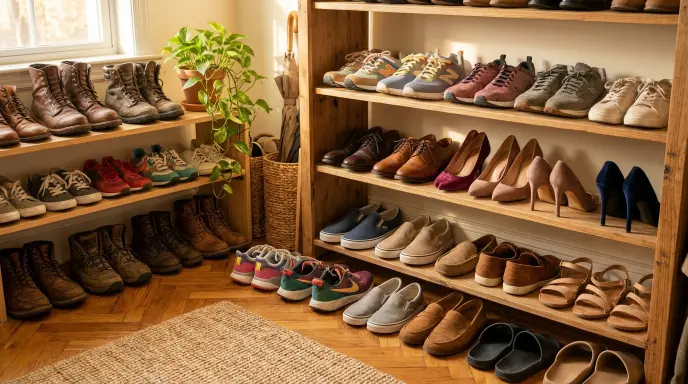
Neutral words are useful in everyday writing because they sound clear without being overly formal. These alternatives work in emails, websites, school assignments, shopping conversations, and general descriptions.
1. Sneakers
Meaning: Comfortable shoes, usually with flexible soles, often designed for casual wear or sports.
Explanation: Sneakers are a type of shoe, not a replacement for every kind of footwear.
Example: I bought new sneakers for my morning walks.
Best Use: Casual fashion, shopping, and everyday writing.
Worst Use: Describing formal leather shoes.
Tone: Neutral and familiar.
2. Trainers
Meaning: Shoes designed for exercise or everyday casual use.
Explanation: Trainers is especially common in British English. In American English, sneakers is more common.
Example: She packed her trainers for the gym.
Best Use: British English and fitness-related conversations.
Worst Use: When writing specifically for an American audience if sneakers would be clearer.
Tone: Neutral and conversational.
3. Boots
Meaning: Shoes that cover the foot and extend above the ankle or around it.
Explanation: Boots are a specific footwear category. They are often designed for protection, warmth, or style.
Example: He wore leather boots during the winter.
Best Use: Fashion, outdoor activities, and seasonal writing.
Worst Use: Referring to low-cut shoes.
Tone: Neutral.
4. Sandals
Meaning: Open shoes that usually have straps holding them to the feet.
Explanation: Sandals are commonly worn in warm weather. They are a specific type of footwear.
Example: I prefer comfortable sandals during summer.
Best Use: Summer fashion and travel writing.
Worst Use: Describing closed shoes.
Tone: Casual and neutral.
5. Loafers
Meaning: Slip-on shoes without traditional laces.
Explanation: Loafers are often worn for smart-casual or business-casual occasions.
Example: He wore brown loafers to the office.
Best Use: Fashion articles and workplace clothing guides.
Worst Use: Referring to athletic shoes or heavy boots.
Tone: Smart and neutral.
6. Flats
Meaning: Shoes with little or no heel.
Explanation: Flats are often comfortable options for everyday wear. Ballet flats are one common style.
Example: She chose black flats for the office.
Best Use: Women’s fashion and everyday clothing descriptions.
Worst Use: Describing high-heeled footwear.
Tone: Neutral and fashionable.
7. Heels
Meaning: Shoes with raised heels.
Explanation: Heels describe a broad category of shoes with elevated heels, including pumps and stilettos.
Example: She wore elegant heels to the wedding.
Best Use: Fashion writing and formal event descriptions.
Worst Use: Describing flat shoes or sneakers.
Tone: Fashionable and neutral.
8. Slippers
Meaning: Soft, comfortable footwear generally worn indoors.
Explanation: Slippers are usually designed for home use, although some styles are suitable for outdoor wear.
Example: I put on my slippers after returning home.
Best Use: Home, comfort, and lifestyle writing.
Worst Use: Describing formal or athletic footwear.
Tone: Casual and familiar.
9. Walking Shoes
Meaning: Shoes designed to support comfortable walking.
Explanation: Walking shoes are a specific functional category. They may resemble sneakers but are designed with walking comfort in mind.
Example: These walking shoes provide good support for long trips.
Best Use: Travel, fitness, and comfort-related product descriptions.
Worst Use: Describing formal shoes without walking features.
Tone: Practical and descriptive.
10. Slip-Ons
Meaning: Shoes that can be worn without tying laces or fastening complicated closures.
Explanation: Slip-ons are a convenient style that may include loafers, casual canvas shoes, and other designs.
Example: He prefers slip-ons because they are easy to wear.
Best Use: Casual fashion and product descriptions.
Worst Use: When the shoe has traditional laces or requires fastening.
Tone: Neutral and conversational.
Informal and Casual Words for Shoes
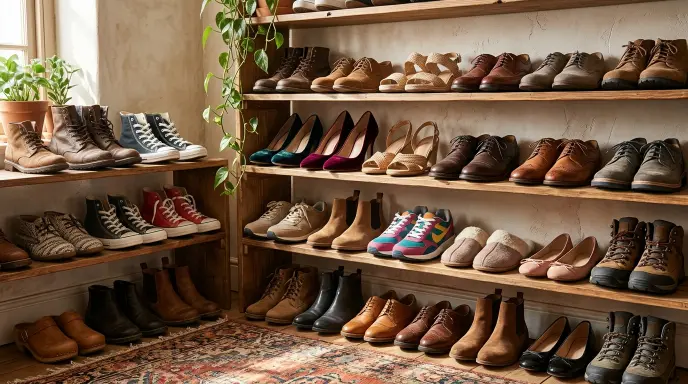
Casual expressions are common in conversations, fashion discussions, and social media. Their meanings can vary by region and audience.
1. Kicks
Meaning: A slang term for shoes, especially sneakers.
Example: Those are some stylish kicks!
When It Sounds Natural: Friendly conversations and streetwear discussions.
When to Avoid It: Formal reports, business emails, and academic assignments.
Tone: Informal and playful.
2. Runners
Meaning: Running shoes or athletic sneakers.
Example: I need new runners before the race.
When It Sounds Natural: Casual conversations, especially in regions where this expression is common.
When to Avoid It: Formal product descriptions unless the shoe is actually designed for running.
Tone: Casual and practical.
3. Slides
Meaning: Open footwear that slips onto the feet, usually with a strap across the top.
Example: I bought new slides for the beach.
When It Sounds Natural: Shopping and everyday summer conversations.
When to Avoid It: When referring to closed footwear.
Tone: Relaxed and casual.
4. Flip-Flops
Meaning: Lightweight sandals with a strap between the toes.
Example: Bring your flip-flops for the swimming pool.
When It Sounds Natural: Beach trips, vacations, and casual settings.
When to Avoid It: Professional or formal clothing descriptions.
Tone: Casual and familiar.
5. Slip-Ons
Meaning: Shoes that are easy to put on without tying laces.
Example: I wear slip-ons when I am in a hurry.
When It Sounds Natural: Everyday conversations and casual shopping.
When to Avoid It: Describing shoes that require lacing or buckling.
Tone: Relaxed and practical.
6. High-Tops
Meaning: Sneakers with higher uppers that extend above the ankle.
Example: He paired his jeans with black high-tops.
When It Sounds Natural: Sneaker and streetwear discussions.
When to Avoid It: Referring to low-cut athletic shoes.
Tone: Casual and fashionable.
7. Low-Tops
Meaning: Sneakers with a low-cut design that sits below the ankle.
Example: White low-tops go well with these jeans.
When It Sounds Natural: Fashion conversations and casual shopping.
When to Avoid It: Describing boots or high-top sneakers.
Tone: Informal and descriptive.
Fashionable and Stylish Alternatives for Shoes
Fashion writing often uses descriptive expressions to explain the design, quality, and purpose of footwear.
1. Designer Footwear
Meaning: Shoes created by a recognized fashion designer or brand.
Example: The store introduced a new collection of designer footwear.
Best Use: Luxury fashion articles and retail descriptions.
Avoid When: The products are not genuinely designer-made.
Tone: Premium and fashionable.
2. Statement Shoes
Meaning: Shoes designed to attract attention and make a strong style impression.
Example: Her red statement shoes completed the outfit.
Best Use: Fashion blogs and styling advice.
Avoid When: Describing ordinary, understated footwear.
Tone: Expressive and fashionable.
3. Platform Shoes
Meaning: Shoes with thick soles that raise the foot.
Example: Platform shoes added height to her outfit.
Best Use: Fashion and footwear descriptions.
Avoid When: Describing shoes with thin, flat soles.
Tone: Stylish and descriptive.
4. Stilettos
Meaning: High-heeled shoes with very thin heels.
Example: She wore black stilettos to the evening event.
Best Use: Formal fashion descriptions.
Avoid When: Referring to all types of heels.
Tone: Elegant and specific.
5. Mary Janes
Meaning: Shoes traditionally featuring a rounded toe and a strap across the instep.
Example: The black Mary Janes looked lovely with her dress.
Best Use: Fashion writing and footwear catalogs.
Avoid When: Describing shoes without the characteristic strap design.
Tone: Classic and fashionable.
Types of Footwear and Their Differences
Some footwear words are closely related but describe different designs. Understanding these differences helps prevent inaccurate word choices.
Sneakers vs. Trainers
Both terms describe similar casual or athletic shoes. Sneakers is the usual American English term, while trainers is common in British English.
Boots vs. Booties
Boots generally extend above the ankle or cover part of the lower leg. Booties are shorter boots, often reaching around the ankle.
Sandals vs. Slides
Sandals usually have straps that secure the footwear to the foot. Slides typically have an open back and one or more straps across the upper foot.
Loafers vs. Moccasins
Loafers are slip-on shoes with a structured design. Moccasins traditionally feature soft leather construction and a flexible sole, although modern designs vary.
Heels vs. Pumps
Heels are a broad category of raised-heel shoes. Pumps are a specific style of closed-toe dress shoe, generally with a low-cut upper.
Flats vs. Ballet Flats
Flats have little or no heel. Ballet flats are a particular type of flat shoe inspired by ballet slippers.
True Synonyms vs. Contextual Alternatives for Shoes
Not every footwear-related word can replace shoes in every sentence. Some terms have nearly the same meaning, while others describe only one specific style.
| Type | What It Means | Can It Replace Shoes? |
|---|---|---|
| True synonym | A word with nearly the same meaning | Yes, in suitable contexts |
| Near synonym | A closely related expression | Sometimes |
| Contextual alternative | A term that works in a specific situation | Depends on context |
| Broader expression | A word covering more categories | Yes, when broader meaning is suitable |
| Narrower expression | A specific kind of shoe | Only when describing that type |
Examples:
- Footwear: A broad alternative that includes shoes, boots, and sandals.
- Sneakers: A specific kind of casual or athletic shoe.
- Kicks: An informal expression, usually referring to sneakers.
- Protective footwear: A functional category focused on safety.
- Sandals: A specific type of open footwear.
The safest general replacement is footwear. Choose a more specific term when the exact design matters.
How to Use Shoe Alternatives in Different Industries
Business Writing
Business writing should use clear and professional terminology. Footwear, protective footwear, and formal footwear work well in reports and product documents.
Example: The company provides protective footwear to employees working in hazardous areas.
Corporate Communication
Corporate announcements and workplace policies benefit from consistent terminology.
Example: All warehouse staff must wear approved safety footwear during working hours.
Academic Writing
Academic writing should use accurate descriptions rather than informal expressions.
Example: The study examines consumer preferences for athletic footwear.
Avoid slang such as kicks in research papers and formal assignments.
Customer Service
Customer service representatives should use simple, friendly expressions.
Example: Our store offers several comfortable footwear options for everyday use.
When a customer asks about a specific product, use its actual type, such as sneakers or sandals.
Legal Writing
Legal documents should use the terminology defined in the relevant contract, regulation, or policy. Footwear may be suitable as a broad term, but protective footwear and safety footwear can refer to specific requirements.
Example: Employees must wear the protective footwear specified in the workplace safety policy.
Do not replace a defined legal term with a casual expression if doing so changes its scope.
Email Communication
Professional emails should use clear words that fit the purpose.
- Client emails: footwear, dress shoes
- Product updates: sneakers, boots, sandals
- Workplace requests: safety footwear
- Vendor communication: leather footwear, athletic footwear
Email Examples Using Different Words for Shoes
1. Email to a Footwear Supplier
Subject: Request for Updated Footwear Catalog
Hello,
Could you please share your latest footwear catalog? We are interested in reviewing your available styles, materials, and wholesale prices.
Please also include information about delivery times and minimum order quantities.
Thank you for your assistance.
Best regards,
Michael
2. Customer Inquiry About Sneakers
Subject: Availability of Running Sneakers
Hello,
I am interested in purchasing a pair of running sneakers from your latest collection.
Could you confirm whether the black model is available in size 9? I would also appreciate information about your return policy.
Thank you.
Best regards,
Daniel
3. Request for Formal Footwear Details
Subject: Formal Footwear Requirements
Dear Team,
Could you please confirm the formal footwear requirements for the upcoming company event?
I would like to make sure my outfit follows the event dress code.
Thank you for your guidance.
Kind regards,
Sarah
4. Product Availability Update
Subject: Update on Leather Footwear Stock
Hello,
We have received a new shipment of leather footwear, including several popular styles.
The updated collection is now available in our store. Please let us know if you would like the complete product list.
Best regards,
James
5. Workplace Safety Request
Subject: Safety Footwear Reminder
Dear Employees,
Please remember to wear approved safety footwear while working in the production area.
This requirement helps protect everyone from workplace injuries. If you need assistance with your footwear allowance, please contact the administration team.
Thank you,
HR Department
Short Dialogue Examples Using Shoe Alternatives
1. Shopping for New Footwear
A: Where can I find comfortable footwear?
B: There is a good shoe store near the shopping center.
A: Great! I need something for everyday use.
2. Talking About Sneakers
Person A: I like your new sneakers.
Person B: Thanks! I bought them last weekend.
Person A: They look comfortable.
3. Choosing Shoes for Work
A: Are these loafers suitable for the office?
B: Yes, they look professional and comfortable.
A: Perfect. I will wear them tomorrow.
4. Asking About Comfortable Footwear
A: Do you have comfortable walking shoes?
B: Yes, we have several options.
A: Could you show me the lightweight ones?
5. Discussing Fashion and Style
Person A: Those are stylish kicks!
Person B: Thank you. They are my favorite pair.
Person A: They look great with your jeans.
How to Replace Shoes in a Sentence
Choosing a suitable alternative depends on what kind of footwear you mean and how formal your sentence should sound.
1. Use Footwear for General Descriptions
Original: The store sells different types of shoes.
Alternative: The store sells different types of footwear.
Why it works: Footwear is a broader, more professional term that includes different styles.
2. Use Sneakers for Athletic Styles
Original: I bought new shoes for the gym.
Alternative: I bought new sneakers for the gym.
Why it works: Sneakers provides a more specific description if the shoes are athletic or casual sneakers.
3. Use Boots for Cold Weather
Original: She wore warm shoes during the winter.
Alternative: She wore warm boots during the winter.
Why it works: Boots better describe footwear designed to cover more of the foot and ankle.
4. Use Sandals for Summer
Original: He packed his shoes for the beach.
Alternative: He packed his sandals for the beach.
Why it works: Sandals are more suitable for many beach activities, although the exact choice depends on the activity.
5. Use Dress Shoes for Formal Events
Original: He purchased new shoes for the wedding.
Alternative: He purchased new dress shoes for the wedding.
Why it works: The replacement gives readers a clearer idea of the style.
6. Use Slippers for Indoor Comfort
Original: I wear comfortable shoes around the house.
Alternative: I wear comfortable slippers around the house.
Why it works: Slippers identify the specific indoor footwear being described.
7. Use Kicks in Casual Conversation
Original: Your shoes look amazing!
Alternative: Your kicks look amazing!
Why it works: Kicks gives the sentence a relaxed, informal tone, especially when referring to sneakers.
8. Use Protective Footwear in Safety Instructions
Original: Workers must wear suitable shoes in the factory.
Alternative: Workers must wear suitable protective footwear in the factory.
Why it works: The replacement emphasizes the safety purpose. However, the required protective features should be clearly defined.
Comparison of Different Words for Shoes
| Phrase | Tone | Meaning / Scope | Best Use | Example |
|---|---|---|---|---|
| Footwear | Formal | All types of foot coverings | Business writing | Quality footwear |
| Footgear | Technical | Items worn on feet | Technical writing | Protective footgear |
| Sneakers | Neutral | Casual athletic shoes | Everyday use | New sneakers |
| Trainers | Neutral | Athletic shoes | British English | Running trainers |
| Boots | Neutral | Higher-cut shoes | Outdoor wear | Leather boots |
| Sandals | Casual | Open footwear | Summer wear | Beach sandals |
| Loafers | Smart | Slip-on shoes | Office clothing | Brown loafers |
| Flats | Neutral | Low-heeled shoes | Everyday fashion | Black flats |
| Heels | Fashionable | Raised-heel shoes | Formal events | High heels |
| Kicks | Informal | Usually sneakers | Casual conversation | Fresh kicks |
| Slippers | Casual | Comfortable indoor footwear | Home use | Soft slippers |
| Pumps | Formal | A specific dress shoe style | Formal fashion | Black pumps |
Which Alternative for Shoes Should You Choose?
The best word depends on your audience, writing purpose, and the exact type of footwear.
- Formal writing: Choose footwear for a broad, professional description.
- Business communication: Use professional footwear or protective footwear when discussing workplace requirements.
- Academic writing: Choose footwear, athletic footwear, or a specific shoe category.
- Legal writing: Follow the exact terminology used in the relevant document or policy.
- Professional emails: Use footwear, dress shoes, or the precise product name.
- Everyday conversation: Use shoes, sneakers, boots, or sandals.
- Casual messages: Use kicks when talking about sneakers with friends.
A simple rule can help: use footwear when you mean shoes in general and a specific style name when the design matters.
Grammar and Usage Guide for Shoes
Understanding the grammar of shoe and shoes helps you create correct and natural sentences.
Is Shoes Singular or Plural?
Shoes is the plural form of shoe. Use it when referring to more than one shoe.
- Correct: I bought two pairs of shoes.
- Correct: Her shoes are comfortable.
- Incorrect: I bought two shoe.
The singular form is used for one individual item.
When to Use Shoe and Shoes
Use shoe for one item and shoes for multiple items.
- One shoe is missing.
- My shoes are near the door.
- This shoe needs cleaning.
When referring to a complete pair, use a pair of shoes.
Is Footwear Singular or Plural?
Footwear is generally an uncountable noun in standard English. It does not normally take a plural form.
- Correct: The store sells quality footwear.
- Incorrect: The store sells quality footwares.
- Correct: Several types of footwear are available.
To count footwear, use expressions such as pairs of shoes or types of footwear.
Correct Use of Shoe-Related Prepositions
Certain prepositions naturally appear with footwear.
- Wear shoes with a formal outfit.
- Put your shoes on before leaving.
- Take your shoes off at the entrance.
- Walk in comfortable shoes.
- Look for a new pair of sneakers.
These combinations make sentences sound natural.
Common Shoe-Related Word Combinations
Here are some useful expressions:
- A pair of shoes
- A shoe collection
- Shoe size
- Shoe store
- Shoe rack
- Shoe polish
- Shoe design
- Shoe brand
- Footwear collection
- Comfortable footwear
Capitalization and Punctuation
The word shoes is a common noun, so it does not need a capital letter unless it begins a sentence or appears in a proper name.
Correct: She bought new shoes.
Correct: Shoes are available in different styles.
Common Mistakes When Using Shoe Synonyms
1. Treating Every Alternative as an Exact Synonym
Boots, sandals, and sneakers are specific types of shoes. They cannot replace the general word in every sentence.
2. Confusing Sneakers with Trainers
Both terms describe similar footwear, but regional preferences differ. American readers usually recognize sneakers, while British readers commonly use trainers.
3. Using Boots and Shoes Interchangeably
Boots are a type of footwear with a higher design. Not every shoe is a boot.
4. Using Slang in Professional Writing
Expressions such as kicks sound natural with friends but may appear unsuitable in business documents.
5. Using the Wrong Singular or Plural Form
Remember that shoe is singular and shoes is plural.
Incorrect: These shoe are expensive.
Correct: These shoes are expensive.
6. Treating Footwear as a Countable Noun
Avoid adding an ordinary plural ending to footwear.
Incorrect: Different footwares are available.
Correct: Different types of footwear are available.
7. Choosing Vague Descriptions
Calling every type of footwear footwear can make product descriptions less useful. Use running shoes, leather boots, or flat sandals when more detail is needed.
8. Ignoring the Audience
A casual term may work well in social media content but sound out of place in an academic paper. Match your vocabulary to your readers.
When Should You Avoid Using the Word Shoes?
Although shoes is a simple and useful word, some situations call for a more specific expression.
1. When You Need a Professional Description
In a business report, footwear may sound more appropriate than repeating shoes several times.
2. When the Exact Type Matters
If you are describing running shoes, safety boots, or formal pumps, use the exact name instead of a general term.
3. When Writing Product Descriptions
Online shoppers benefit from precise information. Describing a product as waterproof hiking boots is more helpful than simply calling it shoes.
4. When Discussing Workplace Safety
Use terms such as protective footwear or safety shoes when the safety purpose matters.
5. When Writing Fashion Content
Fashion articles often benefit from specific expressions such as stilettos, loafers, platform shoes, and Mary Janes.
6. When the Original Word Is Still Better
Do not replace shoes just to make writing sound sophisticated. In simple instructions and everyday conversation, the original word is often the clearest choice.
Advanced Writing Tips for Using Shoe Alternatives
Tone Control
Use footwear in formal writing, shoes in neutral communication, and kicks in casual conversations. The right choice should match the situation rather than simply sound impressive.
Professional Email Etiquette
Keep workplace emails direct and clear. Instead of writing, “We have a wide range of shoes available,” try “Our store offers several footwear options.”
Politeness
When discussing dress requirements, polite language helps avoid sounding demanding.
For example:
- Direct: Wear formal shoes.
- Polite: Please wear appropriate formal footwear for the event.
Context Alignment
Think about the purpose of your sentence. A fashion article may need designer heels, while a workplace safety notice may require protective footwear.
Precision
Choose a word that tells readers exactly what you mean. If you are discussing sneakers, use sneakers. If you are discussing all types of shoes, use footwear.
Readability
Avoid replacing every occurrence of shoes with a complicated term. Natural writing uses familiar words when they communicate the message clearly.
Related Questions About Shoe Synonyms
What Is Another Way to Say Shoes?
Another way to say shoes is footwear. Other alternatives include footgear, sneakers, boots, sandals, loafers, and slippers. The best choice depends on the type of footwear you are describing.
What Is a Professional Alternative for Shoes?
Footwear is a professional alternative that works in reports, product descriptions, and business communication. For specific purposes, use terms such as protective footwear or formal footwear.
What Is a Formal Word for Shoes?
The word footwear is the most common formal alternative. It sounds suitable in business writing, retail catalogs, academic content, and professional documents.
What Is a Slang Word for Shoes?
Kicks is a popular informal expression for shoes, especially sneakers. It is commonly used in casual conversations and streetwear discussions.
Are Shoes and Footwear the Same?
They are closely related, but footwear is broader. It includes shoes, boots, sandals, slippers, and other items worn on the feet. Shoes are one category of footwear.
Can Sneakers Be Called Shoes?
Yes. Sneakers are a type of shoe, usually designed for casual wear, sports, or everyday comfort. However, not all shoes are sneakers.
What Is the Difference Between Shoes and Footgear?
Shoes generally refer to items worn on the feet, while footgear is a broader, less common term for footwear and related foot coverings. Footwear is more natural in modern everyday and professional English.
Frequently Asked Questions About Shoes
1. What Is the Most Common Synonym for Shoes?
The most common broad alternative is footwear. It covers many categories, including boots, sneakers, sandals, and slippers. It is also suitable for professional writing.
2. What Is a Fancy Word for Shoes?
Footwear is a polished alternative, while designer footwear describes premium fashion products. For specific styles, words such as stilettos, pumps, and loafers can sound more refined.
3. What Is the British English Word for Sneakers?
British English commonly uses trainers instead of sneakers. Both words generally refer to similar casual or athletic shoes.
4. Are Footwear and Shoes Interchangeable?
They are interchangeable in many general descriptions, but their meanings are not identical. Footwear includes more categories than shoes, so it is the broader expression.
5. What Are Some Old-Fashioned Words for Shoes?
Footgear is a less common term that can sound old-fashioned or technical. Other historical footwear names depend on the specific style and period.
6. What Is a Casual Word for Shoes?
Kicks is a casual slang term, especially for sneakers. Other informal footwear expressions include runners, slides, and flip-flops, although these describe specific styles.
7. What Is the Difference Between Footwear and Footgear?
Both refer to items worn on the feet. However, footwear is the more widely used modern term, while footgear is less common and may sound technical or dated.
Key Takeaways
- Footwear is the closest broad and professional alternative to shoes.
- Sneakers, boots, sandals, and loafers describe specific types of footwear.
- Kicks is an informal expression that usually refers to sneakers.
- Choose words according to your audience, purpose, and writing style.
- Use specific footwear names when accuracy and clear descriptions matter.
Conclusion
Choosing the right alternative for shoes can make your writing clearer, more natural, and more engaging. Footwear is the most useful broad replacement, especially in professional documents, business communication, and product descriptions. However, specific words such as sneakers, boots, sandals, loafers, and pumps provide more detail when discussing particular styles.
Your choice should always depend on the meaning you want to express. For formal writing, use polished terms such as footwear or protective footwear.
For everyday conversations, familiar words like shoes and sneakers are usually best. If you are writing casually, expressions such as kicks can add personality without sounding too serious.
Remember that related words are not always interchangeable. A sneaker is a shoe, but a sandal is not a sneaker. Focus on accuracy, tone, and readability to make every sentence sound natural and appropriate.